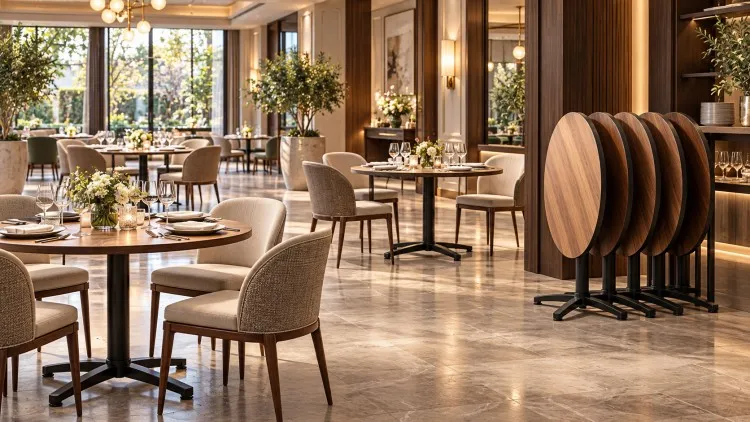
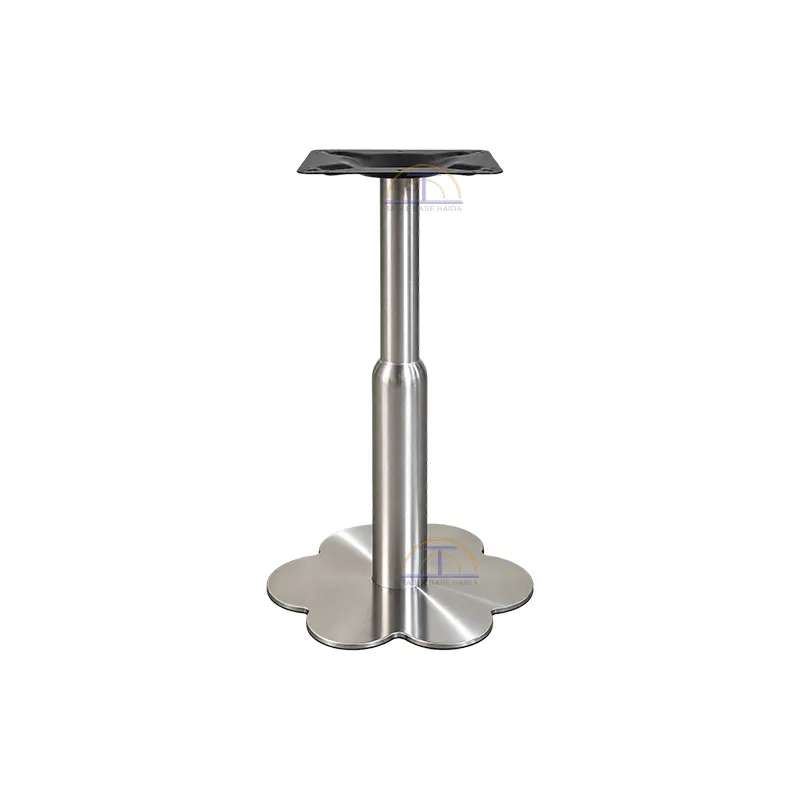
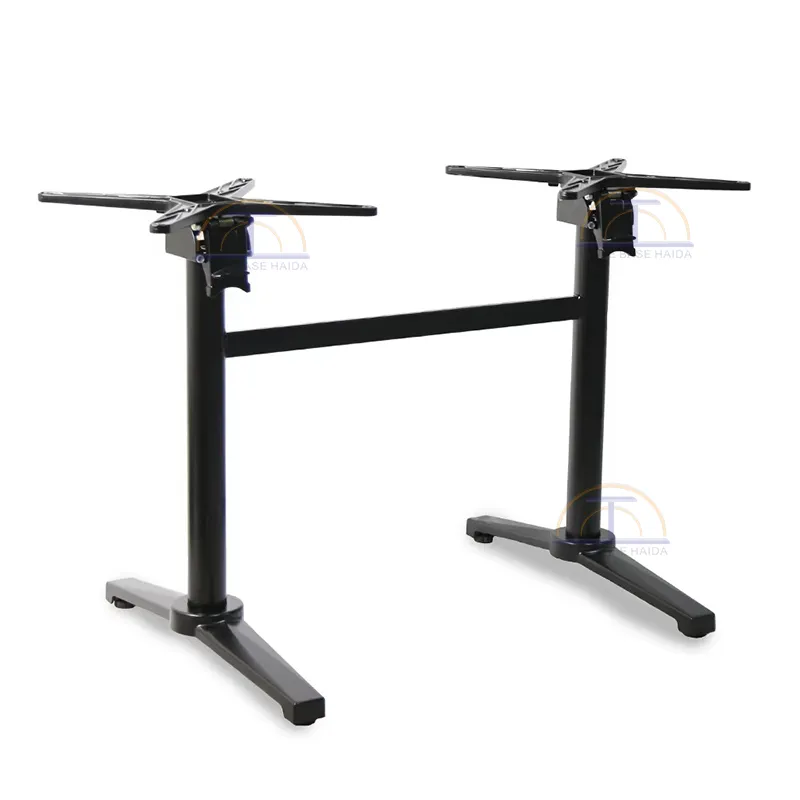
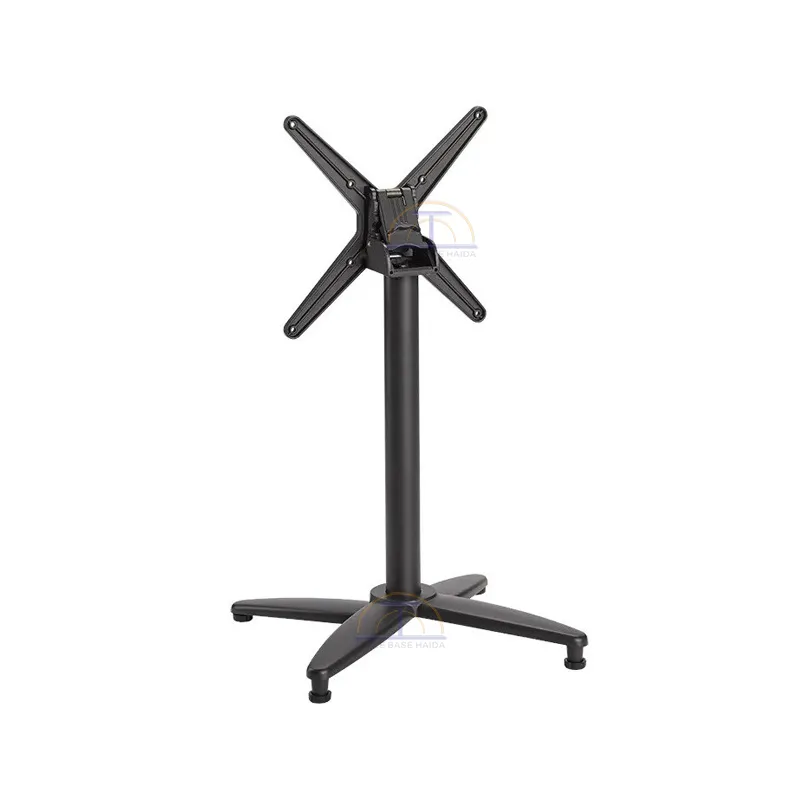
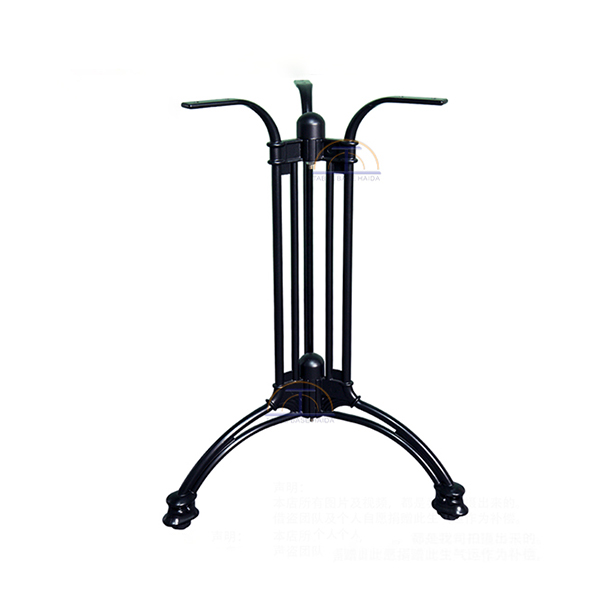
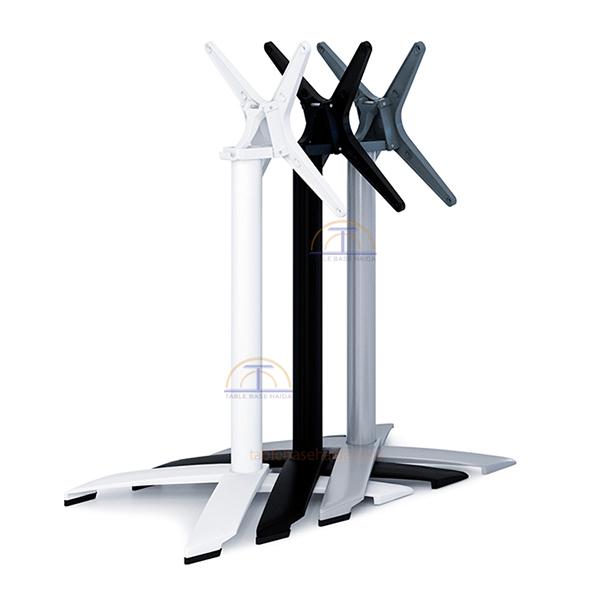
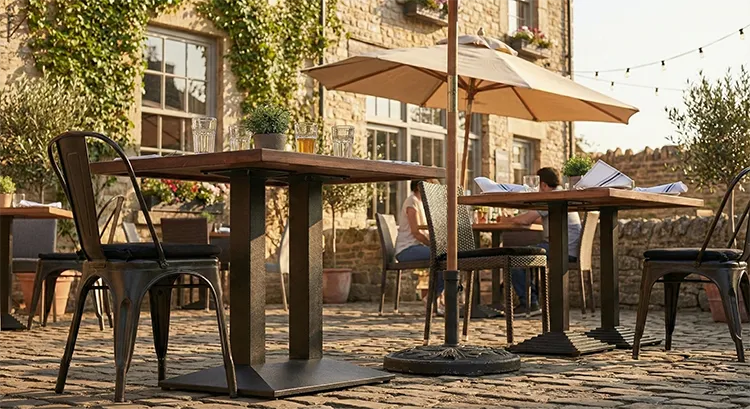
Outdoor table bases are exposed to a combination of rain, humidity, sunlight, cleaning chemicals, uneven paving, repeated movement, and wind. For commercial buyers, selecting an outdoor base is therefore not only a material decision. The final performance depends on the material, coating system, structure, footprint, tabletop, hardware, site exposure, and maintenance plan working together.
This checklist is designed for restaurants, cafes, hotels, furniture dealers, wholesalers, and hospitality projects that need to compare outdoor table bases before sampling or placing a bulk order. It focuses on the questions buyers should send to suppliers, the details that should be approved before production, and the risks that should be checked before shipment.
A useful starting rule is simple: do not buy an outdoor table base only because the listing says “rust-proof,” “weather-resistant,” or “heavy-duty.” Ask what material, surface system, test method, dimensions, hardware, and use conditions support those claims.
For a broader selection overview, see Outdoor Table Base Buying Guide.
1. Define the Outdoor Exposure Before Choosing a Material
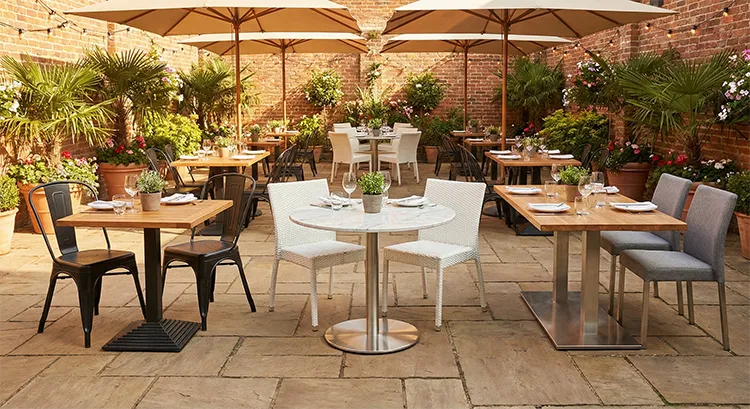
Two outdoor restaurants can require very different table bases. A covered courtyard with occasional rain is not the same environment as a seaside terrace, an exposed rooftop, or a poolside area with frequent chemical cleaning.
Before comparing products, classify the project by exposure. The supplier recommendation should be based on the actual site rather than the generic word “outdoor.”
- Covered or semi-covered outdoor dining
- Open restaurant patio or sidewalk seating
- Rooftop or high-wind terrace
- Coastal, seaside, or salt-air location
- Poolside or high-humidity hospitality area
- Seasonal furniture that is moved and stored frequently
2. Choose the Material by Exposure, Weight, and Handling Needs
Material selection should balance corrosion resistance, base weight, handling effort, appearance, and maintenance. No single material is automatically best for every outdoor project.
For aluminum-specific sourcing considerations, see Aluminum Table Base for Outdoor Commercial Dining: A Buyer’s Guide.
Outdoor Material Comparison
| Material | Main Strengths | Main Watchouts | Typical Fit |
| Aluminum | Low weight; naturally forms a protective oxide layer; easy to move | Wind stability can be lower if the base is too light; finish and alloy still matter | Cafes, patios, seasonal layouts, frequently moved tables |
| 304 Stainless Steel | Clean appearance; good general corrosion resistance; heavier than aluminum | Chloride and coastal exposure require more caution; crevices and contamination matter | General outdoor hospitality, covered or moderate-exposure locations |
| 316 Stainless Steel | Improved resistance to pitting and crevice corrosion in chloride environments | Higher cost; still not universally corrosion-proof | Coastal or chloride-exposed projects where stainless steel is preferred |
| Coated Cast Iron | High weight and strong planted feel; useful where stability is important | Depends strongly on coating integrity; chips or exposed iron can rust | Windier patios, heavier table layouts, projects prioritizing base weight |
| Coated Steel | Flexible fabricated shapes and strong structural options | Needs suitable pretreatment and complete coating protection outdoors | Custom frames and commercial layouts where fabricated steel is specified |
3. Treat “Rust-Proof” as a Specification Question, Not a Marketing Label
For purchasing purposes, “rust-proof” is too broad. Aluminum does not form red iron rust, but its surface can still oxidize or deteriorate in aggressive environments. Stainless steel resists corrosion, but grade selection, chloride exposure, crevices, contamination, and cleaning still matter. Cast iron and carbon steel rely heavily on the integrity of their protective coating system.
A more useful RFQ asks the supplier to identify the base material, grade or alloy where relevant, surface preparation, coating or finishing system, fastener material, and recommended use environment.
4. Verify the Complete Coating System
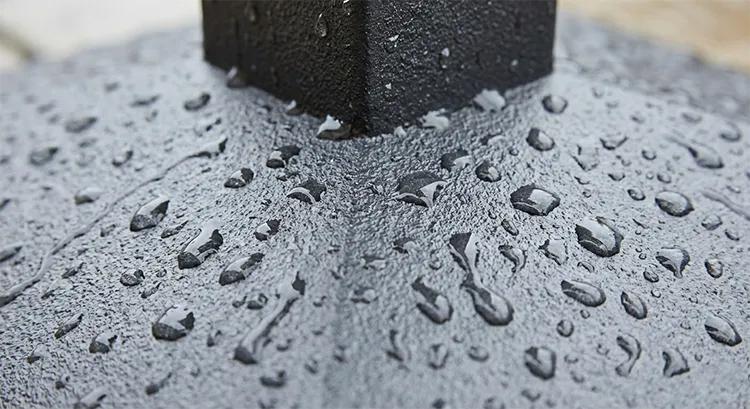
For coated cast iron, steel, and some aluminum bases, buyers should evaluate the full finishing system rather than only asking whether the product is powder coated.
The performance of a coated base can depend on surface preparation, pretreatment, coating chemistry, film coverage, edge coverage, curing, and protection during packing and assembly.
- Surface preparation method before coating
- Pretreatment or conversion-coating process, if used
- Powder coating type and intended outdoor use
- Specified dry-film thickness or supplier control range
- Coverage on edges, welds, recesses, and hidden areas
- Curing controls and production inspection method
- Color and gloss reference for repeat orders
5. Use Salt Spray Results Correctly
Salt spray testing can be useful for checking whether a coating or corrosion-protection process is being maintained, but buyers should not treat a single hour value as a universal definition of outdoor life.
ISO 9227 defines salt spray test methods, but it does not prescribe one exposure period for every product, and the test is not intended to predict long-term service life directly. The project specification should define the test method, exposure duration, specimen condition, acceptance criteria, and whether the requirement applies to the finished base or only to a coating sample.
- Which test standard and test type are being used?
- What exposure duration is specified for this project?
- What counts as a pass or failure?
- Is the tested sample representative of the production coating system?
- Will the same coating process be used for the bulk order?
6. Check Water Traps, Drainage, and Hidden Corrosion Points
Outdoor durability is influenced by geometry as well as material. Water trapped inside tubes, under caps, around welds, or between overlapping parts can create localized corrosion even when the visible surfaces look well protected.
- Open tube ends and cap fit
- Drainage holes where water can enter
- Weld seams and ground weld areas
- Overlapping plates and crevices
- Threaded inserts and fastener recesses
- Contact points where coating can be scratched during assembly or stacking
7. Specify Fasteners, Glides, and Small Hardware for Outdoor Use
A table base can have a suitable main structure and still develop problems because of low-grade screws, exposed threads, plated hardware, or floor glides that deteriorate before the base itself.
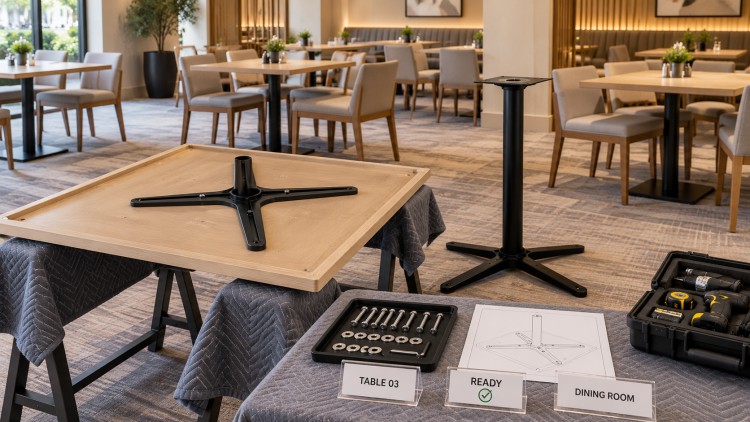
The RFQ and approved sample should therefore identify the hardware set, not only the main base material.
- Bolt, screw, washer, and nut material or finish
- Leveling-glide material and thread size
- Corrosion protection on exposed threaded parts
- Replacement hardware availability
- Compatibility with repeated assembly and maintenance
8. Evaluate Wind Stability as a System
Wind stability is not determined by base weight alone. The complete table includes the base, column, mounting plate, tabletop size, tabletop shape, tabletop weight, overall height, footprint, leveling condition, and the wind exposure of the site.
A lightweight aluminum base can be practical for a protected cafe that moves tables every day, while a more exposed rooftop may require a heavier base, larger footprint, smaller tabletop, or a different table layout. The supplier should evaluate the complete table rather than recommending a base by material name only.
- Base weight and footprint
- Tabletop width, diameter, and shape
- Tabletop weight and material
- Dining height or bar height
- Umbrella use, if any
- Exposure to gusts, corners, rooftops, or coastal winds
- Leveling and floor conditions
9. Match the Tabletop to the Outdoor Base
The tabletop changes both corrosion exposure and stability. Large tops create more leverage and wind area, while heavy stone or dense composite tops increase the structural load. Outdoor buyers should send the tabletop specification together with the base RFQ.
- Tabletop length, width, or diameter
- Tabletop material
- Approximate tabletop weight
- Thickness and fixing method
- Mounting inserts or screw positions
- Expected outdoor exposure
10. Inspect Folding and Stackable Bases at Their Contact Points
Folding and stackable bases are useful for patios and seasonal dining because they reduce storage space, but moving parts and metal-to-metal contact can create additional wear points.
For storage and venue-changeover planning, see Folding & Stackable Table Bases for Flexible Restaurant and Banquet Spaces.
- Folding hinge and locking mechanism
- Contact points during nesting or stacking
- Protective pads or spacers
- Coating damage after repeated folding
- Stability after the mechanism is locked
- Safe storage orientation and stack arrangement
11. Upgrade the Specification for Coastal and Chloride Exposure
Coastal projects require more caution because salt and chloride exposure can accelerate localized corrosion. Stainless steel grade selection, crevice design, surface condition, contamination control, rinsing, and maintenance all become more important.
Grade 316 generally provides better resistance than 304 to pitting and crevice corrosion in chloride environments, but even 316 should not be described as universally corrosion-proof. For marine-adjacent projects, buyers should define the exposure and request a project-specific recommendation rather than assuming that any stainless steel base is automatically suitable.
For coastal material selection, see Coastal Outdoor Table Bases: 304 vs 316 Buying Guide.
12. Approve an Outdoor Production Sample Before Mass Production
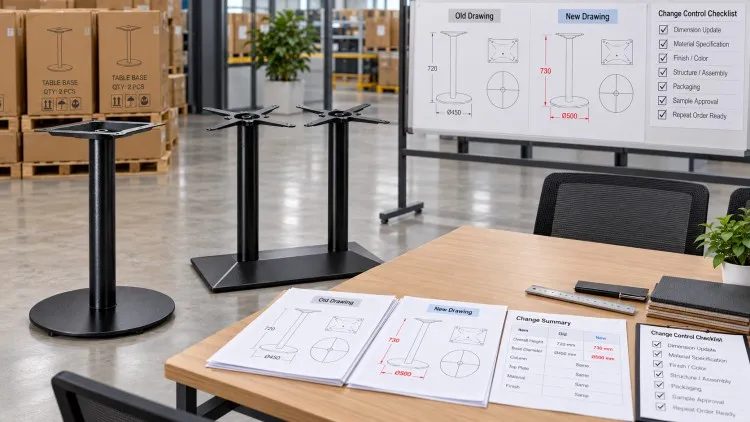
For a new outdoor model, custom finish, coastal project, or restaurant-chain rollout, the approved sample should become the production reference. The sample should confirm more than appearance.
Before mass production, use the Commercial Table Base Sample Approval Checklist as the approval reference.
- Correct base material and model
- Base footprint and overall height
- Top plate and mounting-hole pattern
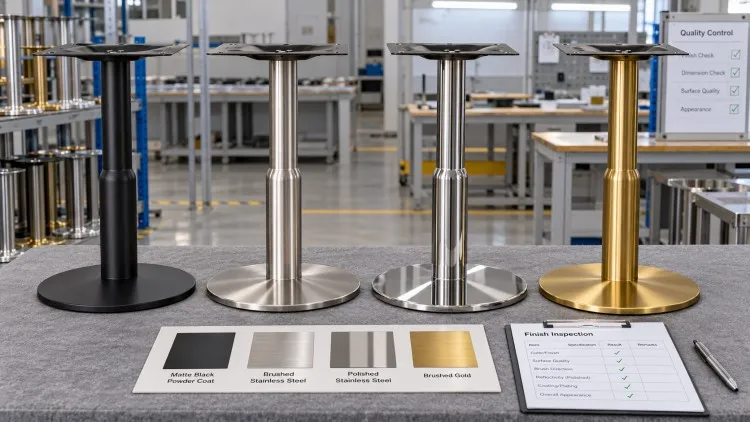
- Coating color, texture, and gloss
- Welds, edges, and hidden coating coverage
- Fasteners, glides, and hardware
- Folding or stacking function, where applicable
- Packing protection and carton identification
13. Build Outdoor-Specific Checks Into Pre-Shipment Inspection
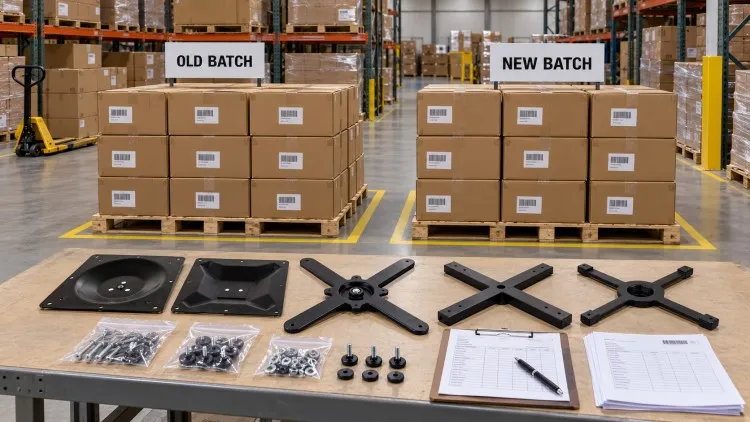
A good sample does not guarantee that the full production batch matches it. Pre-shipment inspection should compare the actual goods with the approved material, finish, hardware, dimensions, and packing specification.
For bulk-order QC, use the Commercial Table Base Pre-Shipment Inspection Checklist.
- Correct model, quantity, and height
- Coating consistency and visible defects
- Coverage on edges, welds, and recessed areas
- Fastener and glide specification
- Table wobble after assembly
- Folding or stackability function
- Surface protection inside the carton
- Model labels and carton marks
14. Plan Maintenance and Replacement Parts Before Installation
Commercial outdoor furniture performs better when the maintenance plan is defined before opening day. Buyers should know how the finish should be cleaned, how often exposed hardware should be checked, and which parts can be replaced separately.
- Recommended cleaning method
- Chemicals or abrasive tools to avoid
- Inspection frequency for glides and fasteners
- Touch-up procedure for damaged coatings
- Replacement glides, screws, and hardware kits
- Model records for future repeat orders
15. Outdoor Table Base RFQ Checklist
Use the same RFQ structure for every shortlisted supplier so quotations are based on the same assumptions.
For a more complete quotation template, use the Commercial Table Base RFQ Checklist.
| RFQ Item | Information to Send |
| Project environment | Covered patio, open patio, rooftop, coastal, poolside, etc. |
| Location exposure | Rain, humidity, salt air, direct sun, cleaning chemicals |
| Tabletop | Shape, size, material, thickness, approximate weight |
| Base material | Aluminum, 304/316 stainless steel, cast iron, steel |
| Base structure | Pedestal, X-base, twin-column, folding, stackable, etc. |
| Height | Dining, bar, or custom |
| Finish | Powder coating, brushed, polished, anodized, or other |
| Color reference | Standard color, RAL/Pantone/reference sample if required |
| Coating requirement | Project-specific outdoor coating specification and acceptance criteria |
| Fasteners & glides | Material, finish, thread size, replacement requirement |
| Wind exposure | Protected, moderate, exposed rooftop/coastal |
| Sample | Standard sample or project-specific approval sample |
| Inspection | Required QC documents, photos, tests, or third-party inspection |
| Packing | KD packing, sets per carton, surface protection, carton marks |
| Quantity & delivery | Quantity by model and target shipment date |
16. Questions to Ask the Supplier
- What exact material and grade or alloy is used?
- What surface preparation and outdoor finishing system is used?
- Which coating parameters are controlled in production?
- If a corrosion test is specified, what standard, duration, specimen, and acceptance criteria apply?
- How are edges, welds, recesses, and hidden areas protected?
- What fasteners and leveling glides are included?
- What tabletop size and weight is recommended for this base?
- How does the recommendation change for rooftop or coastal use?
- Can an approved project sample be retained as the production reference?
- Can replacement glides, bolts, and hardware be supplied for future maintenance?
17. Conclusion
The most reliable outdoor table base specification is built around the actual site, not a generic material label. Buyers should define the exposure environment, tabletop, wind conditions, material, finishing system, hardware, maintenance, and inspection requirements before comparing quotations.
For routine patios, handling efficiency may favor aluminum. For exposed or heavy-table layouts, additional base weight and footprint can become more important. Coastal projects may require upgraded stainless steel selection, tighter control of crevices and hardware, and a stronger maintenance plan.
Most importantly, convert every important outdoor requirement into an approved specification or sample. This gives the supplier, inspector, warehouse, installer, and future purchasing team the same reference when the project moves from quotation to repeat orders.
18. FAQ
What is the best material for an outdoor restaurant table base?
There is no single best material for every project. Aluminum is useful when low weight and frequent movement matter. Stainless steel is a common choice when corrosion resistance and a clean metal appearance are priorities. Heavier coated cast iron or steel can be useful when the project needs more base weight or specific fabricated structures. The site exposure, tabletop, wind, maintenance plan, and budget should be reviewed together.
Is aluminum completely corrosion-proof outdoors?
Aluminum does not develop red iron rust, and its natural oxide layer helps protect the surface, but aggressive environments, incompatible chemicals, salt deposits, galvanic contact, and poor finishing can still cause surface deterioration. The alloy, finish, hardware, and actual exposure should still be specified.
Should I choose 304 or 316 stainless steel for outdoor furniture?
304 can be suitable for many general outdoor environments. 316 generally provides better resistance to pitting and crevice corrosion in chloride-rich conditions, so it is often considered for more aggressive coastal exposure. The final choice should still consider the exact site, maintenance, surface condition, and project budget.
How many hours of salt spray should an outdoor table base pass?
There is no universal salt spray hour requirement for every outdoor table base. The required test method, duration, sample condition, and pass criteria should come from the product or project specification. Salt spray results should not be treated as a direct prediction of years of outdoor service.
Does a heavier table base always provide better wind stability?
More base weight can help, but wind stability is a system issue. Footprint, tabletop size and shape, table height, total mass, floor condition, and site exposure also matter. A complete table configuration should be evaluated rather than comparing base weight alone.
What should I check on a folding outdoor table base?
Check the hinge, locking mechanism, coating around moving parts, contact points during stacking, protective pads, stability after locking, and the amount of finish wear after repeated folding. Outdoor hardware and replacement parts should also be confirmed.
What information should I send for an outdoor table base quotation?
Send the project environment, tabletop shape and size, tabletop material and approximate weight, quantity, preferred base material and structure, height, finish, color, wind exposure, packing requirement, sample requirement, and target shipment date.
Should outdoor table bases be inspected before shipment?
Yes for commercial and project orders. Pre-shipment inspection should compare the bulk goods with the approved sample and specification, including dimensions, finish, coating coverage, hardware, leveling glides, assembly, folding or stacking function, packing, and carton identification.