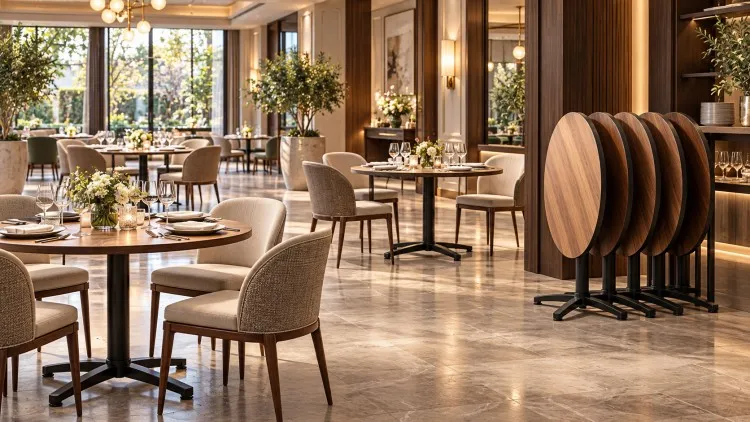
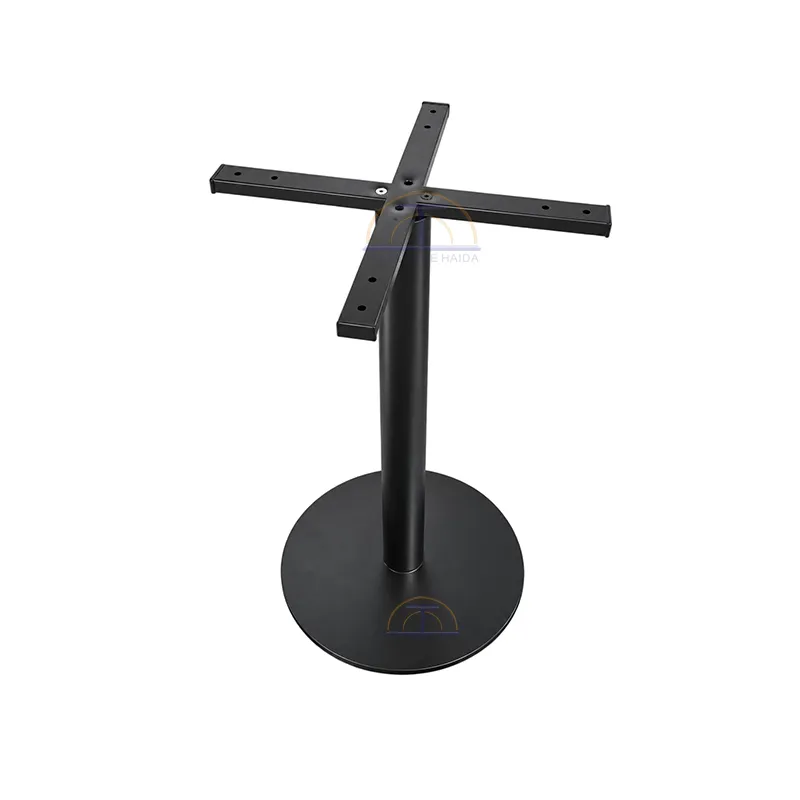
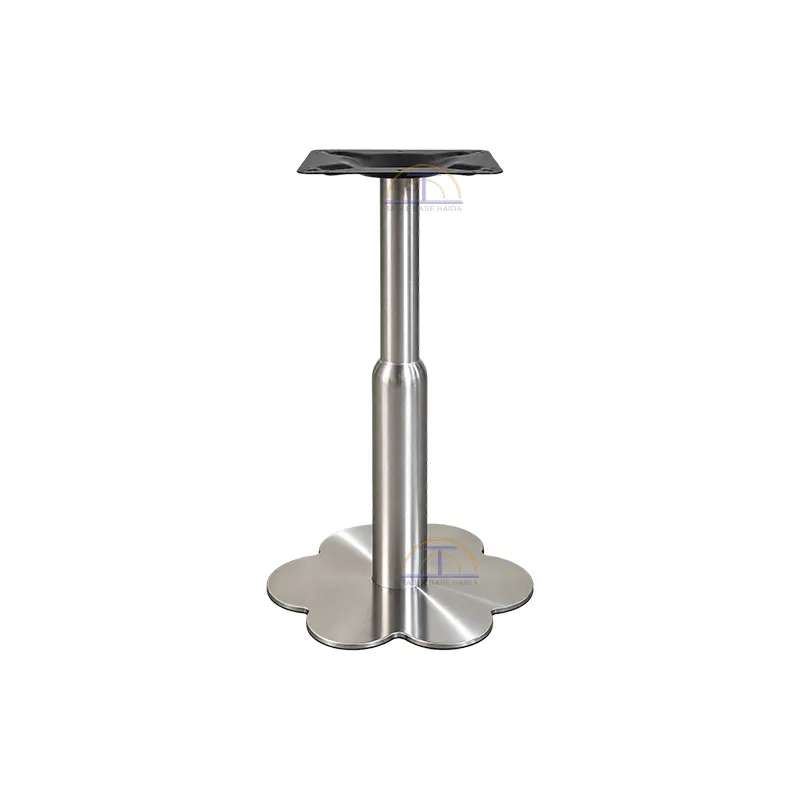
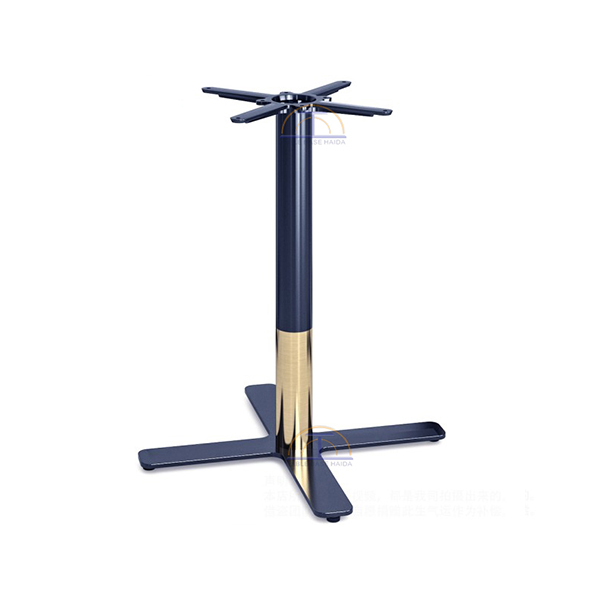
When buyers request a quote for commercial table bases, the fastest and most accurate replies usually come from the clearest RFQs. A supplier cannot recommend the right model, estimate packing volume, or calculate production cost properly if the request only says “please quote table bases.”
For restaurants, hotels, furniture dealers, wholesalers and project buyers, a complete RFQ should include product type, tabletop size, quantity, material, finish, packing requirements, sample needs and delivery plan. This checklist helps buyers prepare the right information before contacting a commercial table base manufacturer.

1. Start with Your Project Type
Before discussing models or prices, explain where the table bases will be used. A restaurant dining area, outdoor patio, hotel banquet space and furniture wholesale program may need different base structures, materials and packing methods.
A useful RFQ should mention whether the project is for restaurants, cafés, bars, hotels, outdoor dining spaces, food courts, office canteens, furniture dealers or OEM furniture brands. This helps the supplier recommend suitable commercial table base options instead of only quoting a random model.
RFQ example:
Project: 120 sets of restaurant dining tables for an indoor casual dining chain
Use: High-traffic restaurant seating area
Market: United States
2. Specify the Table Base Type You Need
Different table base structures serve different commercial needs. For example, cast iron table bases are often selected for stable indoor restaurant tables, while aluminum table bases are useful for flexible outdoor seating. Stainless steel table bases are suitable for food service environments, and steel table bases can support many modern commercial furniture designs.
If you already have a preferred model, include the model number in your RFQ. If you are not sure which type is best, describe your tabletop size, usage environment and target price range so the supplier can recommend suitable options.
Details to include:
- Preferred base type: round base, square base, cross base, twin-column base, folding base or self-leveling base
- Preferred material: cast iron, aluminum, steel or stainless steel
- Preferred model number, if available
- Application: indoor, outdoor, food service, café, bar, hotel or project use
3. Provide Tabletop Size, Shape and Weight
The tabletop is one of the most important details in a table base RFQ. A base that works for a small square tabletop may not be stable enough for a large round, rectangular, stone, HPL or solid wood top.
Buyers should provide tabletop length, width or diameter, thickness, approximate weight and material. These details help the supplier recommend a proper base spread, column structure and mounting plate size.
For example, if your project uses HPL table tops, the supplier needs to know the tabletop size, thickness and application environment before recommending a matching base.
RFQ example:
Tabletop size: 700 × 700 mm square HPL top
Thickness: 25 mm
Approximate weight: 8 kg
Application: Indoor café table
Required base: Stable pedestal base, black powder coating
For heavy tabletops such as marble, granite, sintered stone or large solid wood tops, buyers should clearly mention the tabletop weight. This helps avoid under-sized bases, tipping risks and after-sales problems.
4. Confirm Quantity and Order Plan
Quantity affects pricing, production planning, packing method and shipping cost. A sample order, trial order, mixed container and full container order may all have different quotation logic.
Instead of asking only for the unit price, buyers should tell the supplier whether the order is for sample testing, a first trial order, regular wholesale stock or a project rollout. This helps the supplier provide a more useful quotation.
Details to include:
- Sample quantity
- Trial order quantity
- Target bulk order quantity
- Expected reorder plan
- Mixed models or single model
- Target delivery date
5. Choose the Right Material for the Application
Material selection should match the project environment. Indoor dining areas may focus more on stability, price and finish consistency. Outdoor spaces may need lightweight structure, corrosion resistance and easy movement. Food service areas may require surfaces that are easier to clean.
When sending an RFQ, buyers should avoid saying only “metal table base.” It is better to specify whether they want cast iron, aluminum, steel or stainless steel. If the buyer is unsure, the supplier can recommend a material based on usage, budget and target market.
Material information to include:
- Indoor or outdoor use
- Humid, coastal or dry environment
- Required strength or weight
- Need for corrosion resistance
- Cleaning and maintenance requirements
- Target price level
6. Define Finish, Color and Surface Requirements
Finish is not only about appearance. For commercial table bases, finish affects durability, scratch resistance, corrosion resistance, cleaning and brand consistency.
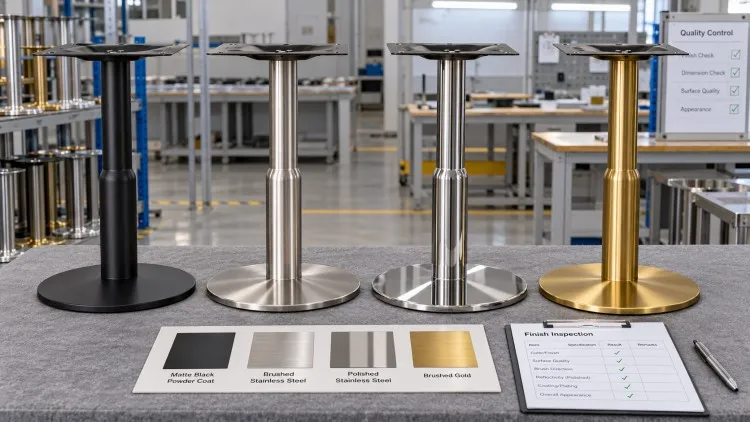
Common options include powder coating, matte black, glossy black, white, chrome, brushed stainless steel, polished stainless steel and customized colors. For chain restaurants, hotels or furniture brands, color consistency across different batches can be especially important.
Details to include:
- Required color
- Surface finish: matte, glossy, textured, brushed or polished
- RAL color code, if available
- Indoor or outdoor coating requirement
- Need for color sample or finish sample
- Whether the finish must match existing furniture
7. Share Packing and Shipping Requirements
For bulk table base orders, packing is part of the product value. Good packing can reduce freight damage, improve warehouse handling and make installation easier for the end customer.
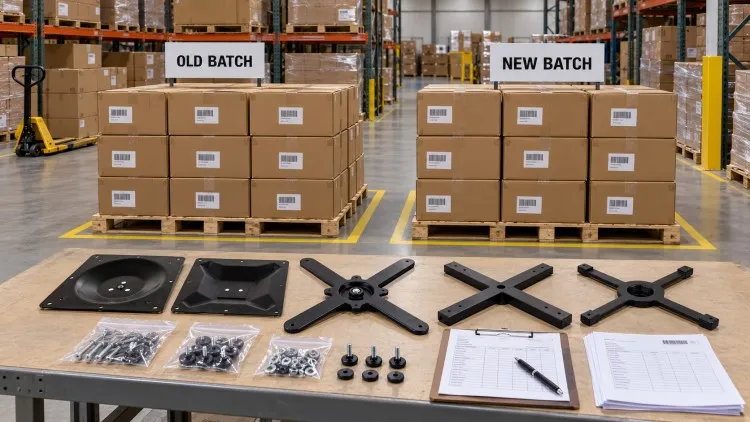
Buyers should tell the supplier whether they need KD packing, individual cartons, master cartons, pallet packing, barcode labels, private label cartons, installation instructions or spare parts bags.
Packing details to include:
- One set per carton or multiple sets per carton
- KD packing or assembled packing
- Carton mark requirements
- Barcode or SKU label
- Private label packaging
- Installation manual
- Spare screws, glides or accessories
- Container loading requirement
8. Mention OEM or Custom Requirements Early
If the project involves OEM or custom metal table bases, buyers should share the technical requirements as early as possible. Custom dimensions, special mounting plates, unique finishes, logo packaging or private label cartons may affect MOQ, tooling cost, sample lead time and production schedule.
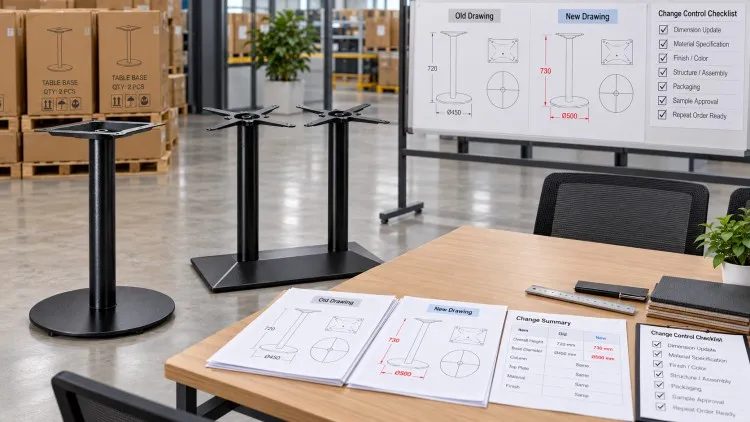
Useful files include drawings, reference photos, size sketches, color samples, packing designs and target product positioning. Even if the buyer does not have a complete drawing, a clear reference photo with dimensions can help the supplier evaluate feasibility.
Custom RFQ details to include:
- Drawing or reference photo
- Key dimensions
- Material and tube or plate thickness
- Finish requirement
- Load requirement
- Logo, carton or label design
- Target MOQ
- Sample approval process
9. Clarify Sample Requirements
Samples are important for importers, wholesalers and project buyers, especially when testing a new supplier or confirming a customized table base before mass production.
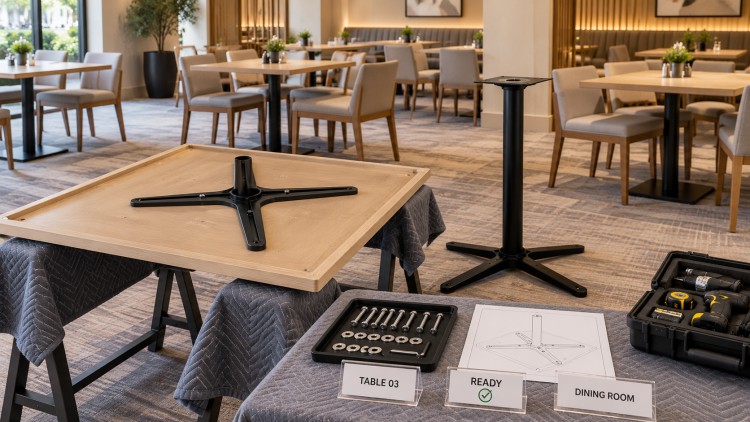
A good RFQ should explain whether the buyer needs a standard sample, finish sample, customized sample, pre-production sample or golden sample. This avoids confusion between product testing and final production approval.
Sample details to include:
- Sample model
- Sample quantity
- Required finish
- Whether packaging should be tested
- Shipping destination
- Sample deadline
- Whether the sample will become the golden sample
10. Include Your Target Market and Compliance Needs
A supplier can give better suggestions when they know the target market. Restaurant furniture buyers in North America, Europe, the Middle East and Asia may have different preferences for height, finish, packing, labeling and documentation.
If the order is for a public project, chain restaurant, hotel group or distributor program, mention any special documentation needs. This may include packing lists, product photos, assembly instructions, HS code reference, inspection photos or batch tracking.
Market and documentation details to include:
- Target country or region
- Required product language or label language
- Need for installation instructions
- Need for product photos before shipment
- Need for inspection report or loading photos
- Required shipping terms
11. Commercial Table Base RFQ Template
Buyers can copy the following template when requesting a quote from a table base supplier.
RFQ Template
Product type:
Preferred model:
Application:
Indoor or outdoor use:
Target market:
Tabletop size:
Tabletop material:
Approximate tabletop weight:
Required base material:
Required finish / color:
Quantity:
Sample requirement:
Packing requirement:
Private label requirement:
Delivery deadline:
Shipping destination:
Required documents:
Additional notes:
12. Common RFQ Mistakes to Avoid
Many table base quotations are delayed because key information is missing. The most common mistake is asking for the lowest price without providing quantity, tabletop size or usage environment.
Another common mistake is comparing unit prices without checking packing, weight, finish, accessories, lead time and after-sales support. For commercial buyers, the real cost is not only the product price, but also shipping, installation, replacement parts and long-term durability.
Avoid these mistakes:
- Asking for price without quantity
- Not providing tabletop size
- Ignoring tabletop weight
- Choosing a base only by appearance
- Not confirming packing method
- Forgetting spare parts or glides
- Comparing suppliers only by unit price
- Not requesting samples for customized orders
13. How Haida Supports B2B Table Base Buyers
For B2B buyers, a good supplier should do more than quote a price. The supplier should help match the right table base structure, material, finish, packing method and product combination according to the buyer’s market and project requirements.
Haida provides commercial table base options for restaurants, hotels, cafés, outdoor spaces, furniture wholesalers and project buyers. Whether buyers need cast iron table bases, aluminum table bases, steel table bases, stainless steel table bases or matching HPL table tops, a clear RFQ helps the team respond faster and recommend more suitable models.
If you are planning a bulk table base order, send your project details, tabletop size, target quantity and packing requirements. You can request a quote for your commercial table base order and let the team help compare suitable options for your project.
FAQ
What information should I send when asking for a table base quote?
You should send the application, tabletop size, tabletop material, quantity, required base material, finish, packing needs, sample requirement and delivery plan.
Can I request a quote if I do not know the exact model?
Yes. You can send the tabletop size, project type, target market and budget range. The supplier can recommend suitable table base models based on your requirements.
Why does tabletop size matter in a table base RFQ?
Tabletop size affects stability, base spread, mounting plate size and weight balance. Without this information, the supplier may not be able to recommend a safe and suitable base.
Should I ask for samples before bulk ordering?
For new models, customized designs or new suppliers, samples are recommended. Samples help buyers check finish, stability, packing, dimensions and overall quality before mass production.
What is the best way to compare table base supplier quotes?
Do not compare only unit price. Buyers should also compare material, weight, finish, packing, lead time, accessories, customization support and after-sales service.
Conclusion
A complete commercial table base RFQ helps buyers receive faster, more accurate and more useful quotations. By sharing project type, tabletop size, material, finish, quantity, packing needs and sample requirements, buyers can reduce communication time and avoid unsuitable product recommendations.
For importers, wholesalers, restaurant furniture dealers and project buyers, a clear RFQ is the first step toward a smoother sourcing process and a more reliable commercial furniture supply chain.