Coastal Outdoor Table Bases: 304 vs 316 and the Corrosion-Protection Checklist Buyers Actually Need
Coastal outdoor projects are not the same as ordinary outdoor projects. For seaside restaurants, hotel terraces, ocean-view cafés, and marine-adjacent hospitality spaces, the real reason table bases fail early is not just rain or sunlight.
It is the combined effect of salt, humidity, and crevice-driven localized corrosion. That is why “looks stainless” does not automatically mean “will last in coastal outdoor use.” This buying guide helps procurement teams decide when material upgrades are necessary and when coating, design details, and maintenance practices matter just as much.
Why Coastal Conditions Are More Aggressive
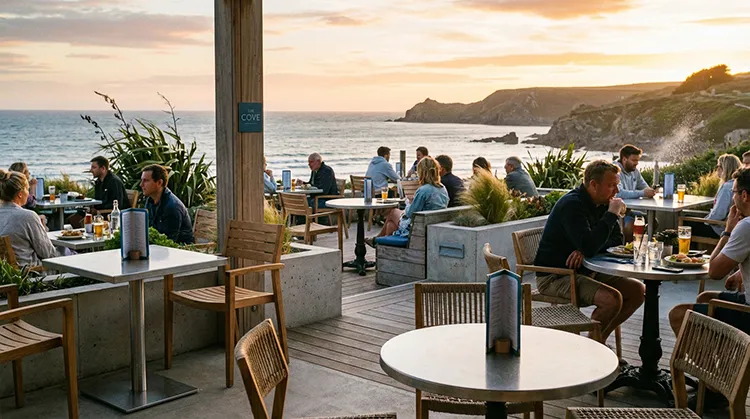
Chloride exposure sharply increases the risk of pitting and crevice corrosion, especially in sheltered joints, hidden seams, and areas that are not regularly rinsed by fresh water.
That means a coastal project should not treat “304 stainless steel” as a simple material label. Buyers must specify the base as a system: material grade, finish, structural detailing, leveling components, and maintenance routine all need to be considered together.
304 vs 316: What the Real Buying Difference Looks Like
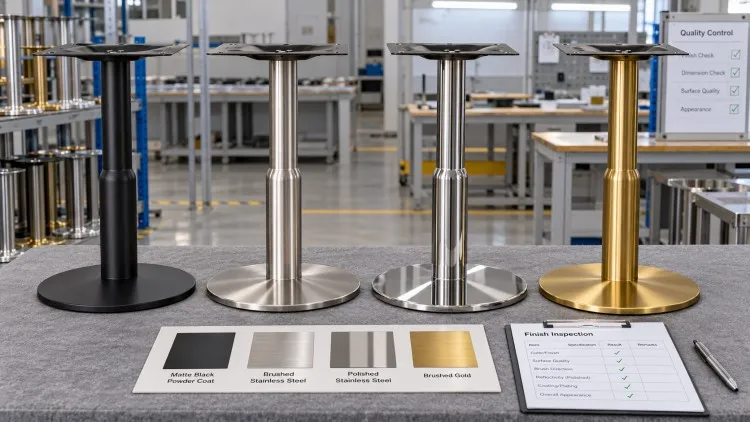
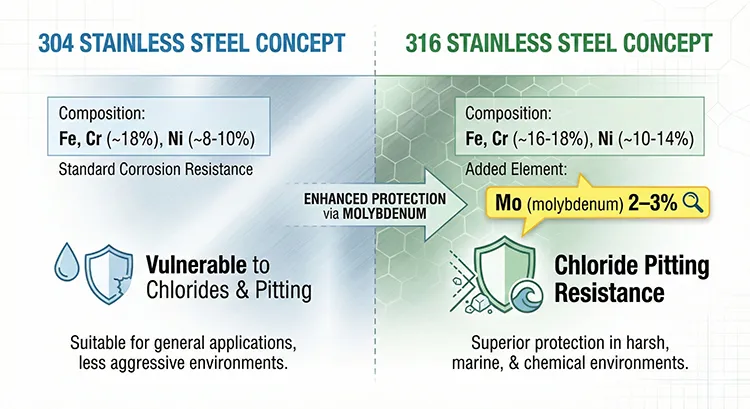
Because 316 contains molybdenum, it offers better resistance to chloride attack and pitting, which makes it the safer option in marine, seaside, and high-salt outdoor environments.
By comparison, 304 is not automatically unsuitable for coastal use, but it makes more sense in near-coast or semi-outdoor projects where chloride exposure is lower, fresh-water rinsing can be done regularly, and the structure is less likely to trap salt. The decision depends heavily on exposure severity and maintenance reliability.
If the Project Is Not in the Harshest Coastal Exposure, 304-Grade Stainless Still Has Practical Value
For projects that are not directly exposed to the harshest marine spray, such as near-coast hotel dining areas, semi-outdoor hospitality spaces, or commercial patios with a real maintenance schedule, 304-grade stainless steel can still be a practical option.
In these applications, the Square Stainless Steel Table Base (HD-J124) provides reliable strength. It is easy to clean and rinse, helping to reduce salt traps and standing moisture for long-lasting performance.
Premium Coastal Projects Also Care About Design Identity
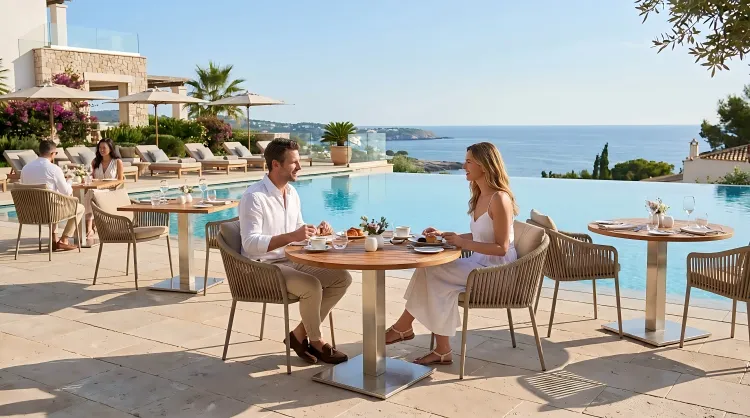
In ocean-view hotels and premium seaside restaurants, buyers care not only about corrosion resistance but also about visual quality and brand image.
For these refined environments, the Tulip Stainless Steel Table Base (HD-J156) serves as a premium project option. It delivers the necessary structural integrity while supporting a high-end, design-led hospitality atmosphere.

In Severe Coastal Exposure, Aluminum Is Often a Real Alternative
If the project sits in extremely salty air, has limited maintenance support, and needs frequent layout changes, a stainless steel option might not be the most efficient choice.
In these demanding scenarios, the Lightweight Aluminum Outdoor Table Base (HD-J147) is often the more practical solution. It offers natural corrosion resistance, lower weight, and much easier day-to-day operation for outdoor hospitality staff.
Coastal Projects Should Specify the Whole Table System
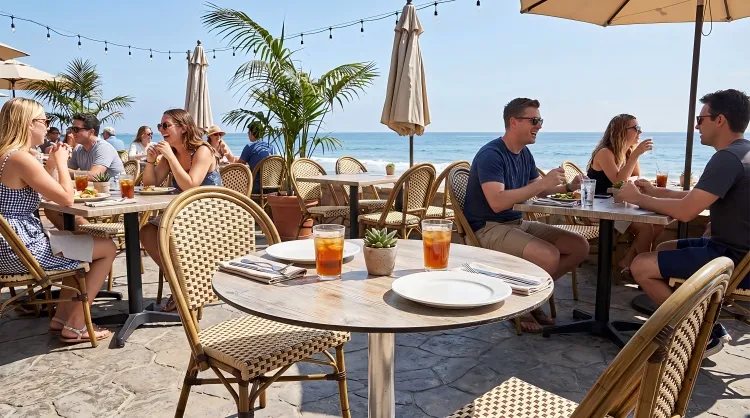
A coastal outdoor table should be specified as a complete system. The tabletop itself also needs to withstand humidity, UV exposure, and constant cleaning.
Pairing a stable base with the Weatherproof Round HPL Patio Tabletop creates a highly durable coastal table package, ensuring both the foundation and the surface can survive harsh outdoor conditions.
The Coastal Procurement Checklist
Coastal procurement is not just about choosing between 304 and 316. Before ordering, commercial buyers should confirm:
-
Exposure Level: Is it direct oceanfront or near-coast?
-
Maintenance Schedule: Can the bases be rinsed with fresh water regularly?
-
Testing Standards: Are there specific salt-spray testing limits, such as ASTM B117?
-
Design Details: Does the design minimize water traps and hidden crevices?
-
Leveling Glides: Are the feet made of corrosion-resistant materials?
Final Recommendation
To maximize ROI on coastal outdoor furniture, match the material to the exact environment. If the environment is highly saline and difficult to maintain, 316 remains the safest direction. If the space is near-coast and regularly rinsed, 304 is usually sufficient. If operations need flexibility and rust-proof performance, aluminum is highly recommended.
-
For near-coast standard projects: Evaluate the HD-J124.
-
For higher-end ocean-view projects: Review the HD-J156.
-
For weather-resistant and lightweight alternatives: Choose the HD-J147.
-
For a complete tabletop system: Pair with the HPL-Round Patio Tabletop.