1. Why Installation Readiness Is a Separate Procurement Stage
A commercial table base order can pass factory inspection and still delay a restaurant opening if tabletops, fixing points, fasteners and installers are not ready at the same time. Installation readiness addresses this gap between delivered components and usable furniture.
Unlike an assembly tutorial, an installation-readiness review confirms responsibilities, approved versions, material compatibility, site access, trial assembly and final acceptance before workers begin a full rollout.
2. Release One Approved Tabletop-to-Base Package
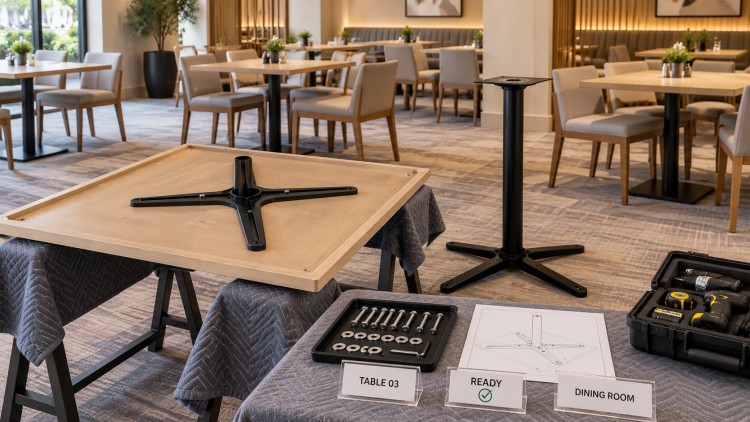
The buyer, tabletop fabricator, base supplier and installation contractor should work from the same approved model list and drawing revision. The package should identify the tabletop SKU, table base model, finished height, underside orientation, mounting method and hardware code.
For the technical interface, use the existing Table Base Mounting Plate & Hole Pattern Guide to lock plate geometry and hole coordinates. This article goes one step further: it controls whether that approved information has reached the people preparing and installing the actual tables.
3. Decide When Pre-Drilling Makes Sense
Pre-drilling can reduce repeated measuring and drilling on site when many identical tables use a verified mounting pattern. However, drilling in advance becomes a risk if the plate, tabletop material or drawing revision is still changing.
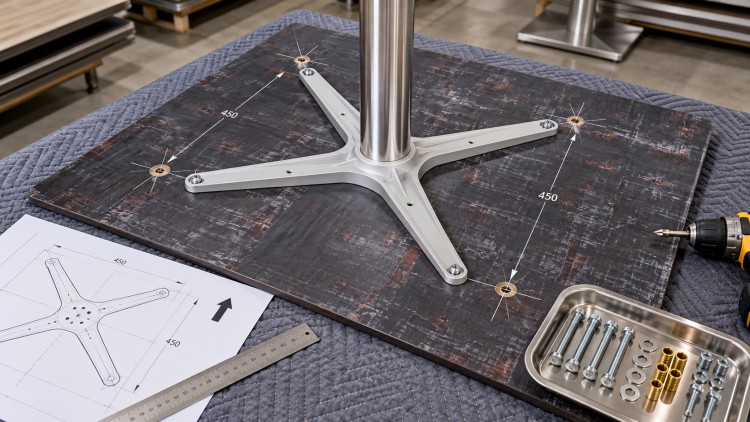
Before releasing a production drilling file, confirm the underside view, reference centerlines, hole or insert positions, allowable tolerances and whether a protective or reinforcing sub-top is needed. Test one complete production-style table before authorizing the remaining tops.
4. Match Fasteners to the Real Tabletop Material
Wood, MDF, HPL-faced panels, metal inserts and stone or glass systems do not all accept the same fixing method. A screw that fits the mounting plate may still be unsuitable for the tabletop substrate or its available fixing depth.
Approve the fastener type, diameter, length, washer or insert, engagement and any manufacturer-specific tightening requirements. Never assume one universal screw length or torque for all commercial tabletops. Stone and glass should use a separately engineered approved attachment system rather than improvised direct drilling.
5. Match Hardware Bags and Assembly Instructions by SKU
A multi-model shipment needs more than a carton marked “table bases.” Each site kit should connect the tabletop SKU, base model, mounting revision, hardware bag and installation instruction. This prevents installers from mixing similar-looking bolts between dining-height, bar-height or different top-plate versions.
The Private Label Carton Marks, Barcodes and Manuals guide explains how carton codes and hardware labeling work before shipment. At the installation stage, those same identifiers should appear on the contractor pick list and room-by-room staging record.
6. Complete a Trial Assembly With Production Components
A trial assembly should use the real tabletop construction, the approved base version and the final hardware—not a substitute top or a loose display sample. Verify centered mounting, correct plate orientation, accessible tools, adequate fixing engagement and final table height.
After carefully turning the table upright, assess contact at every glide, stability under normal expected use and any interference with aprons, cable boxes, reinforcement or folding mechanisms. Record exceptions and approve the setup before repeating it across the project.
7. Plan Tools, Workstations and Installer Responsibilities
Installation teams need a safe, protected assembly surface, sufficient room to turn tables, suitable lifting assistance and the correct tools for the approved fasteners. Include cleaning materials, non-marking protection and a method for segregating defective components.
Assign who receives cartons, checks the kit, performs drilling if still required, assembles the base, mounts the top, adjusts glides and signs off each completed table. When responsibility is unclear, small problems can stop an entire installation crew.
8. Stage Components by Room, Floor or Store
For hotels and restaurant chains, staging by installation zone is usually more practical than opening cartons in a central pile. Label each kit with the target location, tabletop code, base model and quantity to reduce unnecessary re-sorting.
If the site uses phased handover, keep unopened stock for later phases separate from materials assigned to current installers. Protect corridors and finished flooring when moving metal components through guest areas.
9. Allow Time for Site Access and Inspection Holds
An installation schedule should confirm delivery access, loading location, elevator capacity, work-hour restrictions, completed flooring and the availability of a safe storage area. An installer arriving before the site is ready is not a successful delivery.
Create a simple hold rule: stop using any kit with missing hardware, an unapproved drilling revision, damage to a critical connection or an uncertain tabletop attachment. Quarantine the affected unit and document who approves its release.
10. Installation Checks Differ by Base Structure
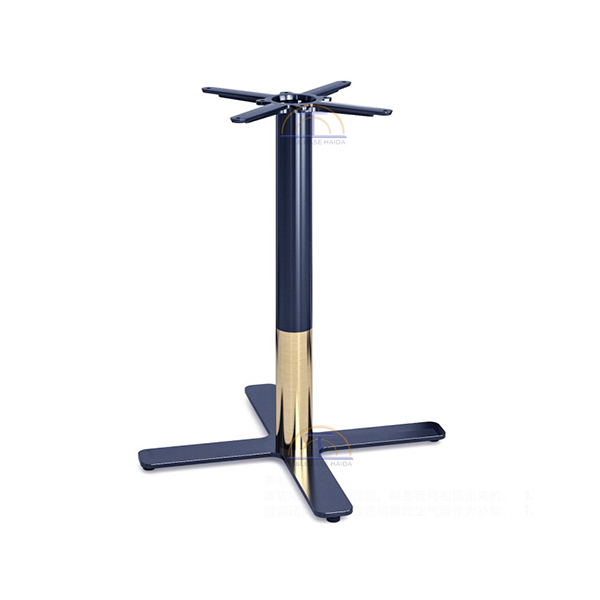
For a compact cross-base project, the HD-J249 cast iron table base has 300 mm and 450 mm top-plate options. Installers must confirm which version matches the drilling and hardware file rather than assuming the model number alone is sufficient.
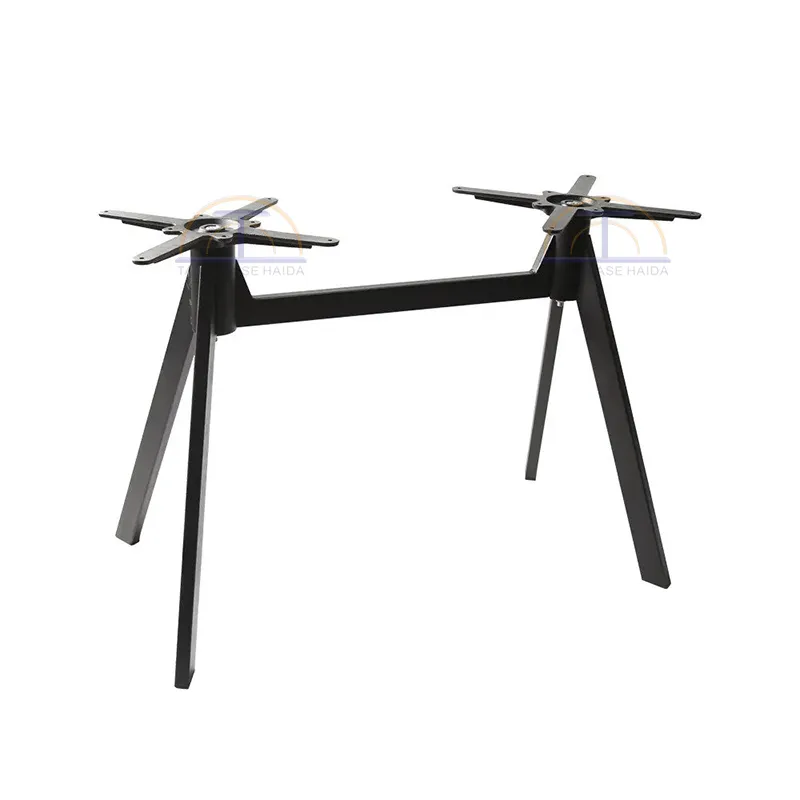
For longer tables, the HD-JN01 steel double-column base requires the two columns and mounting positions to align with the approved tabletop support layout.
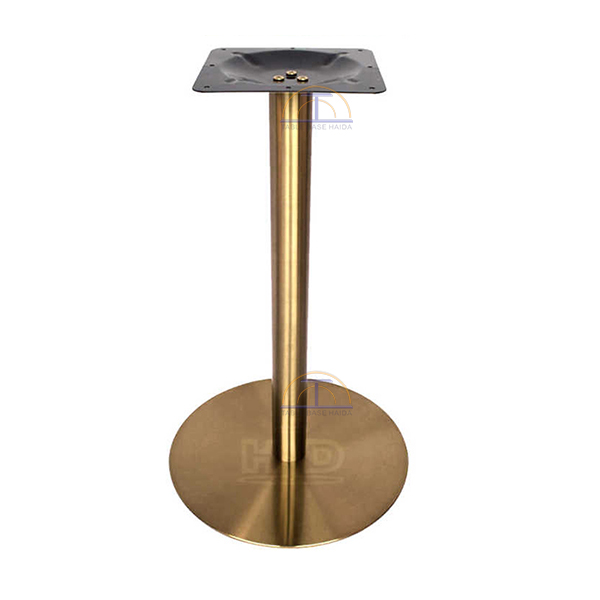
The HD-J068 round cast iron pedestal also lists different top-plate sizes; a centered position and the correct fixing arrangement matter for repeat installation. For lighter outdoor or cafe setups, the HD-J147 aluminum X-base offers another handling profile, but its mounting and tabletop pairing still need confirmation.
11. Record an Installation-Ready Sign-Off
Before bulk installation begins, the project lead can use a short sign-off with eight fields: approved drawing revision, tabletop SKU, base model, drilling complete, correct hardware, trial assembly passed, site access ready and responsible installer. Any unresolved item should have an owner and target resolution date.
Keep one photograph of the approved underside arrangement and one of the completed table. These records make repeat-store installations and later maintenance easier to trace without turning the process into a large paperwork exercise.

12. Handover the Complete Table, Not Just the Components
Final acceptance should cover the assembled table rather than just the delivery count. Check that the table is correctly positioned, all specified fasteners are secured, the table is stable, finished surfaces are protected and any adjustment mechanism operates as approved.
The site handover record should capture location, model, tabletop SKU, installation date, unresolved exceptions and maintenance contact. This is the final step before the furniture becomes part of day-to-day restaurant or hotel operations.
13. How Haida Can Support Installation-Ready Orders
Haida supplies commercial table bases in cast iron, steel, stainless steel and aluminum for restaurants, hotels, cafes and furniture dealers. For an installation-sensitive order, buyers can share the tabletop drawings, selected base models, fixing requirements, installation locations and planned delivery sequence during the quotation and sample stages.
A coordinated review can identify which drawings, hardware-kit labels, assembly references and trial-assembly checks should be confirmed before bulk production. To discuss an upcoming project, contact Haida with your tabletop drawings and installation schedule.
14. FAQ: Commercial Table Base Installation Readiness
Q1. Should restaurant tabletops be pre-drilled?
Yes, when the approved plate-and-top configuration has been validated. Do not release a full drilling batch from a catalog photo or an untested hole pattern.
Q2. Can all tabletop materials use the same screws?
No. The substrate, thickness, insert system and approved attachment method determine the hardware.
Q3. What is the minimum trial-assembly check?
Use production-style components, verify the approved drawing and hardware, assemble the complete table and inspect stability and interference.
Q4. Who should approve installation readiness?
The buyer or project lead should appoint an accountable sign-off owner, with confirmation from the tabletop supplier, base supplier and installer as needed.
15. Conclusion
Installation readiness is the bridge between a correct table base order and a completed commercial dining area. Pre-drilling saves time only when the technical interface is frozen; hardware helps only when each kit matches its SKU; and a delivery date matters only when the site and installers can accept the work.
For importers, restaurant chains and hospitality FF&E teams, one approved configuration, one completed trial table and one clear site sign-off can make a multi-table installation more predictable and easier to repeat.