1. Why Sample Approval Matters Before Mass Production
For importers, furniture brands and project buyers, approving a commercial table base sample is not just about checking whether the product “looks good.” It is an important step before mass production, especially when the order involves custom finish, private label packing, mixed SKUs or project-specific requirements.
A clear sample approval process helps buyers reduce production mistakes, avoid finish differences, confirm installation details and align expectations with the supplier before bulk order production starts.
This checklist focuses on what buyers should check before signing off a table base sample for mass production.
2. Confirm the Sample Type First
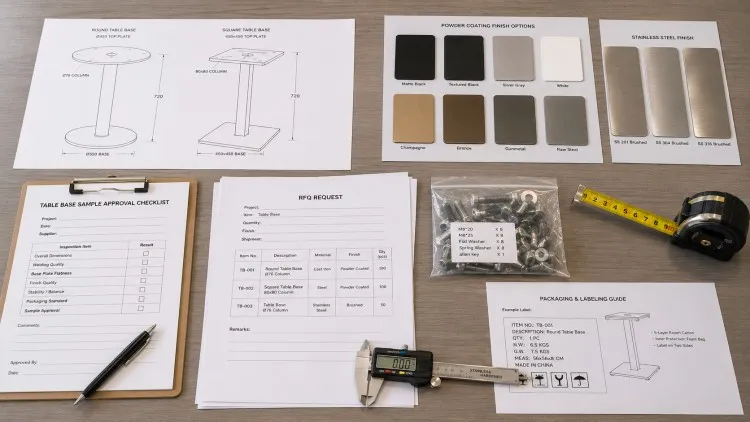
Before reviewing the sample, buyers should confirm what type of sample is being approved. Different sample types have different purposes.
A standard sample is usually used to check an existing model. A finish sample is used to confirm color, texture and surface effect. A custom sample is used to confirm a modified design, special size, custom mounting plate or OEM requirement. A pre-production sample is the version that should be used as the reference for mass production.
Sample types to clarify:
- Standard product sample
- Finish or color sample
- Custom structure sample
- Pre-production sample
- Golden sample for mass production
If the buyer and supplier do not define the sample type clearly, later discussions may become confusing. A sample for appearance review is not always equal to a final production standard.
3. Check Product Model, Dimensions and Structure
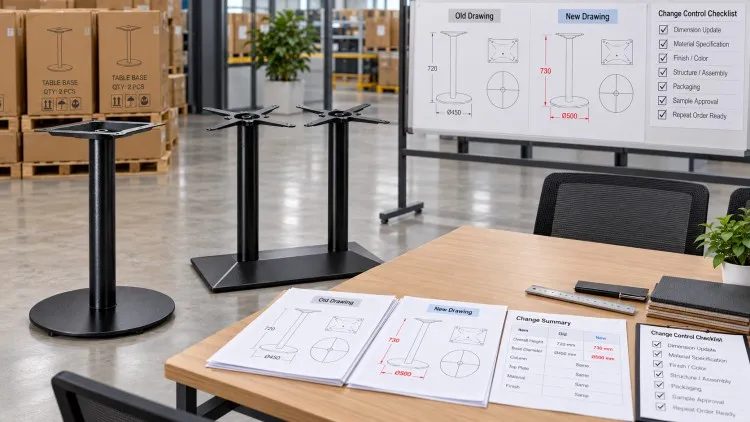
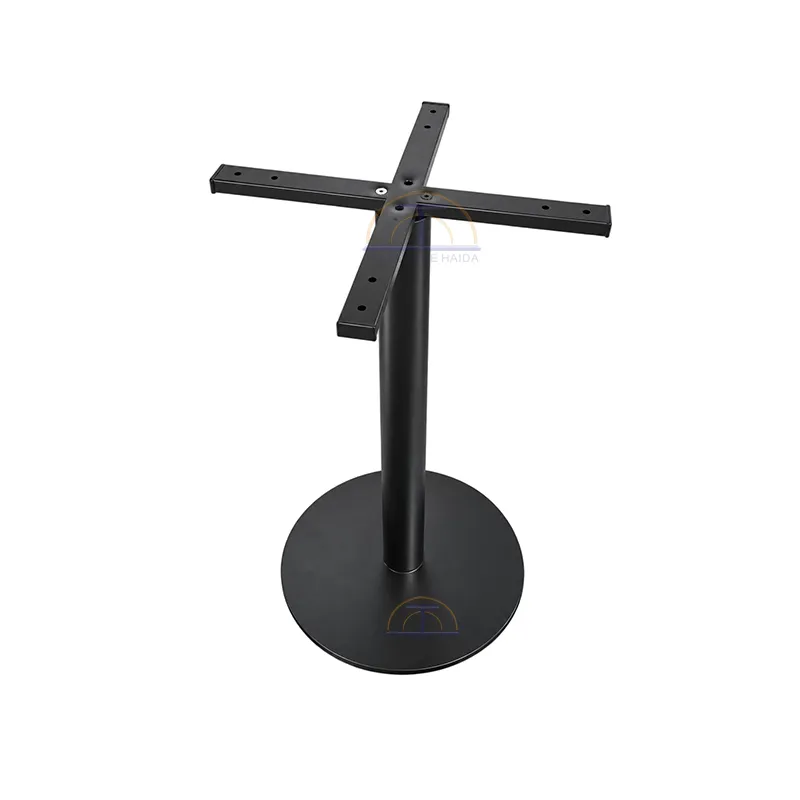
The first step is to confirm whether the sample matches the selected model or drawing. Buyers should check the model number, base shape, column structure, top plate size, height and mounting holes.
For commercial table bases, small dimensional differences can affect tabletop matching, stability and installation efficiency. This is especially important for restaurant chains, hotel projects and furniture dealers who need consistent repeat orders.
Key points to check:
- Model number
- Overall height
- Base size
- Top plate size
- Column diameter or shape
- Mounting hole position
- Screw hole size
- KD structure or assembled structure
- Consistency with drawing or reference sample
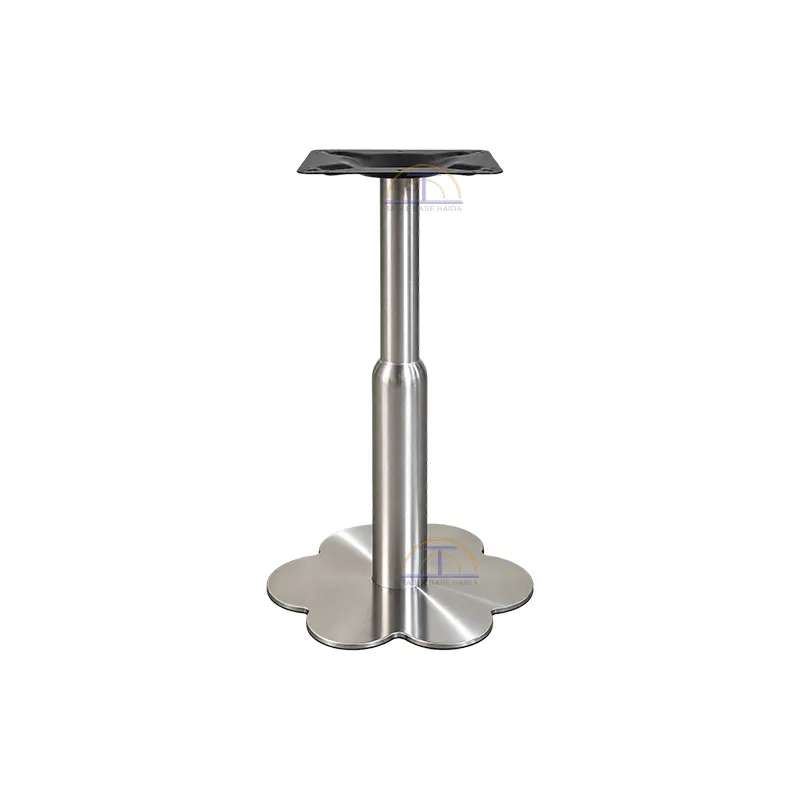
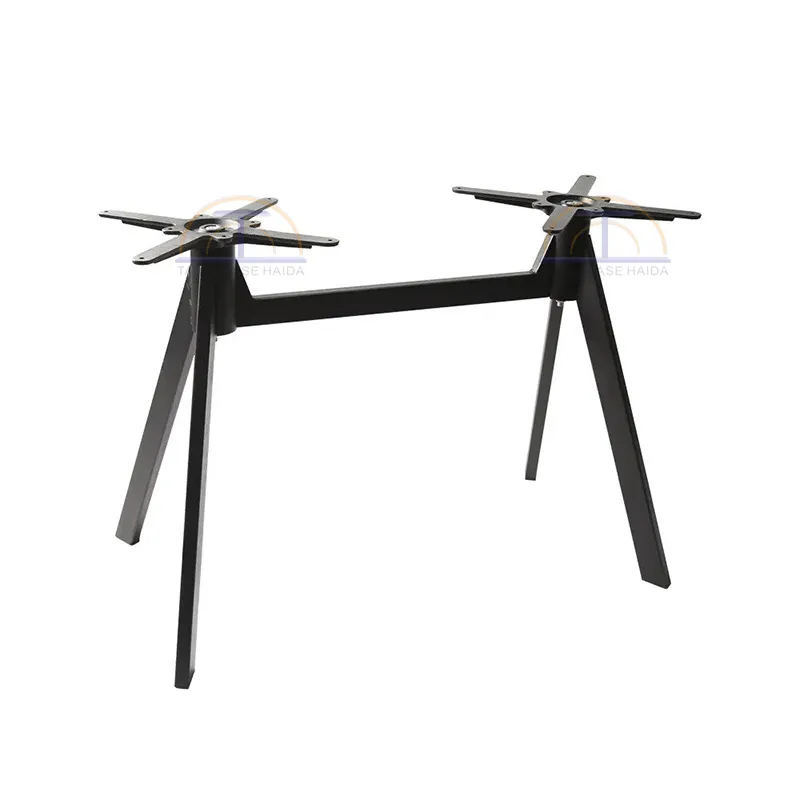
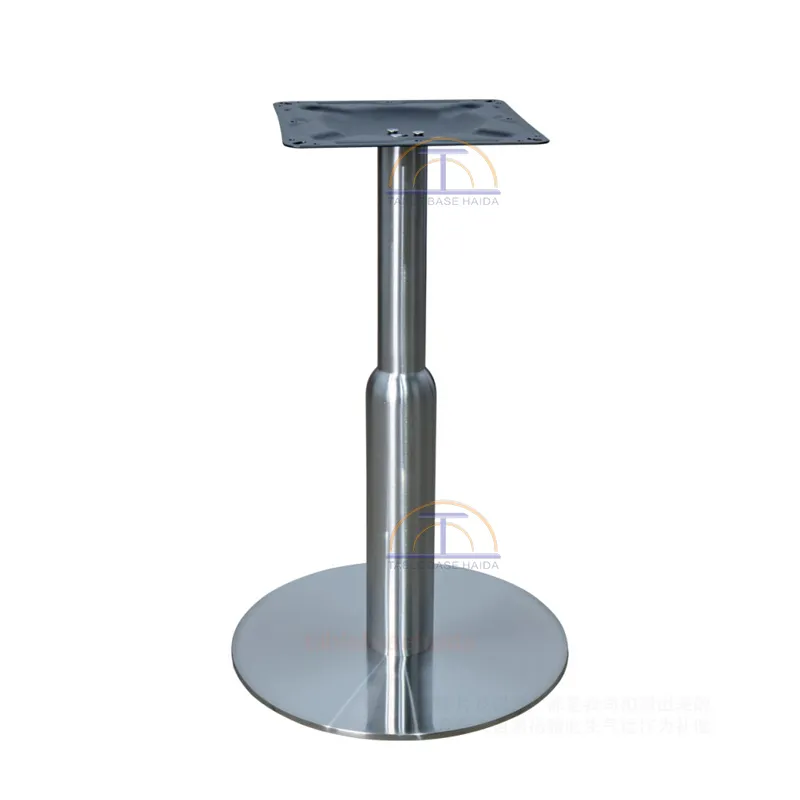
If buyers are reviewing an existing stainless steel model, they can compare the sample against a product specification such as the Stainless Steel Table Base HD-J124 Square Modern Restaurant Use. For heavy-duty restaurant projects, buyers may also compare the approved sample with a stable cast iron option such as the Heavy-Duty Cast Iron X-Base HD-J053 for Commercial Dining.
If the sample is for a custom project, buyers should mark all approved dimensions clearly and keep them as the production reference.
4. Inspect Finish, Color and Surface Texture
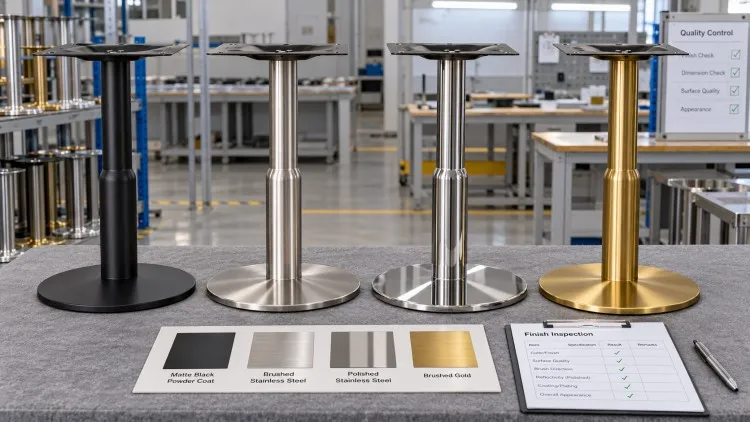
Finish is one of the most important sample approval points. For table bases used in restaurants, cafés, hotels and commercial interiors, finish affects both appearance and long-term use.
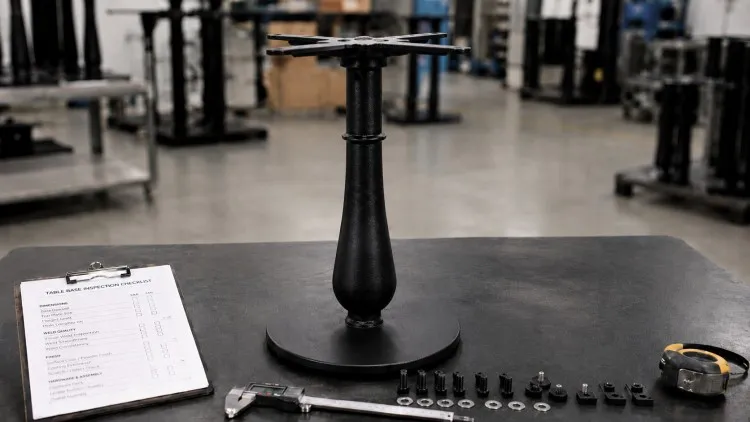
Buyers should check whether the finish matches the required color, gloss level, texture and project style. For powder-coated bases, check color consistency, surface coverage, orange peel, scratches and exposed edges. For stainless steel bases, check brushing direction, polishing quality, fingerprints, welding marks and surface protection.
Finish approval checklist:
- Color matches approved sample or color code
- Gloss level is acceptable
- Surface texture is even
- No obvious scratches or dents
- No exposed metal on edges
- No visible coating bubbles
- Brushed direction is consistent
- Stainless steel surface is clean and protected
Buyers sourcing premium or food-service-oriented products can review options under stainless steel table bases when comparing finish requirements. For indoor restaurant projects requiring a stable and cost-effective base, cast iron table bases may also be used as a comparison category.
For repeat orders, buyers should keep a finish sample or approved photo record to reduce batch-to-batch color differences.
5. Review Welding, Joints and Structural Details
Welding and connection points affect the strength and appearance of metal table bases. Buyers should not only look at the front view. They should also check the underside, joint areas, mounting plate and column connection.
For heavy-duty restaurant bases, welding quality and structural alignment are especially important because the base may be used daily in high-traffic dining areas.
Welding and structure checklist:
- Welds are clean and consistent
- No sharp edges around welded areas
- No obvious gaps or cracks
- Column is vertically aligned
- Base sits flat on the floor
- Top plate is firmly connected
- No loose structure after assembly
- No visible deformation after tightening screws
If a sample looks good in photos but feels unstable after assembly, the buyer should not approve it for mass production until the issue is corrected.
6. Test Flatness, Stability and Leveling
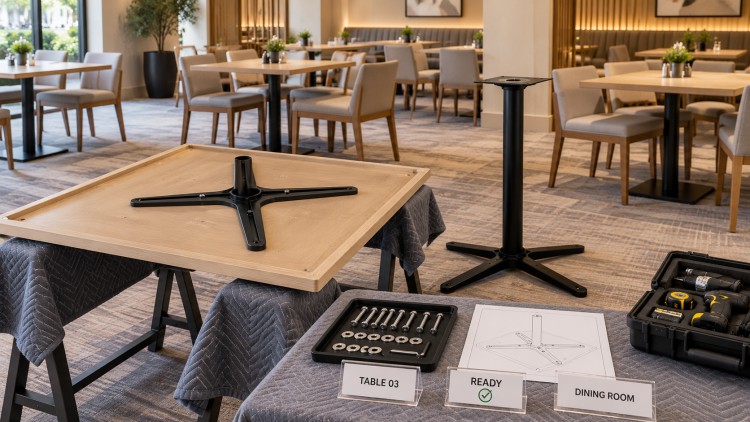
A commercial table base should support the tabletop without visible wobbling. Before approving the sample, buyers should place the base on a flat floor and test stability after assembly.
Flatness and leveling are especially important for restaurant dining areas, cafés, bars and hotel projects. If the sample already wobbles before the tabletop is installed, it may create larger problems after mass production.
Stability checklist:
- Base sits flat on the floor
- No obvious wobbling after assembly
- Leveling glides can be adjusted smoothly
- Top plate remains level
- Column does not tilt
- Base can support the intended tabletop size
- No movement after screws are tightened
If the table base will be used with heavy tabletops, buyers should also test the sample with a similar tabletop size and weight whenever possible.
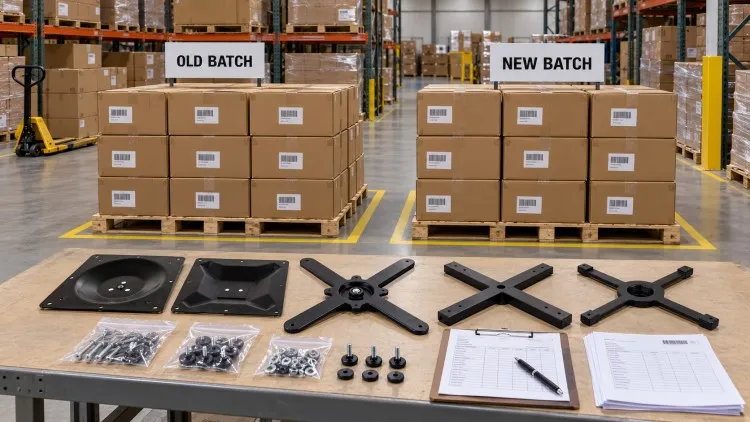
7. Confirm Hardware Bag and Assembly Parts
Many after-sales problems come from small missing parts. Before approving a table base sample, buyers should check the hardware bag carefully.
The hardware bag should match the installation structure. Screws, bolts, washers, leveling glides and assembly instructions should be complete and easy to identify.
Hardware checklist:
- Screws and bolts are complete
- Washers or nuts are included if required
- Leveling glides are included
- Hardware bag is sealed properly
- Parts are not mixed or loose inside the carton
- Spare parts are included if requested
- Assembly sequence is clear
- Hardware matches the approved sample
For wholesale and project orders, buyers should also confirm whether the hardware bag needs a label, SKU code or private label mark.
8. Check Packing, Carton Mark and Protection
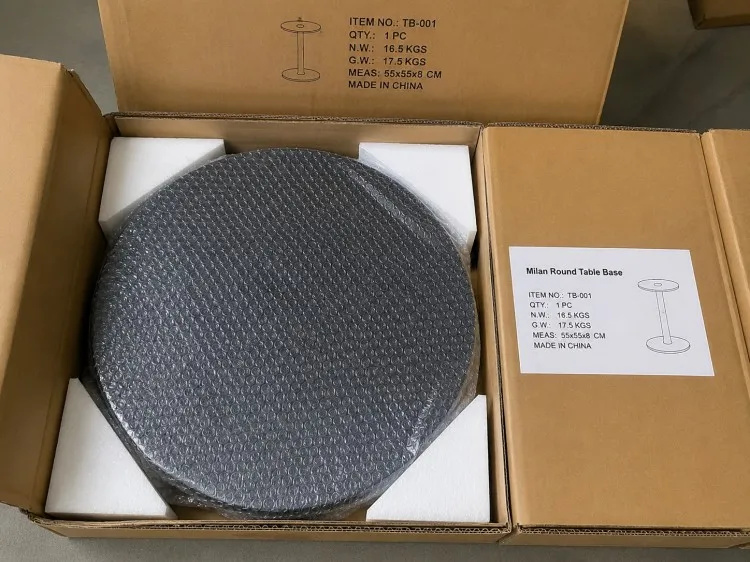
Packing should be reviewed at the sample stage, not only before shipment. For table base orders, proper packing helps reduce freight damage and makes warehouse handling easier.
Buyers should check whether each part is protected properly, whether the carton is strong enough, and whether the packing method matches the approved order requirements.
Packing checklist:
- KD packing or assembled packing is confirmed
- Surface is protected against scratches
- Corners and edges are protected
- Hardware bag is fixed inside the carton
- Carton size is acceptable
- Carton mark is correct
- Product model and quantity are clear
- Barcode or SKU label is correct, if required
- Packing can support bulk shipping
For private label or dealer orders, carton marks, labels and manuals should be approved before mass production to avoid rework.
9. Review Assembly Instructions and Installation Logic
A table base sample should not only be approved as a product. It should also be approved as an installable item.
Buyers should assemble the sample once and check whether the installation steps are clear. If the end customer is a restaurant, hotel, dealer or contractor, unclear installation can create complaints even when the product itself is acceptable.
Assembly checklist:
- Assembly steps are easy to understand
- Screws match the correct holes
- No special tools are required unless specified
- Parts fit together smoothly
- Top plate aligns with the column
- Base does not twist after tightening
- Installation time is acceptable
- Instructions match the actual sample
If instructions are unclear, buyers should ask the supplier to revise them before bulk packing.
10. Take Photos and Create a Sign-Off Record
Sample approval should be documented. Verbal approval is not enough for B2B production.
Buyers should keep photos, videos and written notes for every approved detail. This record helps both sides compare the mass production goods with the approved sample later.
Recommended approval records:
- Front, side and bottom photos
- Close-up photos of finish
- Close-up photos of welds
- Top plate and screw hole photos
- Hardware bag photo
- Packing photo
- Carton mark photo
- Assembly video
- Written approval date
- Approved model and version number
A clear approval record can reduce misunderstanding when the order enters production.
11. Common Mistakes in Sample Approval
Many buyers approve samples too quickly after checking only the appearance. This can create problems later when bulk production starts.
Another common mistake is approving the product sample but forgetting to confirm packing, hardware, labels or assembly instructions. These details may seem small, but they affect the final customer experience.
Mistakes to avoid:
- Approving photos only without assembly test
- Not checking the underside of the base
- Ignoring weld quality
- Not confirming finish consistency
- Forgetting hardware bag details
- Not checking carton mark or labels
- No written sign-off record
- No reference sample or approved photos kept
12. How Haida Supports Table Base Sample Approval
For commercial table base buyers, sample approval should connect product design, production details and bulk order requirements. A qualified supplier should help buyers confirm not only the product appearance, but also dimensions, finish, stability, packing and installation details.
Haida provides multiple commercial table base categories, including cast iron, aluminum, steel and stainless steel options. For standard orders, buyers can confirm existing models. For custom or project orders, buyers can review samples based on drawings, finish requirements, packing needs and application scenarios.
Before mass production, buyers can share their sample feedback, approved photos, tabletop size, finish requirements and packing details. This helps the supplier align production with the approved standard and reduce avoidable order issues.
To review a sample or discuss a pre-production table base order, buyers can contact Haida for sample approval support with model number, drawings, finish requirements, tabletop size and target order quantity.
13. FAQ
Q: What should buyers check before approving a commercial table base sample?
Buyers should check model, dimensions, finish, welds, flatness, stability, hardware bag, packing, carton mark, assembly instructions and written approval records.
Q: Is a finish sample enough for mass production approval?
Not always. A finish sample confirms color and surface effect, but buyers may still need to approve the full table base structure, hardware, packing and assembly details.
Q: Should buyers assemble the table base sample before approval?
Yes. Assembly testing helps buyers check hole alignment, screw matching, stability, leveling glides and installation logic before mass production.
Q: Why should packing be checked during sample approval?
Packing affects shipping damage, warehouse handling and customer installation. If packing is not confirmed early, it may cause rework or complaints after bulk production.
Q: What is a golden sample?
A golden sample is the approved reference sample used as the standard for mass production. It should represent the confirmed structure, finish, dimensions, hardware and packing details.
14. Conclusion
Sample approval is one of the most important steps before commercial table base mass production. It helps buyers confirm the product standard before committing to bulk orders.
A complete sample review should cover dimensions, finish, welds, stability, hardware, packing, labels, assembly and written sign-off records.
For importers, furniture brands and project buyers, the best sample approval process is not only about checking a single product. It is about making sure the supplier can repeat the approved standard during mass production.