When restaurant buyers place a bulk order for table bases, most delays and misunderstandings do not come from the quotation itself. They usually come from details that were not clarified early enough.
At Haida, we focus on commercial table bases and related furniture solutions for restaurants, hotels, bars, and outdoor spaces, so we see the same buyer questions come up again and again before production begins.
This guide is built around those common concerns and is meant to help restaurant buyers make clearer decisions before placing a bulk order.
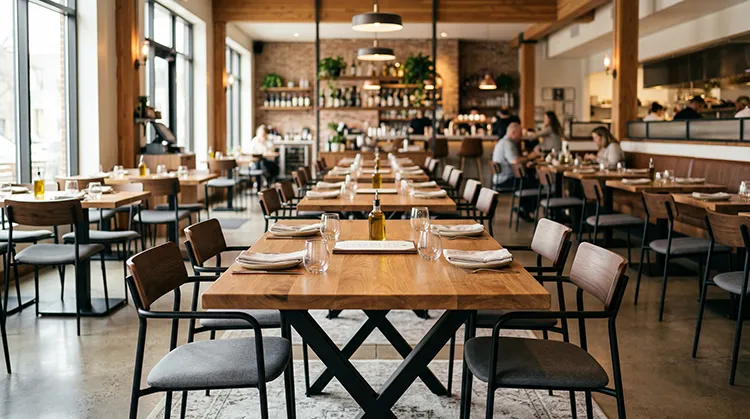
1) Is this supplier built for bulk restaurant orders?
This is often the first real question behind an inquiry. Buyers want to know whether a supplier can support repeat orders, commercial standards, and project coordination instead of handling only small one-off orders.
Haida’s public company information presents it as a factory-direct manufacturer focused on wholesale table bases and commercial furniture solutions, which is the kind of positioning many B2B buyers look for first.
2) Can we review a sample before mass production?
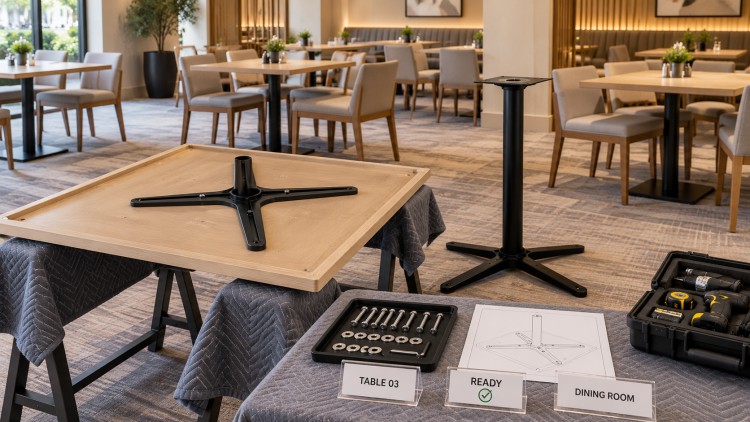
For restaurant projects, a sample is usually about more than appearance. Buyers often want to verify the height, finish, weld quality, and overall stability against the actual tabletop and seating layout.
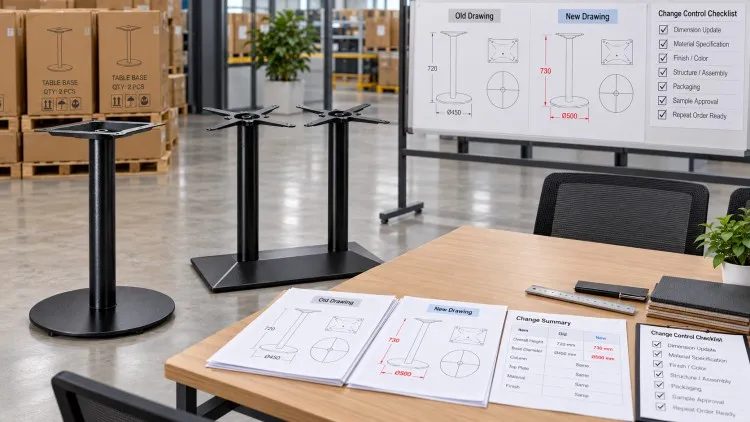
Haida’s published OEM/ODM process says a project can start from a drawing, a 3D file, or even a concept image, and then move into prototype confirmation before mass production.
If your project includes custom requirements, you can review our custom metal table legs OEM/ODM process before approving a sample.
3) How long will sample development take?
Sample timing affects the entire purchasing schedule because project delays often begin during review and revision rather than during mass production itself.
According to Haida’s process guide, a physical sample for standard metal fabrication can often be completed within 7 to 10 days, which gives buyers a useful planning baseline.
Buyers should still leave time for comments, revisions, and internal approval on their own side.
4) Do we need a pre-production sample?
If the order is based on a proven standard model, the process may move faster. But when the project includes custom size, finish, logo, structure, or packaging, a pre-production sample is usually the safer option.
Haida’s published workflow is built around design review, prototyping, tooling when required, and mass production only after approval, which supports this more cautious approach.
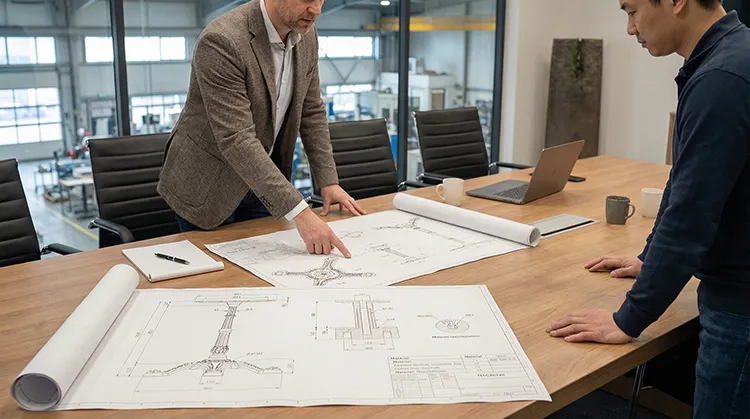
5) What really affects bulk lead time?
Many buyers ask for one lead-time number, but actual delivery timing is shaped by several connected steps. Drawing review, sample approval, tooling, production scheduling, quality checks, and packing all affect the final timeline.
Haida’s OEM/ODM guide explicitly includes manufacturability review, prototyping, mold or tooling development for unique shapes, and production plus QC after approval.
6) Are there standard models that can move faster?
Not every restaurant project needs a fully custom base. In many cases, choosing a standard and proven model reduces risk, cost, and development time.
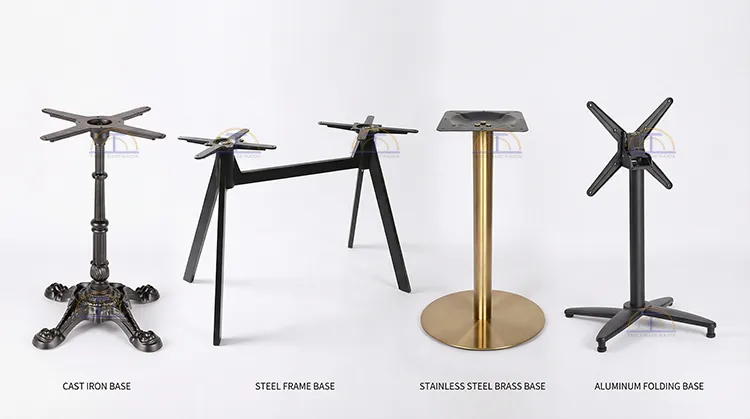
Haida’s public product range covers cast iron, steel, stainless steel, aluminum table bases, and multiple tabletop categories, giving buyers several standard directions before moving into customization.
If speed matters, buyers can first browse our standard table base options before deciding whether custom development is necessary.
7) How is QC handled before shipment?
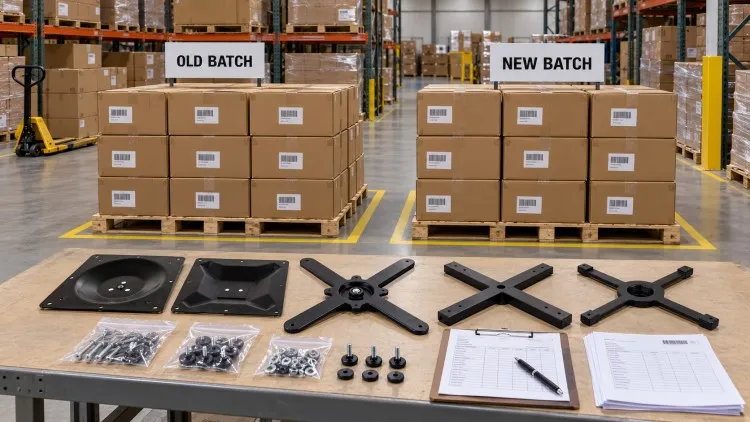
At bulk-order level, QC matters more than marketing language. Buyers need to know what is checked, when it is checked, and how fit and finish problems are controlled before shipment.
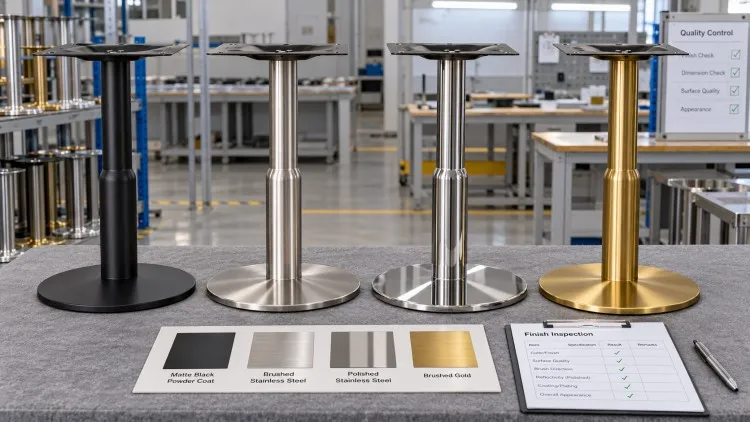
Haida says its QC process includes welding checks, finish inspection, and random assembly tests on 5% to 10% of the batch to verify alignment and fit.
8) How should the goods be packed for export?
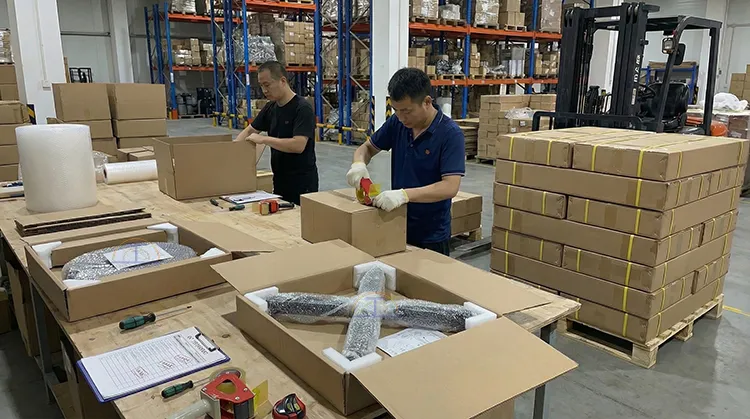
Packing is not just a freight detail. It affects damage rates, loading efficiency, unloading at the job site, and the condition of the goods when they finally arrive.
Haida’s public company information describes secure packaging and careful container loading as part of its worldwide shipping process, which is why buyers should confirm packing expectations early in the order.
9) What support is available during and after the order?
Strong support usually starts before shipment. Buyers often care about drawing confirmation, packaging details, delivery updates, and replacement parts just as much as the product itself.
Haida’s website publicly lists inquiry and contact channels including email, phone, WhatsApp, and a contact form, which is a practical sign of how business communication is structured for buyer follow-up.
When the project is ready to move forward, buyers can contact our team for drawings, quotations, and order follow-up.
10) Can this supplier support repeat orders over time?
A bulk order is rarely just one shipment. Restaurant groups, contractors, and importers usually want consistency across future orders, not just a good first transaction.
Haida’s public positioning emphasizes factory-direct supply, consistent quality, and ongoing support for B2B partners, which aligns with what repeat-order buyers usually expect from a long-term supplier.