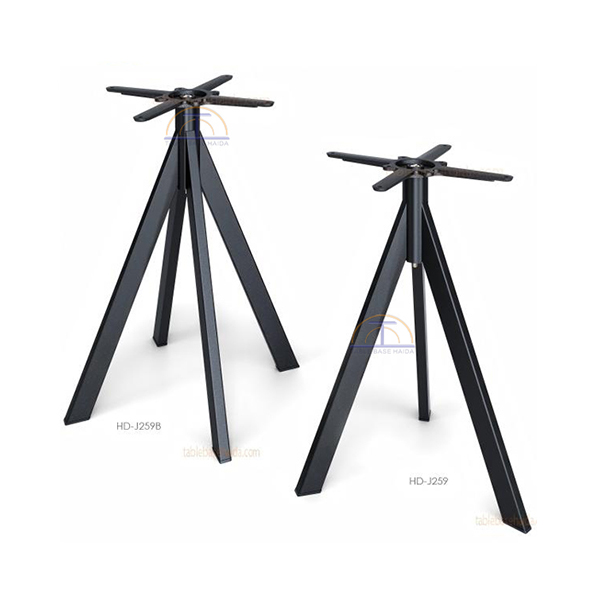
For B2B buyers, lead time is never just a number on a quotation sheet. It affects opening schedules, installation planning, container booking, and how smoothly a project moves from approval to delivery.
If you are still deciding between a standard model and a custom order, it helps to first review Haida’s Products page or the main homepage to see whether your project is closer to a stock-friendly item or a customization request.
Haida presents itself as a factory-direct manufacturer with ongoing product development and one-stop furnishing capabilities, so buyers often work with it on standard table bases, custom requests, or a mix of both.
What Shapes Lead Time
Lead time usually depends on four linked stages: sample review, pre-production confirmation, mass production, and shipment preparation.
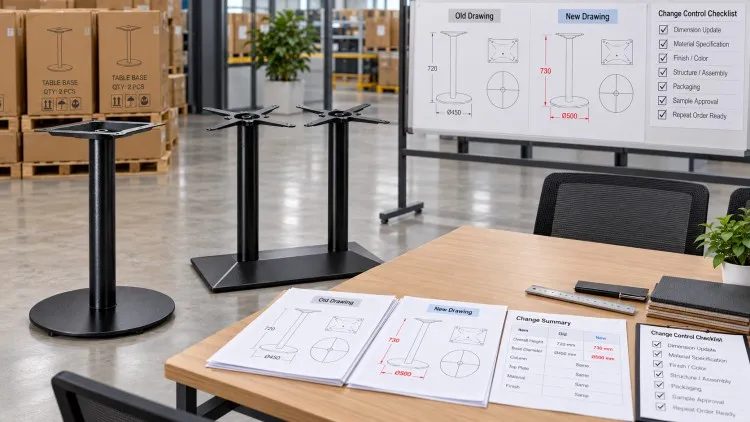
For custom orders, Haida’s published OEM/ODM workflow shows that projects normally begin with drawing review, engineering evaluation, and prototype confirmation before bulk production starts.
That is why asking only “How many days?” often gives an incomplete answer. A more useful question is which stage the order is in now, and what still needs to be approved before production can move forward.
If the order is based on existing categories such as Steel Table Base, Cast Iron Table Base, or Aluminum Table Base, the schedule is usually easier to control than for a fully new development.
Samples and Approval
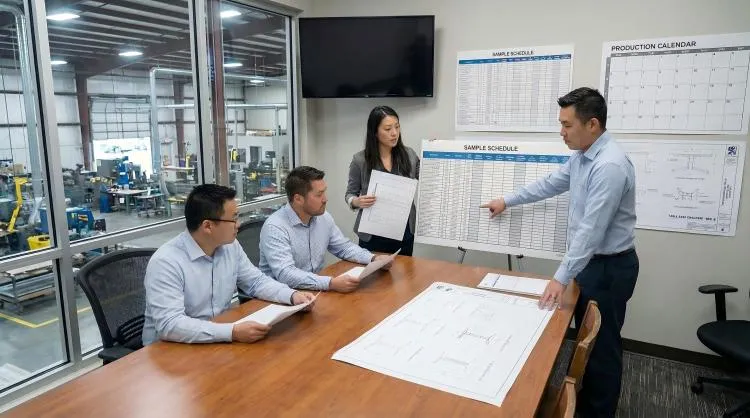
For many buyers, the first timing mistake happens before production even starts: they count factory days, but forget that decision-making and approval also take time.
In Haida’s current cooperation setup, the sample cycle is usually around 15 days.
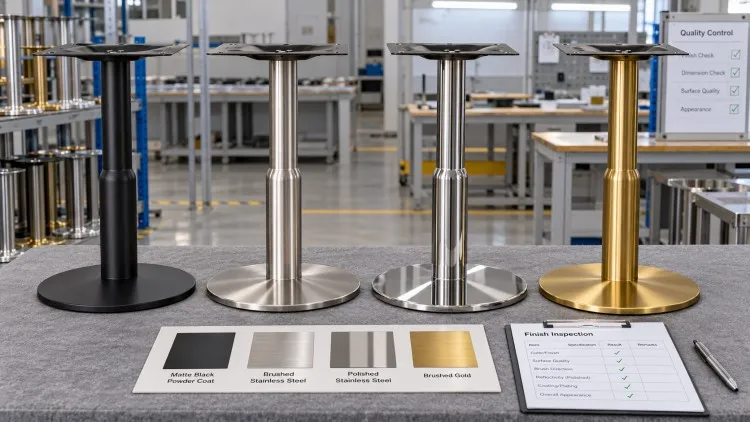
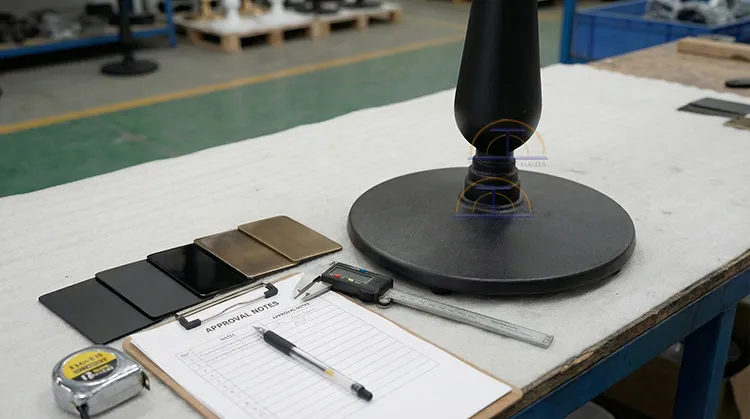
This stage is used to confirm size, finish, structure, and whether the base really matches the tabletop or project setting.
Haida’s OEM/ODM article describes prototyping as the stage where customers verify finish, welding quality, and real-life proportions before committing to mass production.
If your project is not fully custom but still needs structural or finish adjustments, Haida’s article Custom Metal Table Legs: From Design Sketch to Mass Production is a useful reference for understanding how feasibility is reviewed before bulk production begins.
Haida’s sample policy is straightforward: the sample fee is charged at double rate, and the extra part can be returned after a bulk order is placed.
If the buyer does not want to start with a separate sample order, Haida can first produce a pre-production sample for approval, then move into full production after confirmation.
This extra approval step may look slower at first, but it usually prevents much larger delays later.
Production Window
Once the sample or pre-production sample is approved, buyers can begin discussing the real production window.
For Haida’s current order rhythm, mass production is generally around one month after approval.
That timeline includes much more than workshop time alone. It also covers material preparation, welding, surface finishing, assembly checks, and packing readiness.
Our factory workflow includes advanced equipment such as laser cutting machines, automated welding systems, and powder coating lines, along with rigorous quality control from raw materials to finished products.
That matters because production lead time is shaped not only by fabrication speed, but also by how consistently a factory can move a batch through inspection and finishing.
For standard fast-ship directions, the schedule can be shorter. Based on Haida’s current order setup, simple standard steel bases, the cast iron HD-J086 direction, and the foldable aluminum HD-J152 line can usually move out within about 10–15 days, while aluminum folding or lift-function products remain part of Haida’s public product range.
If buyers want to compare standard categories before asking for an exact schedule, they can start from the Products page or browse the main material categories first.
Packing and Shipment
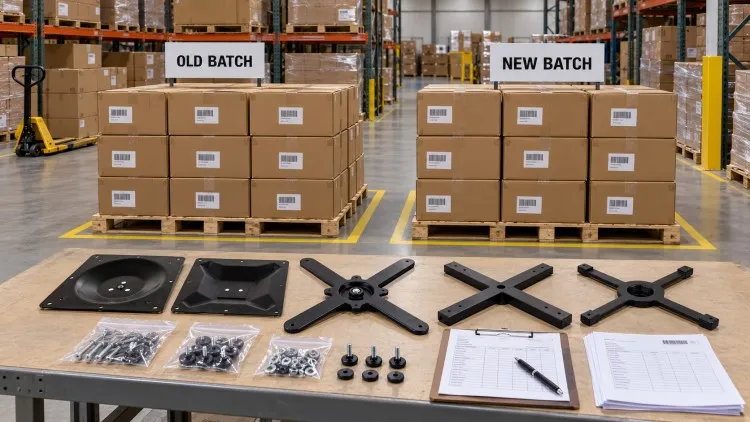
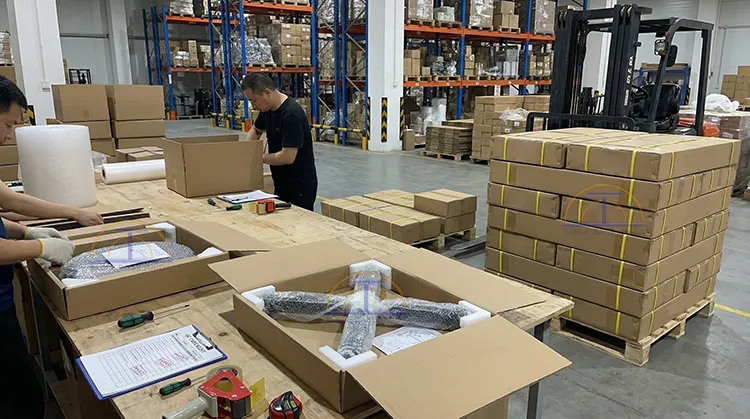
A common mistake is to think production ends when the base is finished. In export business, packing and shipment preparation are part of the lead time too.
For Haida’s current packing practice, standard models are usually packed 2 sets per carton.
If the model includes folding or height-adjustable functions, it is more suitable to pack 1 set per carton so the moving structure is better protected.
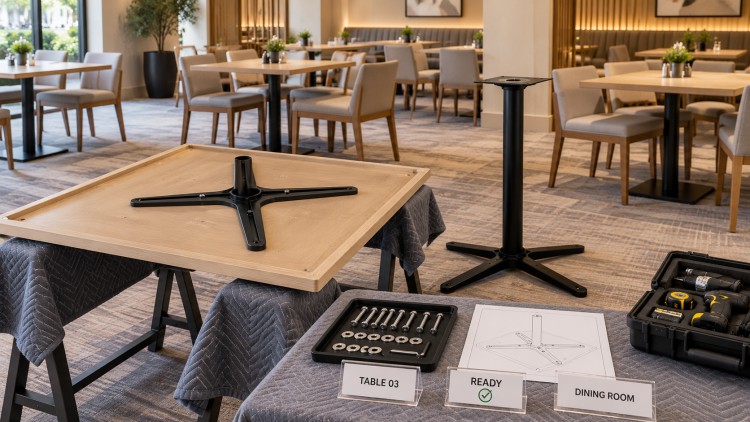
Haida also supports custom packaging, logo marking, mixed loading, pre-shipment photos or video confirmation, installation drawings, spare screws, and basic after-sales support.
For international orders, shipment timing is easier to discuss when both sides define delivery responsibility clearly. The ICC’s official Incoterms® rules page is a useful external reference for clarifying responsibilities, costs, and risks in goods delivery.
ICC also warns buyers to rely on official Incoterms sources, because incomplete or unofficial information online can create costly misunderstandings in trade contracts.
Planning the Schedule
If you only ask for one final shipping date, you may get an answer, but not a reliable project rhythm.
A better way is to plan the order by milestones:
- Drawing or item confirmation.
- Sample production, around 15 days.
- Sample feedback and revision if needed.
- Pre-production sample approval, if required.
- Mass production, around 1 month.
- Packing, shipment check, and booking coordination.
For buyers who are still getting familiar with Haida, it also helps to read the company’s About Us page and recent News updates together, because one explains factory capability and the other shows how the company communicates product and project topics over time.
When lead time is managed this way, buyers usually gain more control over opening dates, installation coordination, and payment planning.
Closing Notes
Lead time becomes easier to manage when buyers stop treating it as one number and start treating it as a process.
For commercial table base orders, the most useful questions are not only “How fast?” but also “What must be confirmed first?” and “What could slow the order down later?”
Haida’s published factory and customization content already gives buyers a clear framework: evaluate the project, confirm the sample, move into production, and keep shipment preparation aligned with the order stage.