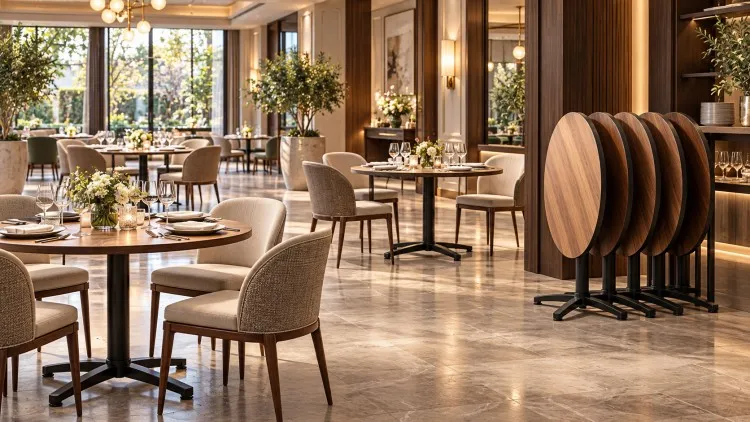
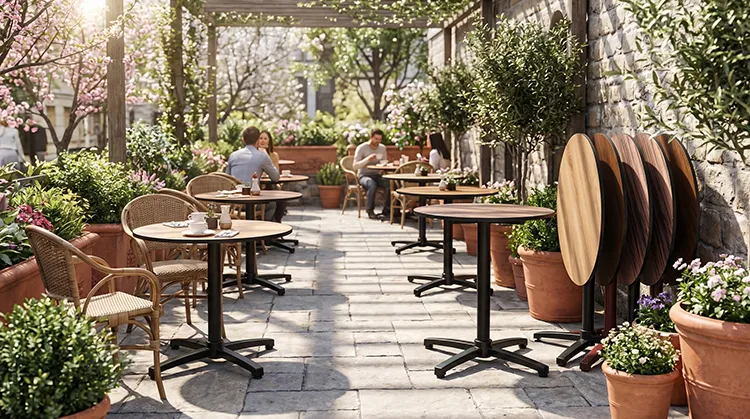
When outdoor dining becomes more active in spring and summer, many cafes, patios, and event spaces need furniture that is easier to move, store, and reset throughout the day. In these environments, flexibility matters almost as much as appearance and durability.
That is exactly where flip-top table bases stand out. Their foldable, space-saving structure makes them a smart solution for hospitality businesses that need smoother daily operations and more adaptable layouts.

Why do cafes need flexible layouts in spring and summer?
Spring and summer usually bring more patio traffic, more temporary seating changes, and more frequent cleaning and closing routines. Outdoor tables may need to be rearranged during peak hours, moved for weather changes, or stored after service.
For cafes with limited outdoor space, fixed table setups can quickly become inefficient. A more flexible base system helps staff respond faster without sacrificing the overall look of the space.
What is a flip-top table base?
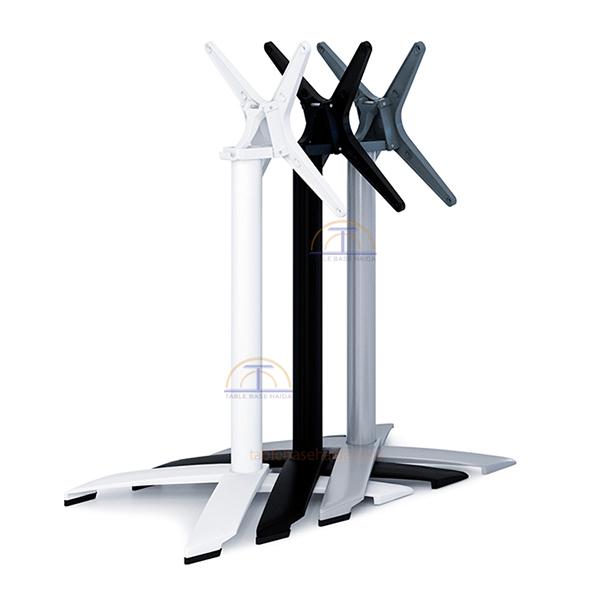
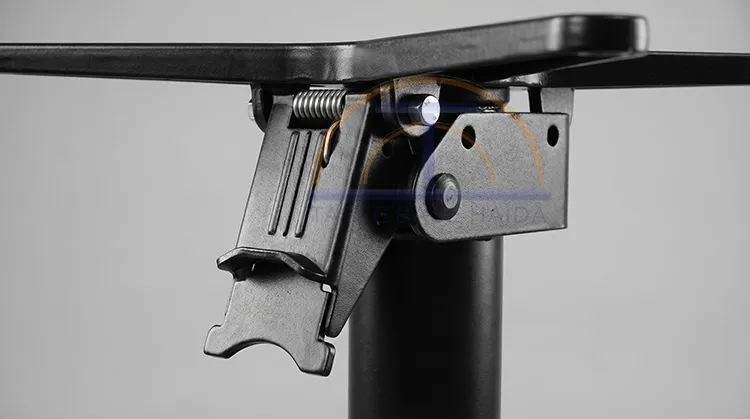
A flip-top table base is a table base with a mechanism that allows the tabletop to tilt upward into a vertical position. Once folded, the table takes up less floor space and is easier to store or move.
This design is especially useful in cafes, bistros, hotel patios, and event venues where layouts change often. Instead of fully disassembling tables, staff can quickly fold and clear them when needed.

What problems can flip-top bases solve?
The most obvious benefit is space saving, but the real value goes further than that. Flip-top bases can reduce the time and effort required for opening, closing, cleaning, and layout changes.
In real hospitality use, they help with:
-
Faster patio reset after service.
-
Easier temporary layout changes for groups or events.
-
Better use of limited storage space.
-
Quicker table movement during weather changes or cleaning.
For operators, these are practical workflow benefits rather than just product features.
Why are aluminum flip-top bases a strong choice?
Aluminum is one of the most practical materials for spring and summer outdoor use because it is lightweight, corrosion-resistant, and easier to handle during daily operation. Haida’s aluminum table base category is designed for lightweight outdoor and hospitality use, which makes it a strong match for this article’s use case.
If the project focuses on outdoor cafes, patios, or flexible seating zones, aluminum bases are often easier for staff to reposition while still offering good durability in commercial use.
Which spaces benefit most from flip-top bases?
Flip-top bases work particularly well in spaces that change layout often or need easier end-of-day storage. This includes cafes, bakery seating areas, hotel terraces, outdoor dining zones, and small event venues.
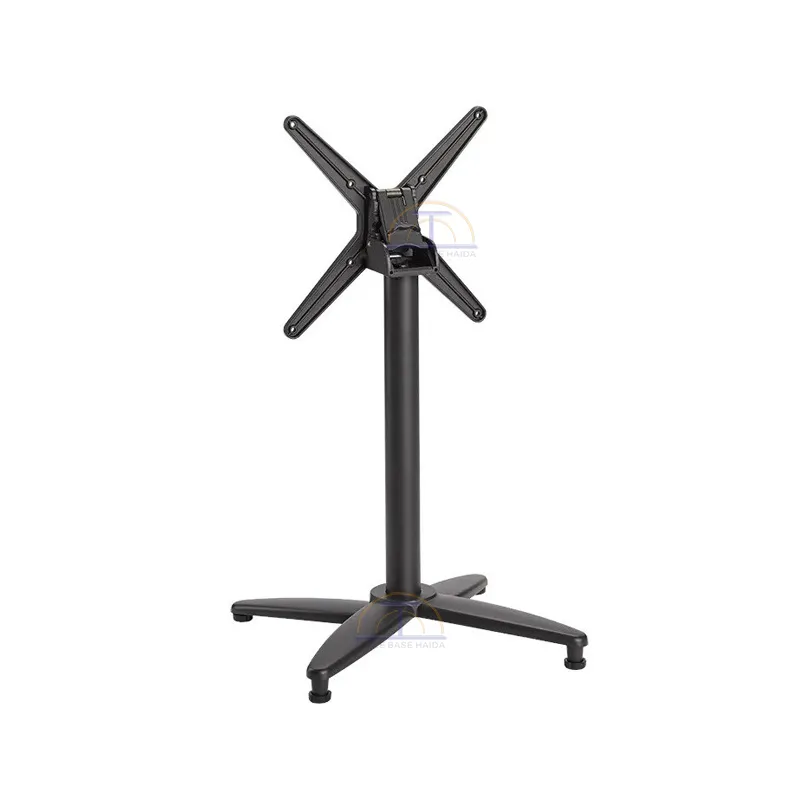
Haida’s HD-J277 product is described as a lightweight aluminum X-base with adjustable height, foldable structure, and stackable storage, designed for cafes, bars, restaurants, and event venues.
That makes it a useful example of how a flip-top structure can support both daily dining and more flexible venue use.
What should buyers check before choosing one?
A flip-top function is useful only when it matches the real operating environment. Buyers should not focus on the folding feature alone. They should also evaluate daily handling, outdoor suitability, and storage practicality.
A practical checklist includes:
-
Is the base light enough for regular staff use?
-
Is the folding mechanism stable and easy to operate?
-
Is the finish suitable for outdoor exposure?
-
Can the table be nested or stored efficiently?
-
Does the size match the intended tabletop and seating layout?
Haida’s HD-J277 lists a height range of 720–1120 mm, aluminum construction, a folding top plate, and KD packing, all of which are useful details for buyers comparing flexibility and storage efficiency.
How do flip-top bases support storage and shipping efficiency?
For B2B buyers, furniture efficiency is not only about use on the floor. It is also about what happens in storage, handling, and shipping. A foldable base can reduce wasted space and simplify back-of-house organization.
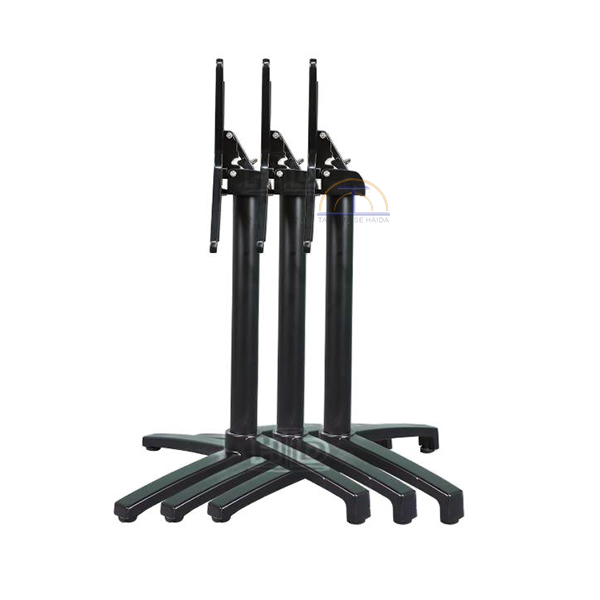
Haida’s HD-J152 and HD-J277 product pages both emphasize foldable or stackable structures for space-saving storage, reinforcing the practical value of this product type.
For buyers comparing options, the Adjustable Height Folding X-Base HD-J277 and the Lightweight Foldable Aluminum Base HD-J152 are two relevant product references.
Why does this matter for business operations?
A flip-top base is not just a convenience feature. In the right setting, it can improve labor efficiency, speed up resets, reduce storage pressure, and make the space easier to adapt for different service formats.
For cafes and outdoor venues operating through spring and summer, that kind of flexibility can directly support smoother daily management.