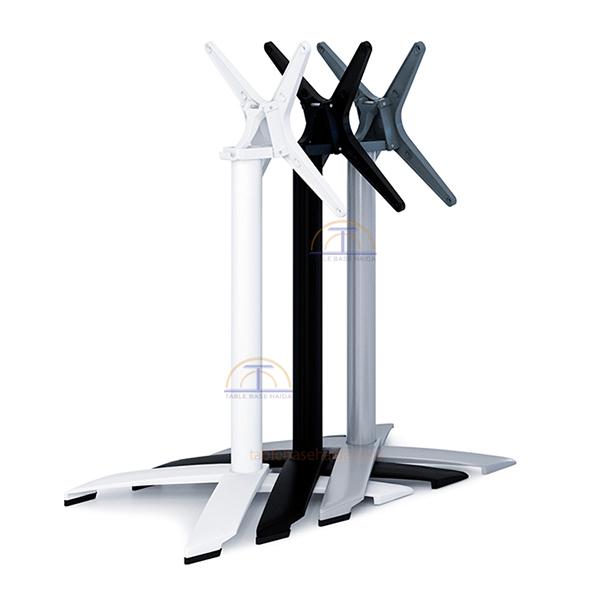
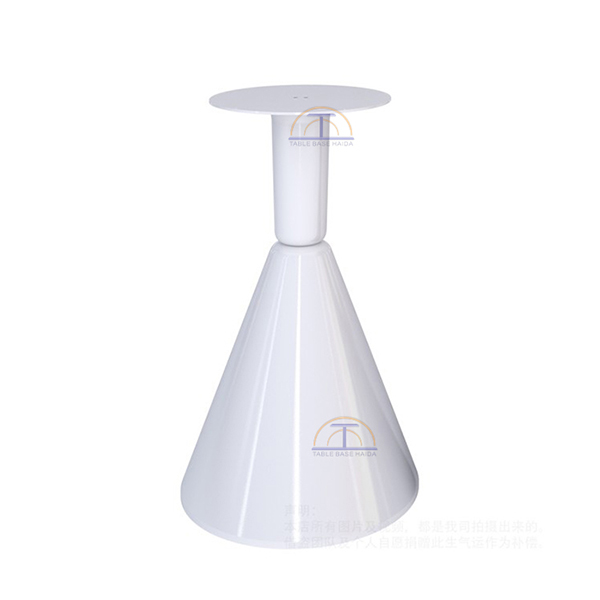
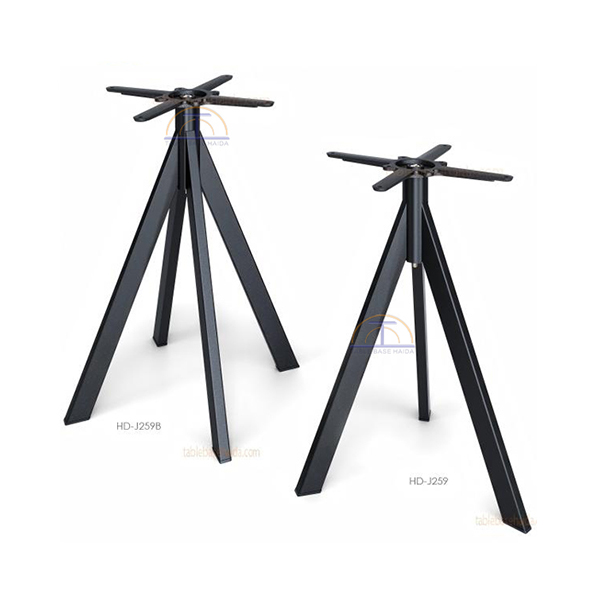
In commercial furniture, table bases are often overlooked, yet the material of the base is one of the key factors that determines stability, lifespan, and overall quality. This guide focuses on the three main metal materials—cast iron, stainless steel, and aluminum—to help restaurants, cafés, hotels, and distributors choose the right commercial table bases with a more professional perspective.
For commercial table bases, material affects far more than just the appearance. It directly impacts:
- Stability and load capacity: Denser and stronger materials perform better when supporting large or heavy tabletops with less wobbling.
- Rust and weather resistance: In hospitality and outdoor environments, moisture, cleaning chemicals, and weather exposure make corrosion resistance critical.
- Lifespan and maintenance cost: High-quality materials with proper surface treatment can significantly extend the life of the base and reduce replacement or repair costs.
- Overall design style: The texture, sheen, and form of the metal base play a major role in the look and feel of your restaurant, café, or hotel.
The three most common metal materials for commercial table bases are cast iron, stainless steel, and aluminum alloy. The comparison table below gives you a quick overview of their key characteristics.
- High load capacity: The density and weight of cast iron make it ideal for supporting large or heavy tabletops.
- Excellent stability: A heavy base keeps the center of gravity low, reducing wobbling and tipping when the table is bumped.
- Great value for money: Among metal materials, cast iron often offers a very competitive cost, making it suitable for bulk orders.
- Flexible shapes: It can be used to manufacture round, cross, or square bases in many designs.
- Heavy tabletops such as granite, marble, and thick solid wood
- High-traffic restaurants, fast-food chains, and bar areas
- Larger tables where stability is critical (4-seater, 6-seater, or communal tables)
- Heavier weight makes handling and moving more difficult
- If the coating is damaged, long-term exposure to moisture can cause rust
- The look can feel “industrial,” which may not fit every interior style
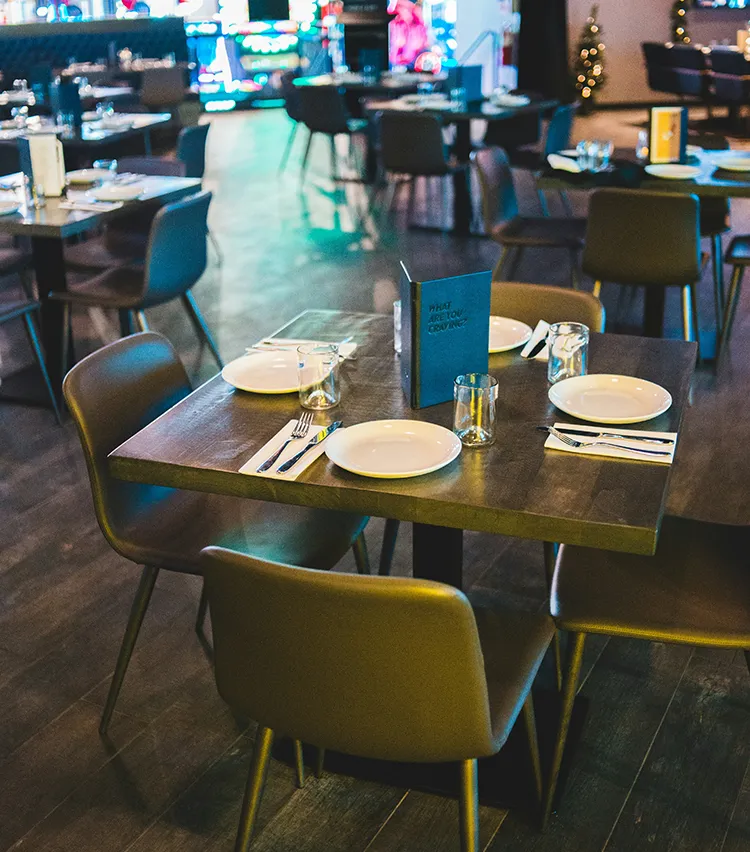
- Excellent corrosion resistance: Especially 304 stainless steel, which performs very well in humid or semi-outdoor conditions.
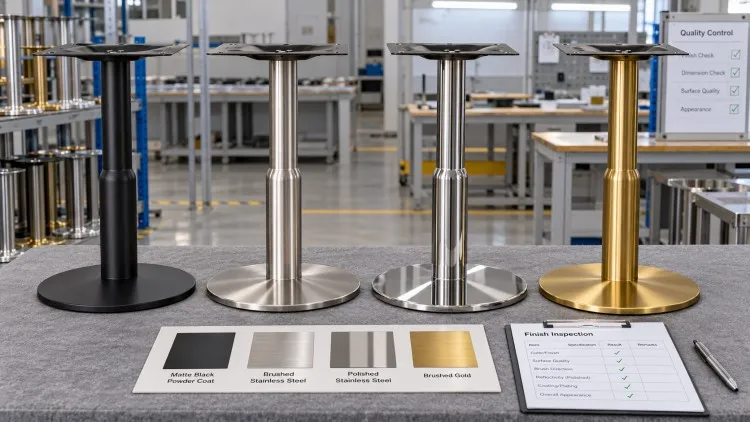
- Modern look: Brushed or polished finishes fit contemporary, minimalist, or upscale interiors.
- Easy to clean: Ideal for hygiene-sensitive environments.
- 304 stainless steel: Offers better rust resistance, ideal for outdoor areas, coastal regions, or high-end projects.
- 201 stainless steel: More economical and suitable for indoor projects with tighter budgets.
- When long-term corrosion resistance and brand image are key, 304 is usually the better choice.
- Cafés, hotel lobbies, and boutique restaurants
- Spaces that emphasize a modern or premium look
- Semi-outdoor or near-window locations with higher humidity
- Generally more expensive than cast iron
- Polished finishes can show fingerprints and require more frequent cleaning
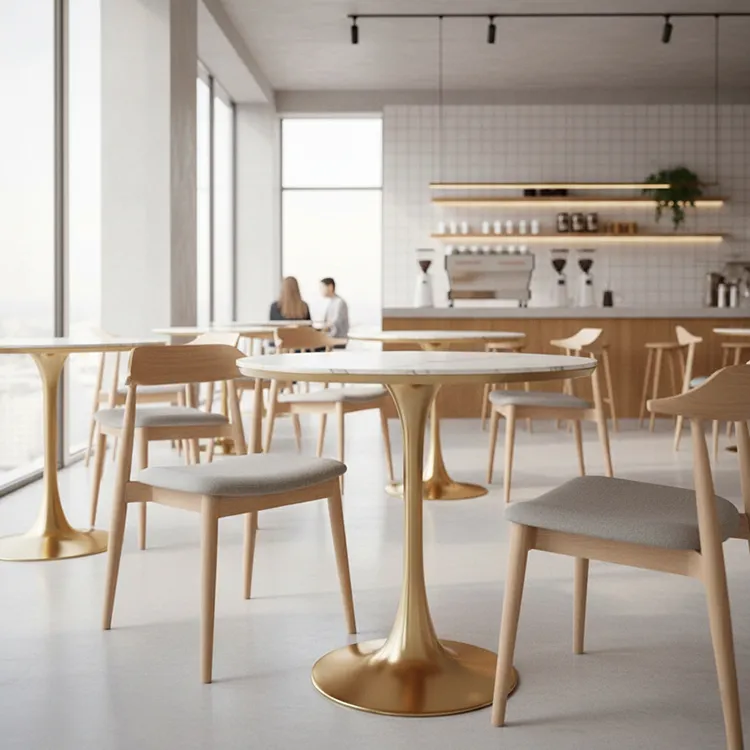
- Lightweight: Easy to move, ideal for spaces that frequently change layouts.
- Good corrosion resistance: When combined with powder coating or anodizing, it can work well in outdoor environments.
- Design flexibility: Fits modern and youthful interior styles.
- Cafés, pop-up stores, and small dining spaces
- Tables that need to be moved, folded, or stored frequently
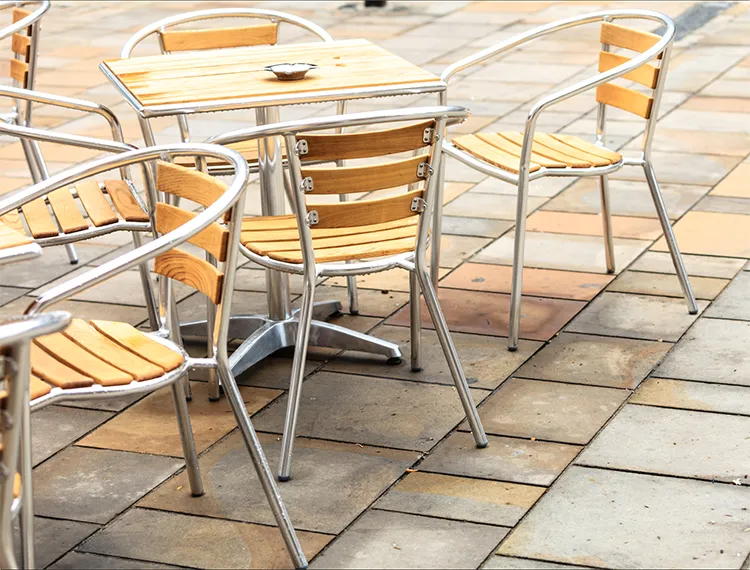
- Certain outdoor areas with proper protective finish
- Lower load capacity and stability compared with cast iron
- Not recommended for very large or very heavy tabletops
- Typically mid-range in cost between cast iron and stainless steel
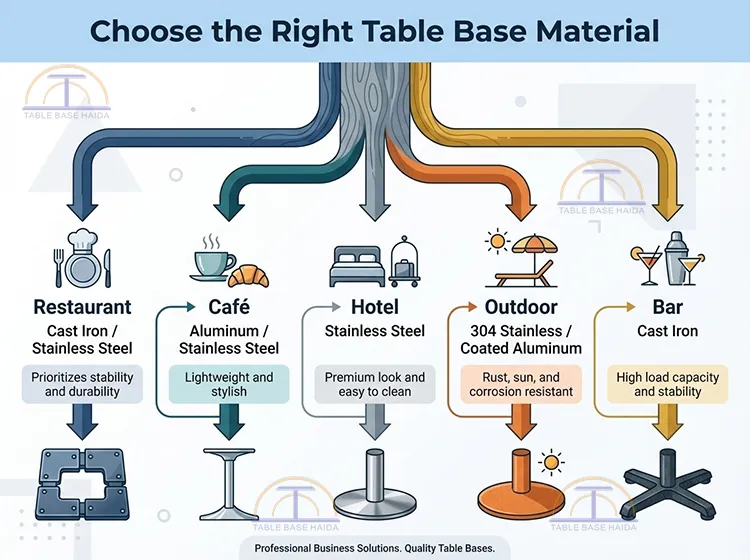
- Tight budget: Cast iron bases offer the best balance between stability and cost.
- Medium budget: Consider aluminum or selected stainless steel options.
- Premium projects: Choose 304 stainless steel to highlight brand image and long-term durability.
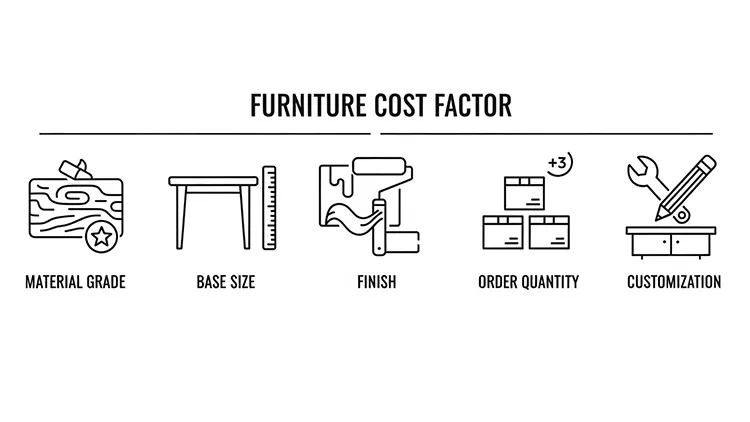
The cost of a table base is influenced by:
- Type and grade of material (e.g., 201 vs 304 stainless)
- Base size and thickness
- Surface finish (powder coating, plating, brushed, polished, etc.)
- Order quantity and customization (non-standard sizes, special colors, branding)
Cast iron, stainless steel, and aluminum each have their own strengths. Some are more stable, some resist rust better, and others are lighter and easier to move. The “best” choice is not simply the most expensive or the most popular—it is the one that matches your space, tabletop, budget, and usage pattern. If you are planning a specific project, such as furnishing a new restaurant or upgrading a chain, feel free to share your tabletop sizes, applications, and budget.
We can recommend the most suitable material and base structure for your needs.