Making the Right Choice for Your Space
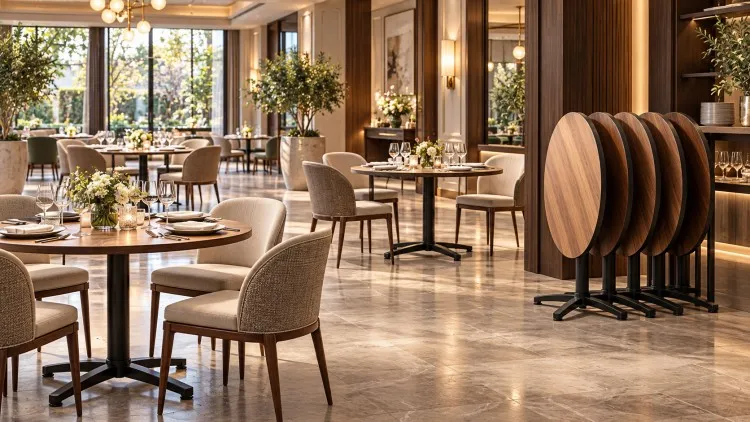
When selecting table legs or table bases for a commercial space, material choice is not only about appearance. It directly affects stability, durability, maintenance, and how easily your layout can adapt over time.
For restaurants, cafés, hotels, and outdoor projects, cast iron and aluminum are two of the most common options, but they serve different needs.
In general, cast iron is the stronger choice when maximum support and stability matter most. Aluminum is often the better fit when outdoor performance, lighter weight, and layout flexibility are priorities.
This guide looks at the decision from a practical commercial perspective so buyers can choose the right solution for their space.
Why Cast Iron Remains the Standard for Stability
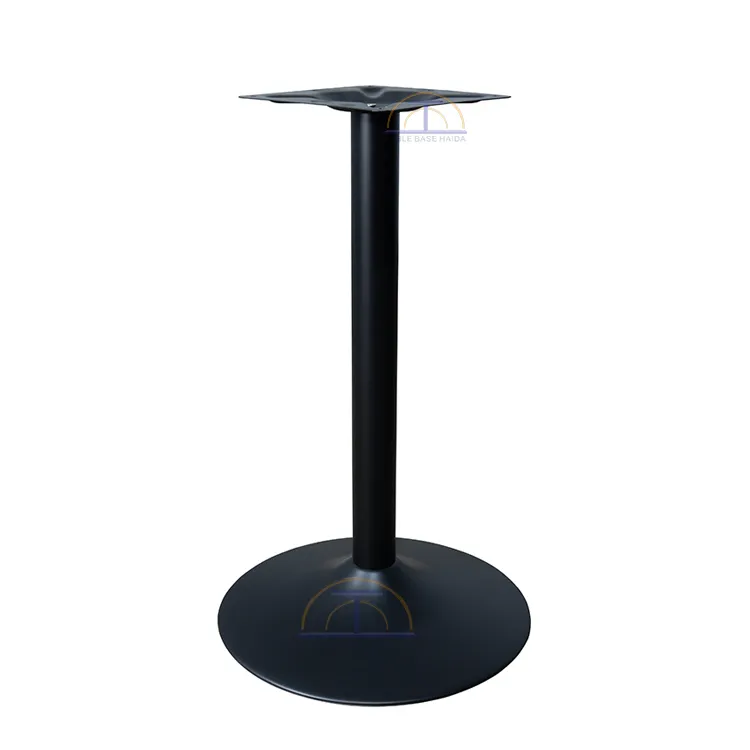
Cast iron table legs have long been a standard choice in commercial dining projects for one main reason: they are heavier, more stable, and better suited to demanding use. For projects using marble, granite, thick solid wood, or other heavy tabletops, cast iron usually performs better in load-bearing, anti-wobble support, and long-term structural reliability.
A product such as the Heavy-Duty Cast Iron X-Base is especially suitable for busy dining environments because its cast iron construction and X-base design create a larger, more dependable support footprint.

When Decorative Cast Iron Table Bases Make More Sense
If your project needs both stability and a stronger visual identity, a decorative cast iron option can make more sense than a purely functional base. Spaces such as French bistros, boutique cafés, hotel dining rooms, or vintage-inspired commercial interiors often benefit from a model like the Decorative Cast Iron Bistro Table Base.
In this type of setting, the base is not only a support component. It also contributes to the atmosphere of the space, adding visual character while still delivering the dependable strength of cast iron.
Why Aluminum Table Legs Work Better for Outdoor and Flexible Layouts
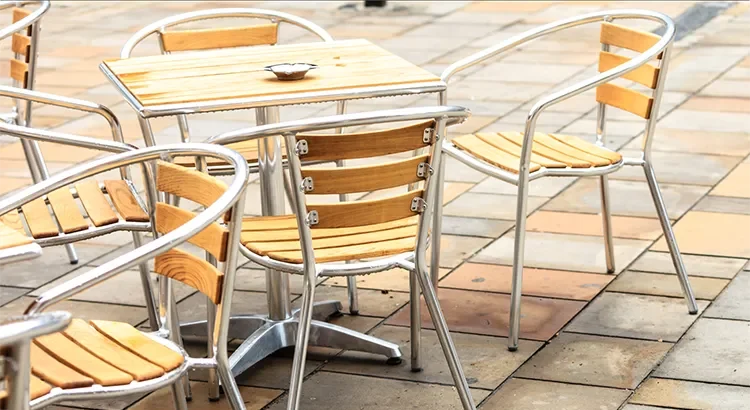
The greatest advantages of aluminum table legs are lighter weight and better weather resistance. In patios, sidewalk dining areas, hotel terraces, and semi-outdoor hospitality spaces, tables often need to be moved, rearranged, or stored seasonally.
If a project uses an unnecessarily heavy cast iron base in this kind of environment, stability may improve, but day-to-day operations become less efficient.
In those situations, a product like the Lightweight Aluminum Table Base For Outdoor Use is often a smarter solution because it combines aluminum-alloy construction, corrosion resistance, easier handling, and compatibility with common commercial tabletop sizes such as 600/700/800 mm.

If the Project Needs More Flexibility, Consider an Adjustable Aluminum Option
For some commercial spaces, being lightweight is not enough. The base may also need adjustable height or easier storage.
In venues that switch between different seating formats, or outdoor projects that move between dining-height and bar-height service, the Adjustable Aluminum Lift Table Leg can be a more practical choice than a standard fixed-height base.
Its aluminum X-frame structure combines stability, portability, and height flexibility, making it especially useful for dynamic hospitality operations.
Quick Decision Guide: Which Material Fits Which Space
If your project is an indoor restaurant, hotel dining room, or other space using heavier tabletops with a relatively fixed layout, cast iron should usually be the first option to evaluate. That is especially true for stable, heavy-duty structures or decorative commercial styles.
By contrast, if the project is outdoor, semi-outdoor, or frequently reconfigured, aluminum often makes more operational sense.

If You Want a More Premium Modern Indoor Look
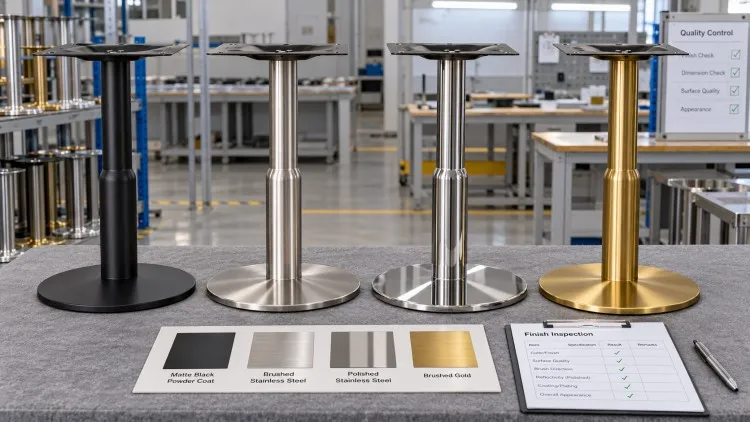
Some buyers are not choosing only between cast iron and aluminum. In many commercial interiors, the real priority is a cleaner premium look with modern surface finishes and a more polished project feel. In those cases, stainless steel can be introduced as a related recommendation inside the article.
The Brushed Stainless Steel Table Base is well suited to luxury restaurants, hotels, and design-led interiors, while the Square Stainless Steel Table Base fits modern restaurants, contract projects, and other clean-lined indoor commercial spaces.
Final Recommendation
The best table leg material is not the one that looks best in theory. It is the one that best matches your real operating conditions.
If your priority is supporting heavy tops, maximizing stability, and reducing wobble, start with cast iron. If your priority is outdoor use, lighter weight, and easier movement, aluminum is usually the smarter solution. If your priority is a premium modern indoor atmosphere, stainless steel is also worth evaluating.
-
For heavy-duty dining stability, start with HD-J053.
-
For a more decorative cast iron bistro style, look at HD-J086.
-
For lightweight outdoor use, consider HD-J147.
-
If you need adjustable height and more flexible operation, review HD-J278.
-
For refined indoor projects, HD-J123 and HD-J124 are also strong options.