A repeat order should not require buyers to redesign a table, but it should not rely on the model number alone. A familiar table base SKU can conceal revisions to mounting plates, glides, finishes, fasteners, folding components, packing or manufacturing drawings. Those differences may not appear on the quotation, yet they can affect installation and compatibility with tables already in service.
For importers, furniture dealers, restaurant groups and hospitality projects, the practical question is not simply “Can you produce HD-XXX again?” It is “Can the next batch match the approved configuration, and which changes must be reviewed before release?”
This guide explains a focused model-revision and change-control workflow. It does not replace general reorder forecasting, new-product selection or the restaurant replacement-base compatibility process.
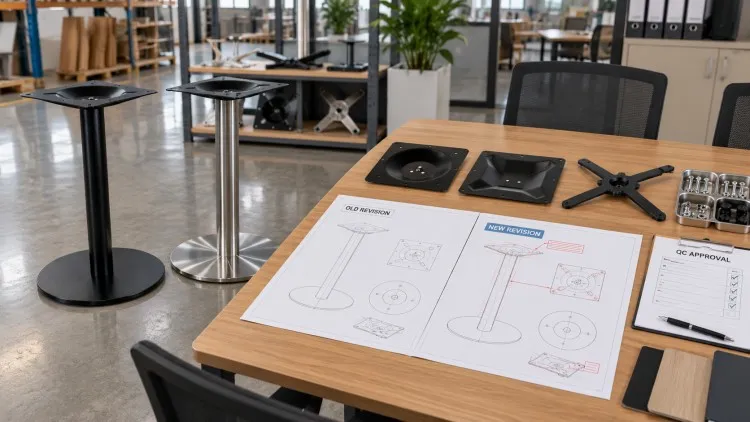
1. Why the Same Model Number May Not Mean the Same Configuration
A supplier may keep the commercial model number unchanged while updating a production drawing, sourcing a different glide, revising a top plate or changing the hardware kit. Some changes improve production efficiency without affecting the buyer. Others change how the base attaches to the tabletop or how a service part fits an older batch.
Separate the public model identifier from the approved configuration revision. For example, “HD-XXX / Rev B” is an illustrative document-control format, not a claim that a named Haida product has a Rev B. A change becomes relevant when it affects form, fit, function, appearance, serviceability, packing or an agreed contractual requirement.
2. Build a Baseline Record for Each Approved SKU
The baseline is the last configuration that the buyer actually approved and received. It should connect the supplier model, buyer SKU, purchase order, approval date, drawing revision, sample ID and packing version. Where possible, retain a representative physical finish sample and underside mounting photo.
The SKU Matrix explains how dealers organize commercially distinct items. For change control, go one level deeper: record the engineering and service details inside each sellable SKU, including the top-plate drawing, hole pattern, glide thread, fastener specification, finish reference and hardware-bag code.
3. Check the Interfaces Before Comparing Visual Appearance
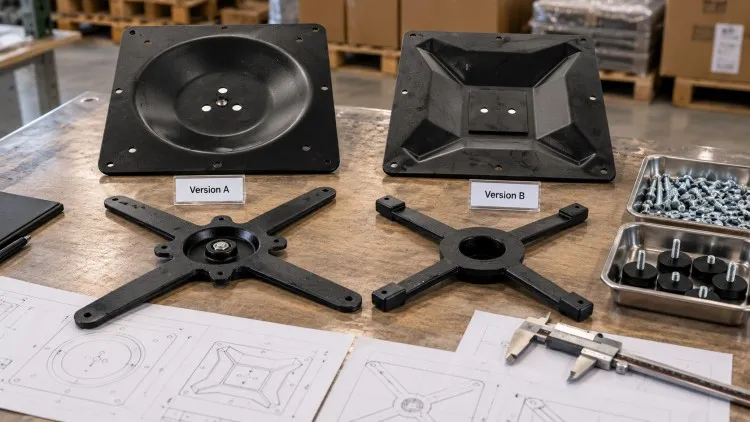
Start with the components that must fit something outside the base: tabletop inserts, underside drilling, bolts, feet, replacement glides and folding hardware. A new part can look nearly identical to the previous version while using different hole centers, thread engagement or fixing depth.
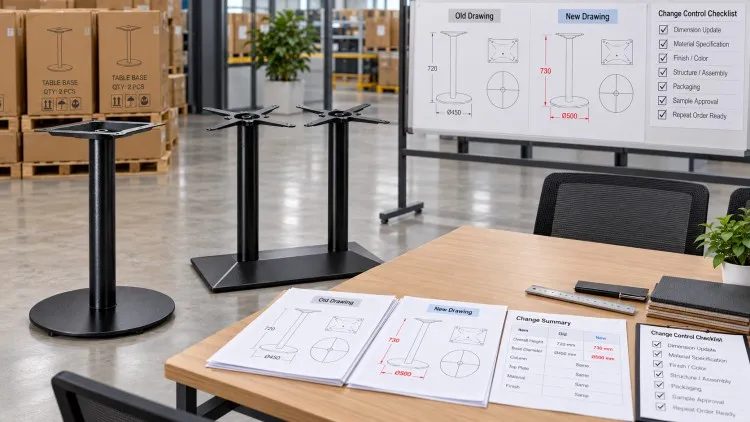
Use the Mounting Plate Guide to confirm plate geometry, hole coordinates, underside orientation and the approved drawing revision. When any interface changes, test the real tabletop and production-style hardware before approving a repeat batch.
4. Divide Changes Into Three Practical Release Classes
A useful system distinguishes documentation-only changes, changes that require compatibility evidence, and changes that create a new incompatible variant. The exact approval owner and test scope should be agreed between buyer and supplier, not inferred from a model code alone.
|
Release class |
Typical change |
Buyer action |
| A — Administrative | Document formatting or contact update; no physical-product impact | Buyer file update; confirm no drawing or SKU content changed |
| B — Controlled fit / finish | Top-plate revision, glide supplier change, new brushing reference, label or kit change | Compare old/new; run defined fit or finish checks; buyer approval before release |
| C — Non-interchangeable | Different mounting pattern, incompatible replacement part or changed functional geometry | Separate variant/SKU; complete validation; update stock and service records |
5. Inspect Finish Revisions Across Old and New Batches
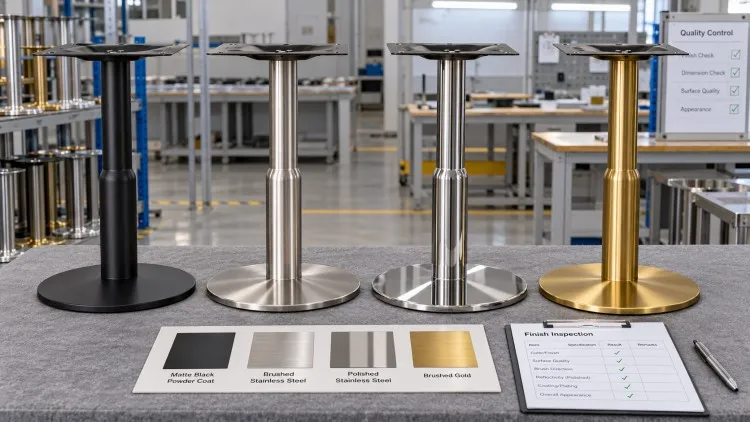
Finish continuity matters when replacement units will stand beside earlier installations. A black powder coat may change in gloss or texture even when the color name stays “black.” Brushed stainless steel may differ in grain direction, reflectivity or protective handling. Use an approved physical reference rather than relying on photographs alone.
The Finish Inspection Guide covers detailed surface inspection. For repeat orders, the decision is narrower: does the new batch need to match the older installed appearance, or is a documented appearance change accepted for a clearly separated project zone?
6. Match Hardware, Glides and Service Parts by Version
Screws, nuts, washers, leveling glides, caps and mounting components should be treated as version-controlled items when they affect fit or serviceability. Ask whether new hardware can be used with installed older bases and whether existing spare stock remains usable.
The Spare Parts Kits Guide is useful for labeling parts by model, code and batch. A practical change note should state “backward compatible,” “compatible only with a conversion kit,” or “not interchangeable,” with the result supported by a real fit check.
7. Review Product-Specific Interfaces: Four Haida Examples
The models below are examples of different structures currently offered by Haida. They are not evidence that these products have actually undergone undocumented revisions.
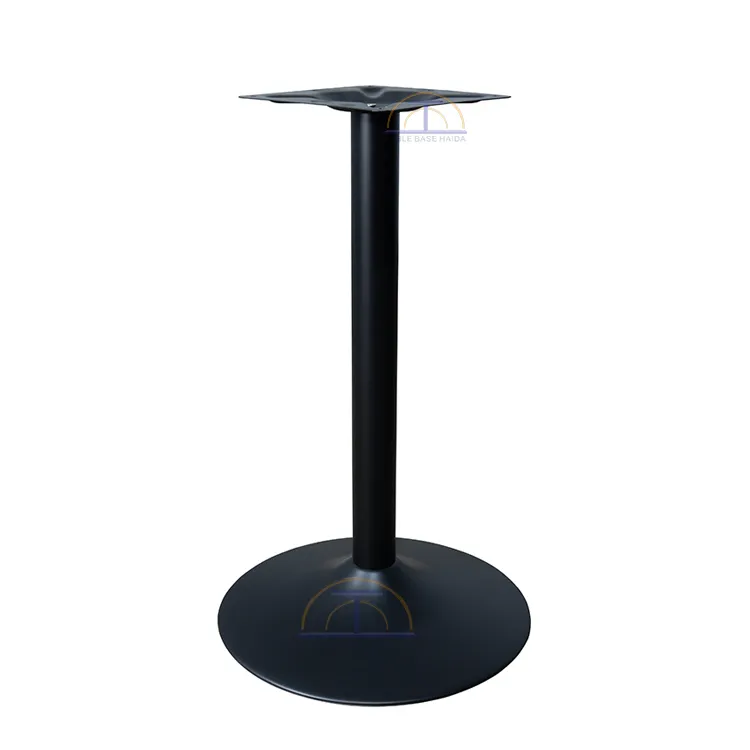
For the HD-J053 heavy-duty cast iron X-base, compare the floor-base configuration, selected top plate, column connection, glides and height version against the old approval. For the HD-J133 stainless steel round pedestal, pay particular attention to the approved finish, pedestal footprint and top-plate interface.
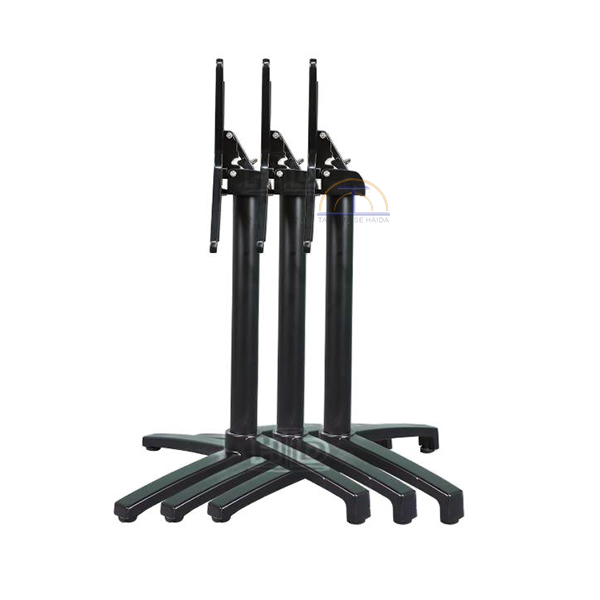
For a longer tabletop using HD-J044 twin-column cast iron support, check column spacing and mounting-position references rather than only the external base shape. For folding or nesting layouts such as HD-JN04 twin aluminum stackable folding base, the hinge, locking mechanism, nesting clearance and replacement mechanism components should be reviewed against the approved sample.
8. Keep Buyer and Supplier Approvals in One Change Log
Each proposed change should have a unique ID, affected model and SKU, old reference, proposed reference, reason, compatibility impact, samples or tests required, buyer decision and effective batch. An email saying “same as last time” is not a substitute for an approved reference.
If the new configuration is accepted, define whether the old and new parts may be mixed in one shipment, one store or one spare-parts location. If interchangeability is not proven, keep the versions separate until a decision is signed off.
9. Validate a Change With a Complete Trial Table
A drawing comparison is important, but a complete trial assembly may be needed when fit, function or safety is affected. Use the actual tabletop construction, new base parts, approved fasteners and, if needed, an old-version replacement part. Check final height, alignment, mounting engagement, rocking, glide contact and service access.
The existing Sample Approval Checklist establishes the first production reference; the Installation Readiness Guide explains how to release a verified complete tabletop-to-base package for site installation. Repeat-order testing should use the same logic for a changed version.
10. Control Packaging and Labels When the Version Changes
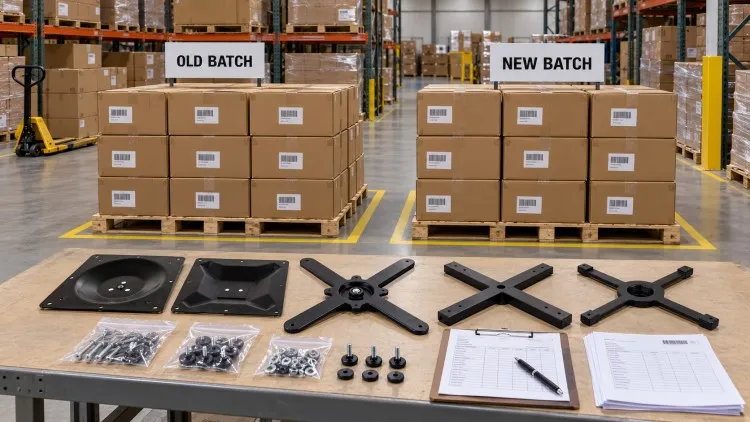
A revised part is difficult to trace if cartons still carry the older SKU or hardware bag label. Update the packing list, carton mark, barcode mapping, manual, parts list and warehouse receiving reference whenever those documents are affected by the approved change.
Use the Private Label Packaging Guide for the detailed label system. Here, the objective is to make the shipped revision unambiguous without adding unnecessary complexity to every carton.
11. Freeze the Approved Version Before Mass Production
Before release, the supplier and buyer should agree which drawing revision, finish sample, hardware kit and packing file will apply to the entire order. The change log should close or clearly identify any outstanding exceptions. A revised drawing must not enter production silently after approval.
At the pre-shipment inspection stage, inspect against the new approved baseline, not a generic image of the model. Record sample locations across cartons and confirm that any old-version stock has been intentionally separated.
12. Plan the Reorder Handover for Warehouses and Future Buyers
The warehouse receiving team should know which revision is arriving and how it relates to stock already on the shelves. A short comparison sheet can prevent mixing visually similar but incompatible mounting plates or hardware kits. Where useful, show old and new part photographs side by side.
Keep the released revision, effective production batch, approval reference and compatibility decision accessible to later purchasing and service teams. This allows the next reorder to start from a verified baseline instead of rediscovering the same issue.
13. Final Release Checklist for Repeat Orders
Before signing a repeat-order purchase order or releasing the production batch, confirm that all changed and unchanged requirements are traceable to the approved configuration. The objective is not zero engineering changes; it is zero unapproved changes that matter to installation, operation or service.
- Model + buyer SKU linked to latest approved revision
- Old-versus-new dimensions, mounting interface and height reviewed
- Finish reference and appearance continuity accepted
- Hardware, glides and replacement parts classified for compatibility
- Changed functions tested with an assembled table where needed
- Approved drawing, parts list, manual and packing version aligned
- Old stock mixing/separation rule documented
- Buyer approval and effective production batch recorded
14. Conclusion: Reorder the Approved Configuration, Not Just the Name
Successful table base reorders preserve the dimensions and interfaces that matter, the approved visual appearance, the correct hardware and the documentation that allows parts to be identified years later. A model number is the starting point; an approved revision-controlled configuration is the actual purchasing reference.
For restaurant groups and furniture importers, a short change log, one verified trial table when needed and one clear release decision can reduce incompatibility disputes without turning every reorder into a new-product development project.
15. FAQ: Repeat-Order Compatibility
Can I reorder a commercial table base using only the model number?
The model number identifies the product family, but repeat orders should reference the approved drawing revision, mounting details, finish, hardware kit and packing version. Ask the supplier to confirm any changes since the last order.
Does every production change need a new SKU?
No. Documentation-only changes may not affect the sellable SKU. Changes to fit, function, service parts or agreed appearance need a controlled review; incompatible versions may require a separate variant code.
What is the most important compatibility check?
Start with the real tabletop-to-base interface: mounting-plate dimensions, hole centers, fixing hardware, inserts and finished height. Then check any version-specific replacement parts and functions.
Can two batches have the same finish name but look different?
Yes. Broad terms such as matte black or brushed stainless steel do not fully define gloss, texture, grain direction or acceptable variation. Keep an approved physical reference when visual matching matters.
What should I do if the new hardware will not fit older bases?
Stop treating the parts as interchangeable. Identify affected batches, request a verified conversion solution if one exists, and keep incompatible parts and labels separate. Do not promise a retrofit before physical validation.
Should a repeat order always require a new sample?
Not always. Unchanged, well-documented configurations may use the existing approval baseline. A new or partial sample is appropriate when a proposed revision affects fit, function, appearance, safety or serviceability.