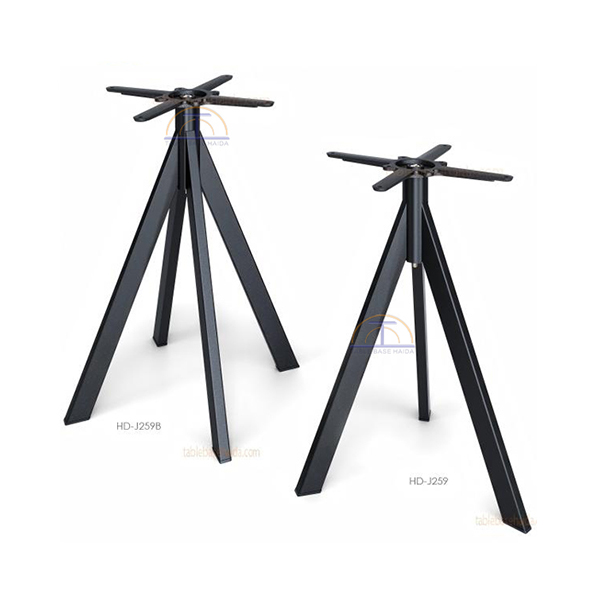
1. Why Spare Parts Kits Matter for Table Base Dealers
For table base dealers and importers, spare parts are not only small accessories. They are part of after-sales support, reorder planning and customer retention.
A restaurant buyer may not replace an entire table base when only one glide, screw, bolt or hardware bag is missing. If the dealer can provide replacement parts quickly, the customer can solve the problem without waiting for a new full order.
A well-planned spare parts kit helps reduce complaints, support repeat orders and make the dealer’s product line easier to maintain.
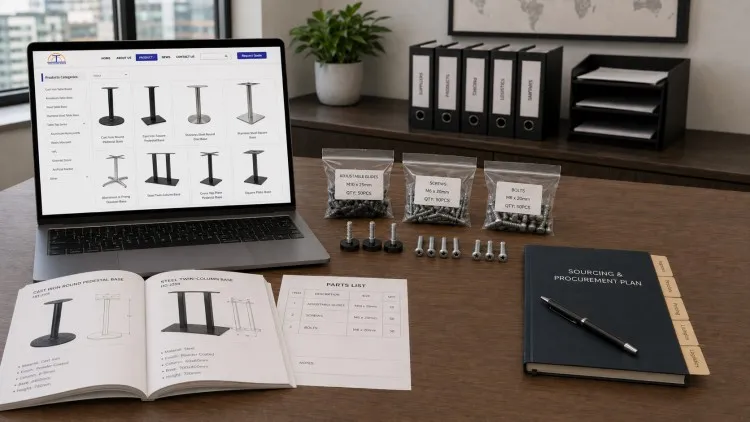
2. Do Not Treat Spare Parts as an Afterthought
Many buyers focus on the table base model, finish and price, but forget to plan spare parts before placing a bulk order.
This can create problems later. If a restaurant loses screws during installation or needs extra leveling glides after months of use, the dealer may have to place a small urgent order, which increases freight cost and communication time.
Instead, dealers and importers should plan spare parts together with the original table base order.
3. Identify the Main Spare Parts for Each Table Base Type
Different table base types may require different spare parts. A cast iron dining base, aluminum outdoor base, stainless steel pedestal base and folding base may not use the same hardware.
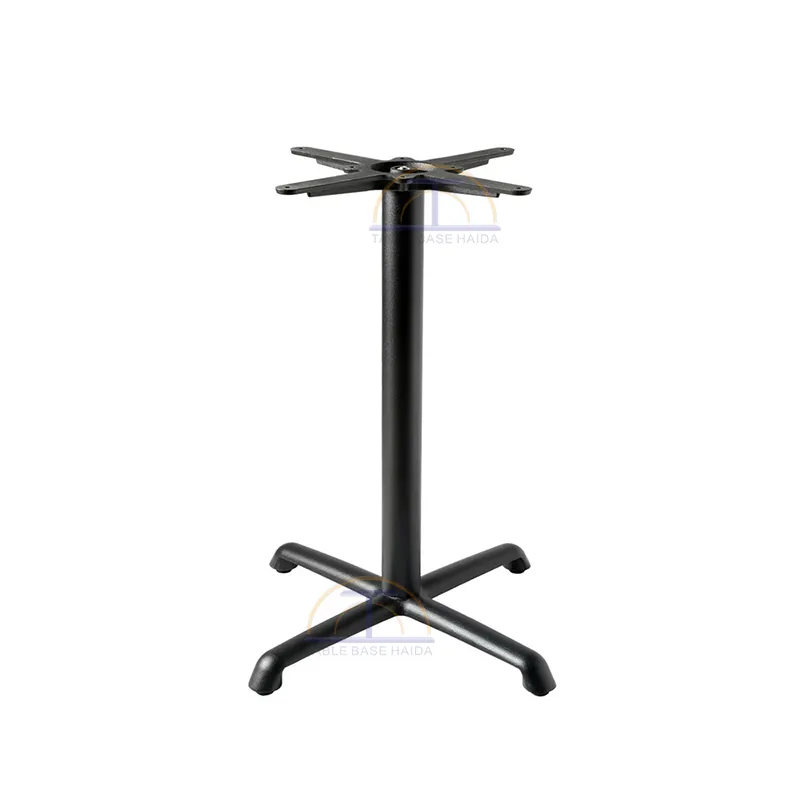
For stable indoor dining programs, dealers may stock spare parts for cast iron table bases. For outdoor café or patio projects, spare parts for aluminum table bases may be more important because these bases are often moved, cleaned and rearranged more frequently.
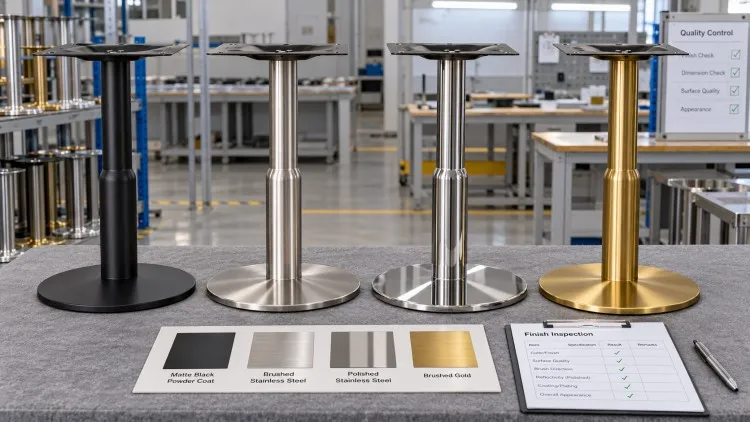
For premium dining or food-service environments, spare parts for stainless steel table bases should be kept consistent with the approved finish and hardware standard.
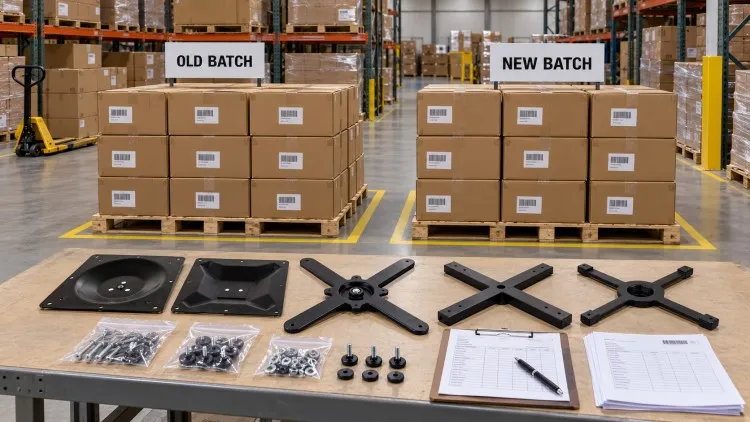
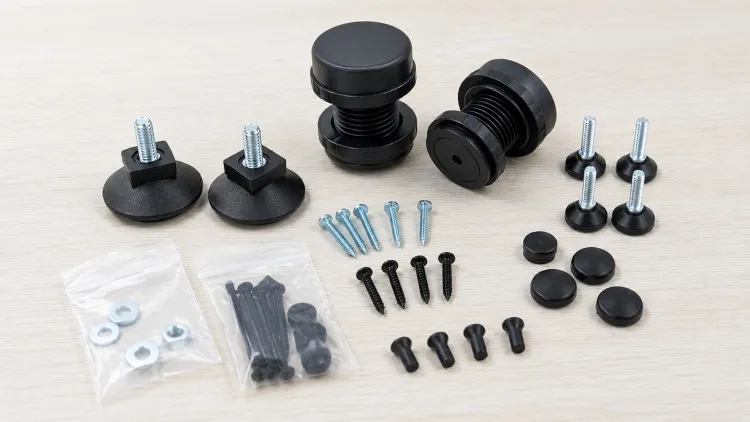
Common spare parts include glides, adjustable feet, screws, bolts, washers, nuts, mounting plates, top plates, hardware bags and protective caps.
4. Build a Basic Spare Parts Kit for Every Order
A basic spare parts kit should cover the small items most likely to be lost, damaged or replaced during installation and daily use.
For dealers and importers, the purpose is not to stock every possible component. The purpose is to carry the parts that solve the most common customer problems.
A basic table base spare parts kit can include:
- Leveling glides
- Adjustable feet
- Screws and bolts
- Washers and nuts
- Spare hardware bags
- Plastic floor protectors
- End caps or small covers
- Simple replacement instruction note
This kit helps dealers respond faster when a customer needs a small replacement part.
5. Plan Spare Parts by Product Category
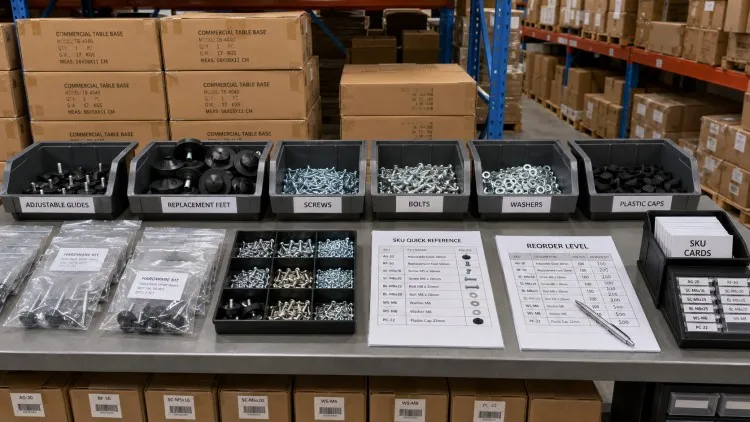
A better spare parts plan should be organized by product category. This helps dealers avoid mixing hardware from different models.
For cast iron table bases, the kit may focus on glides, screws, washers and mounting hardware. For aluminum outdoor bases, the kit may include extra feet, plastic caps and corrosion-resistant hardware. For stainless steel bases, the kit should keep visible parts and hardware consistent with the product finish.
A simple category plan can look like this:
|
Table Base Category |
Suggested Spare Parts |
Main Purpose |
|
Cast iron table bases |
Glides, screws, washers, hardware bags |
Installation and stability support |
|
Aluminum table bases |
Adjustable feet, caps, stainless screws |
Outdoor maintenance and movement |
|
Steel table bases |
Bolts, top plate screws, protective caps |
Structure and assembly support |
|
Stainless steel table bases |
Matching screws, glides, surface-safe hardware |
Premium appearance and maintenance |
| Folding table bases | Hinges, locking parts, screws, glides |
Movement and repeated use support |
This structure makes spare parts easier to manage in the warehouse and easier to explain to customers.
6. Set a Spare Parts Ratio for Bulk Orders
Dealers and importers should not decide spare parts quantity randomly. A spare parts ratio helps make planning more consistent.
The ratio can be based on total table base quantity, customer type, project environment and expected maintenance needs.
For example, a dealer may request extra leveling glides and hardware bags for every bulk table base order. A restaurant chain rollout may require a higher spare parts ratio because multiple stores will install and maintain the products over time.
A simple planning idea can include:
| Order Type |
Suggested Spare Parts Planning |
| Small trial order |
One or two extra hardware bags |
|
Dealer stock order |
Extra glides, screws and bolts by model |
|
Restaurant chain rollout |
Spare parts packed by store or project phase |
|
Outdoor project order |
Extra feet, caps and corrosion-resistant hardware |
| Custom project order |
Spare parts matched to approved sample version |
The exact ratio should be confirmed with the supplier based on product structure and order quantity.
7. Label Spare Parts Clearly
A spare parts kit is only useful when the customer can identify the parts quickly.
For dealers, unclear spare parts packaging can create confusion in the warehouse and during after-sales communication.
Each spare parts kit should include clear labels, product model, part name, quantity and matching SKU. For private label or dealer programs, labels can also include barcode, carton mark reference or internal stock code.
Useful label information includes:
- Product model
- Spare part name
- Quantity
- Matching table base SKU
- Order batch or version
- Barcode or internal code
- Simple replacement note
Clear labeling helps the dealer ship the right spare part without checking the full product carton again.
8. Match Spare Parts with Approved Samples
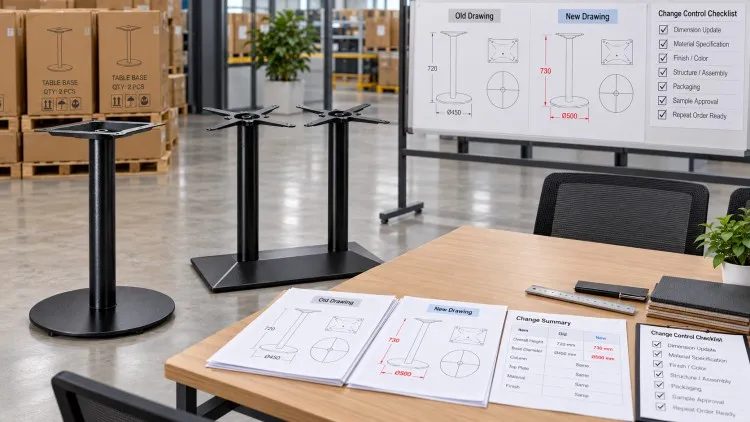
For custom or project orders, spare parts should match the approved sample version.
If the screw size, glide type, top plate or finish changes after sample approval, the spare parts kit should be updated at the same time.
This is especially important for OEM buyers, furniture brands and restaurant chains that need long-term repeat orders.
Before mass production, buyers should confirm:
- Whether spare parts match the approved sample
- Whether old-version parts should be avoided
- Whether hardware bags need updated labels
- Whether the supplier should keep a spare parts record
- Whether replacement parts can be reordered later
This helps reduce mistakes when customers request replacement parts after delivery.
9. Use Spare Parts to Reduce Warranty Claims
Many warranty claims are not caused by full product failure. They are caused by small missing, loose or damaged parts.
A spare parts kit gives the dealer a faster way to solve these problems before they become bigger after-sales issues.
For example, if a customer reports a missing screw bag, the dealer can send a replacement hardware bag immediately. If a table base becomes uneven after use, replacement glides may solve the issue without replacing the entire base.
This reduces customer downtime, freight cost and supplier communication.
10. Connect Spare Parts Planning with Reorders
Spare parts can also help dealers understand which models need better reorder planning.
If a specific glide, screw or hardware bag is requested frequently, it may mean that the related table base model is selling well, being used heavily or needs clearer installation instructions.
Dealers can use spare parts data to improve stock planning, reorder timing and customer support.
Useful tracking points include:
- Which spare parts are requested most often
- Which table base models need more spare support
- Which customers reorder parts regularly
- Which installation issues repeat
- Which product versions need updated instructions
Over time, spare parts planning can become part of the dealer’s repeat-order strategy.
11. Keep Spare Parts Easy to Request
A dealer should make spare parts easy for customers to request.
Instead of asking customers to describe the part from memory, the dealer can use product photos, SKU codes, part names and simple request forms.
For example, a customer should be able to say, “I need replacement glides for model HD-XXX,” instead of sending multiple unclear photos.
A simple spare parts request should include:
- Table base model
- Spare part name
- Quantity needed
- Order batch or invoice number
- Photo of the part, if possible
- Shipping address
This makes after-sales communication faster and more professional.
12. How Haida Supports Table Base Spare Parts Planning
For dealers, importers and project buyers, spare parts planning should be considered before bulk table base orders are shipped.
Haida can support commercial table base buyers with product matching, hardware bag confirmation, packing details and spare parts planning based on order type and application.
Buyers can compare different product categories, including cast iron table bases, aluminum table bases, stainless steel table bases and HPL table tops, before confirming the final product and spare parts plan.
To plan spare parts for a wholesale or project order, buyers can contact Haida for table base spare parts support with model number, order quantity, application and target market.
13. FAQ
Q1: What spare parts should dealers stock with table base orders?
Dealers should usually stock glides, adjustable feet, screws, bolts, washers, nuts, hardware bags, protective caps and other parts that match the approved table base model.
Q2: Should spare parts be packed with every bulk table base order?
Yes. Adding spare parts to bulk orders helps reduce urgent small shipments, installation delays and after-sales complaints.
Q3: How should dealers decide the spare parts ratio?
The ratio should be based on order quantity, product structure, customer type, installation environment and expected maintenance needs.
Q4: Why should spare parts be labeled clearly?
Clear labels help dealers identify, store and ship the correct spare parts quickly without checking the full product carton again.
Q5: Can spare parts help reduce warranty claims?
Yes. Many after-sales issues can be solved by replacing small parts such as glides, screws or hardware bags instead of replacing the entire table base.
14. Conclusion
A table base spare parts kit is a practical tool for dealers, importers and project buyers.
It helps reduce after-sales pressure, improve customer support, simplify maintenance and support repeat orders.
Instead of treating spare parts as a small detail after shipment, buyers should plan them together with the original table base order.
For long-term wholesale and project business, the best spare parts plan is simple, clearly labeled, matched to appoved models and easy to reorder.