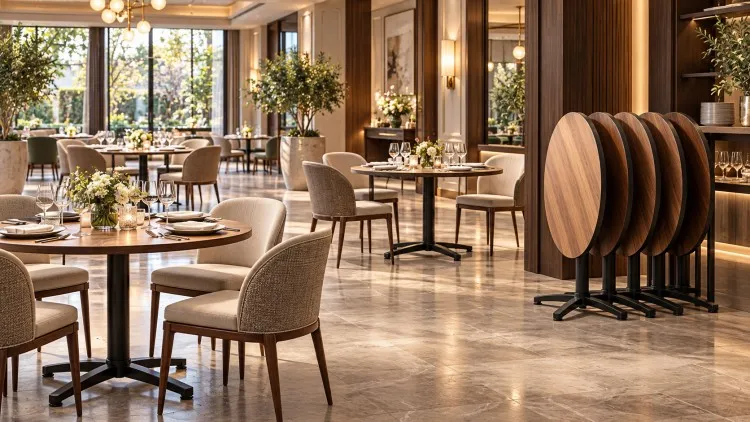
Choosing the right table base structure is one of the fastest ways to improve stability, comfort, and layout efficiency in a commercial space.
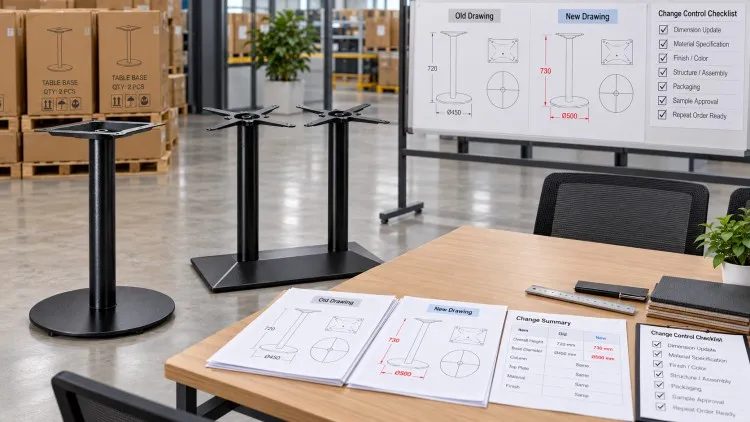
In restaurants and cafés, the most common structures are round disc bases, cross/X bases, and square bases. Each option has different trade-offs in stability, legroom, and layout flexibility.
1. Round Disc Bases
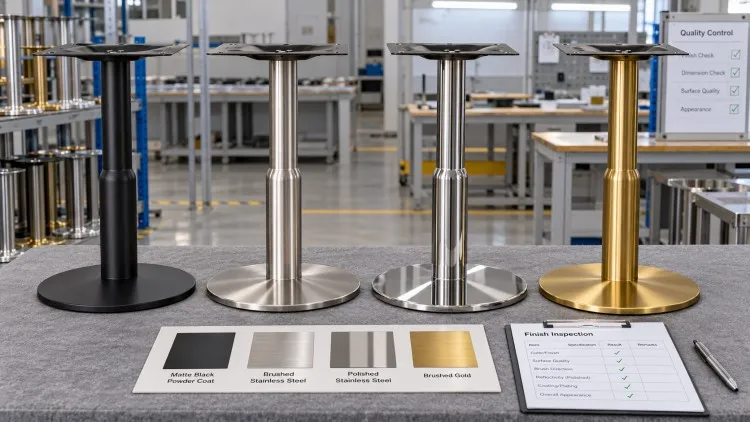
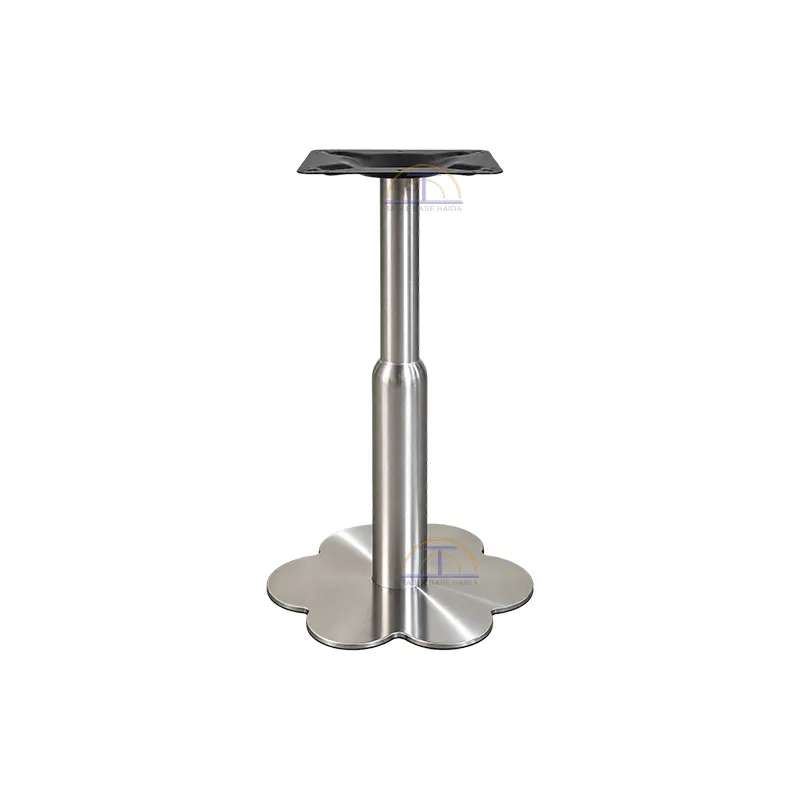
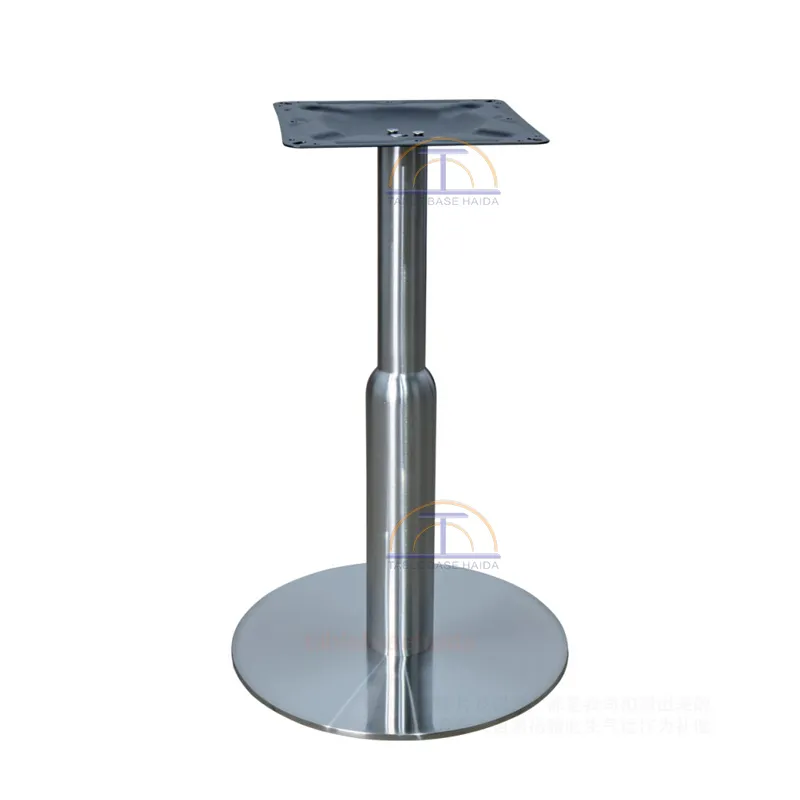
Round disc bases typically use a single center column supported by a round steel or cast-iron disc. This structure keeps the table visually clean and helps preserve knee space for guests.
Because the footprint is continuous and weight is concentrated at the bottom, disc bases are often chosen for projects that want a more “grounded” feel—especially when tabletops are heavier.
Best for
- Round tabletops and compact dining layouts.
- Spaces prioritizing legroom and a minimalist style.
- Areas where easy cleaning around the base is important.
Watch-outs
- Disc bases can be heavy, which may reduce day-to-day flexibility if staff frequently move tables.
- If the disc diameter is too small for the tabletop, stability still suffers—size matching matters.

2. Cross/X Bases
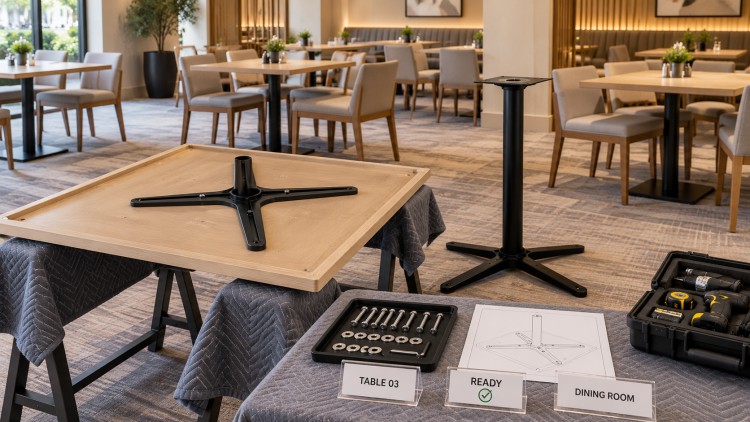
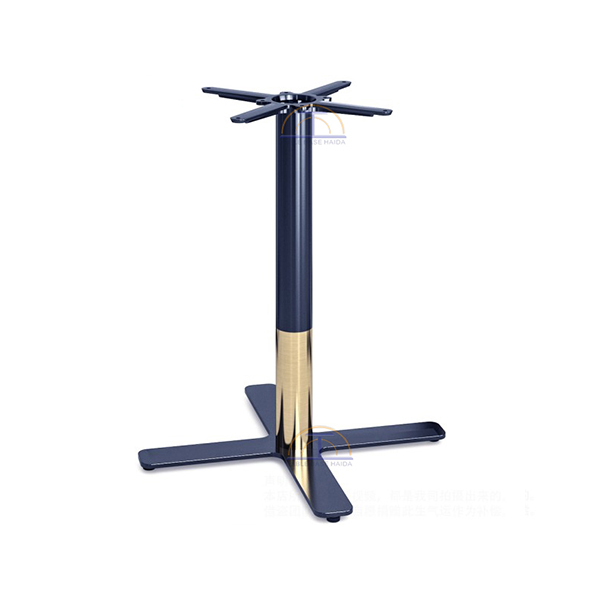
Cross/X bases use a center column with four arms extending outward to contact the floor. This structure is widely used because it balances footprint efficiency with reliable everyday stability.
Cross bases are also friendly for chair placement, especially in tight layouts where you want guests to approach the table from multiple directions.
Best for
- Standard restaurant setups (2-top / 4-top tables).
- Square tabletops or small-to-medium rectangular tabletops.
- Projects aiming for a cost-effective, scalable configuration.
Watch-outs
- Uneven floors can amplify wobble risk; plan for adjustable leveling glides and correct installation.
- If you need step-by-step setup and quick fixes for wobble, use this guide: https://www.tablesbases.com/metal-table-base-installation-troubleshooting-guide/

3. Square Bases
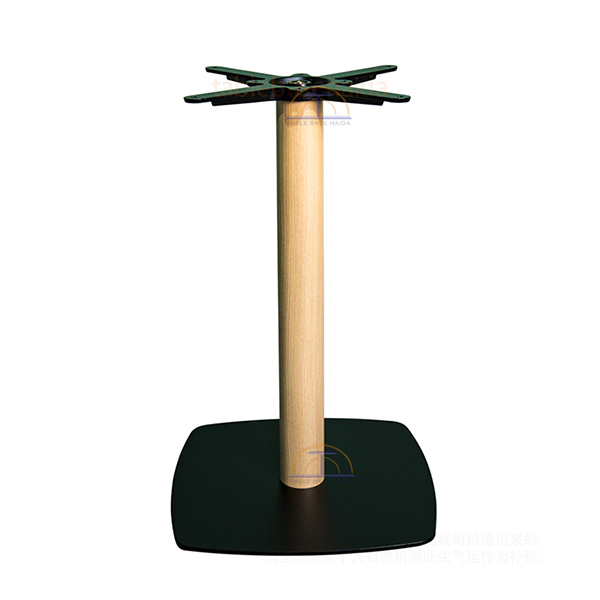
Square bases are commonly used with square or rectangular tabletops, and they are often selected when buyers want a broad, stable footprint for busy commercial use.
For high-traffic interiors, a square footprint can feel more stable and predictable during daily use, which is why many buyers choose it for busy dining rooms.
Best for
- Square/rectangular tops in high-traffic dining rooms.
- Layouts where stability is the top priority.
- Designs that want a stronger base presence (visual weight).
Watch-outs
- Depending on design, a square footprint may slightly reduce knee space compared with a single-disc pedestal.
- Make sure the base edges do not interfere with chair legs in tight seating plans.

Quick Selection Guide
- Choose a round disc base when legroom, minimalist style, and a grounded feel are priorities.
- Choose a cross/X base when you want a classic restaurant setup that is space-efficient and easy to scale across many tables.
- Choose a square base when you want a broad footprint and the most “stable-looking” presence for busy interiors.

What to Confirm Before Ordering
Even the “right” structure can wobble if sizing and floor conditions are ignored, so confirm these details early.
- Tabletop size and weight (especially heavy materials like stone).
- Recommended maximum tabletop size for the chosen base style and footprint.
- Whether adjustable leveling glides are included for uneven floors.
- Mounting plate size and hole pattern compatibility with your tabletop.
For sizing rules and how to match tabletop dimensions to base spread, use this guide (internal): https://www.tablesbases.com/the-ultimate-guide-to-choosing-the-perfect-metal-table-base/