1. Why Floor Contact Is a Procurement Detail
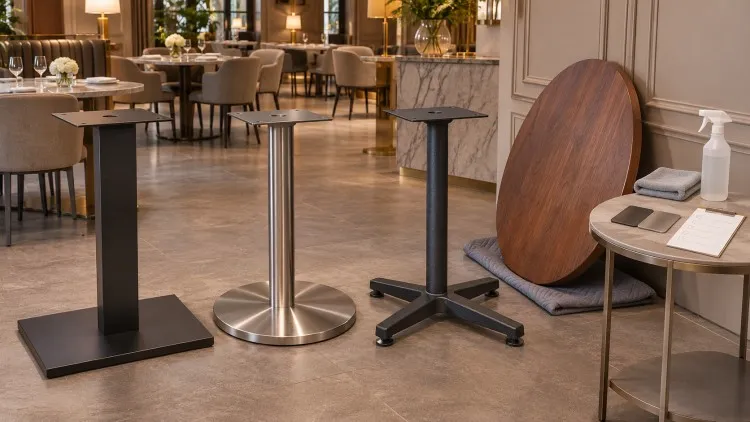
A commercial table base is specified by its column, footprint and mounting plate, but daily performance also depends on the small parts touching the floor. A missing, worn or poorly matched glide can leave a table rocking, mark a finished floor or make routine repositioning harder.
For restaurant chains, hotels and furniture dealers, floor-contact parts should be recorded as part of the approved table configuration, not treated as interchangeable accessories. The objective is to protect the floor while preserving correct support for the complete table.
2. Map the Real Flooring Before Choosing Glides
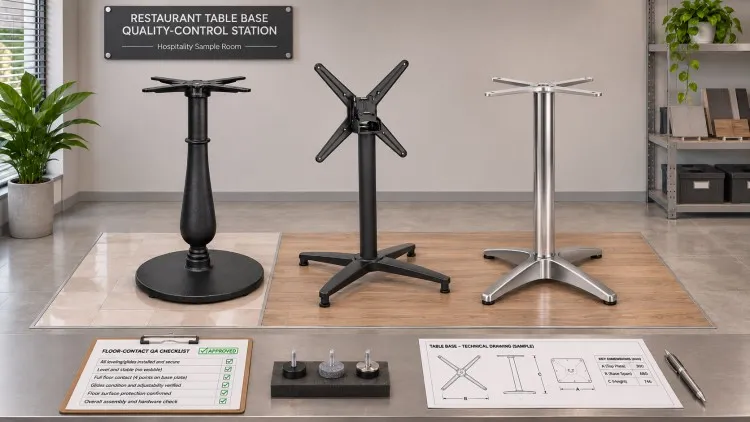
A venue may combine ceramic tile, grout joints, sealed concrete, timber, luxury vinyl, carpet or outdoor pavers. The same glide may behave differently on each surface, especially when sand, cleaning moisture or frequent movement is involved.
Ask the flooring supplier or project contractor what contact materials and cleaning methods are approved. Do not assume that a generic “non-marking” claim guarantees compatibility with every floor finish; test the actual combination where visible marks or warranties matter.
3. Separate Glides, Levelers and Self-Leveling Systems
A fixed glide primarily provides a contact surface. A threaded adjustable glide also allows a technician to correct small height differences manually. An automatic or hydraulic self-leveling mechanism is a different system with its own approved operating range and service requirements.
These terms should not be mixed in an RFQ. In particular, a base with manually adjustable feet should never be described as hydraulically self-leveling unless the exact model documentation confirms that feature.
4. Record the Complete Floor-Contact Specification
Before bulk approval, identify the base model, number and position of contact points, glide or foot design, attachment thread or fixing method, approximate adjustment range if applicable, replacement-part code and proposed floor type.
If these details are not available on the published product page, treat them as questions for the manufacturer rather than inventing a dimension or material. Keep one approved photo or sample with the specification so receiving and maintenance teams can identify the right part.
5. Protect the Floor Without Compromising the Base
Glides should contact the floor in their intended orientation and should not expose a sharp metal edge. A protective surface that wears through, loosens or traps hard grit may stop protecting the flooring even when the original component was suitable.
Do not add thick improvised pads to one side of a base without checking stability and the approved height. A temporary fix that changes the support geometry can create a different problem elsewhere in the table.
6. Check Every Intended Contact Point
After installation, inspect the completed table on the actual floor, not only on a level factory bench. Verify that all intended feet or the floor-plate contact surfaces are supporting the table as designed, and check for wobble under normal service conditions.
Floor adjustment is not a substitute for selecting the right base footprint or tabletop support. The existing Table Base Load Capacity Guide explains why stability also depends on tabletop dimensions, weight distribution and the complete structure.
7. Treat Round Plates and Multi-Leg Bases Differently
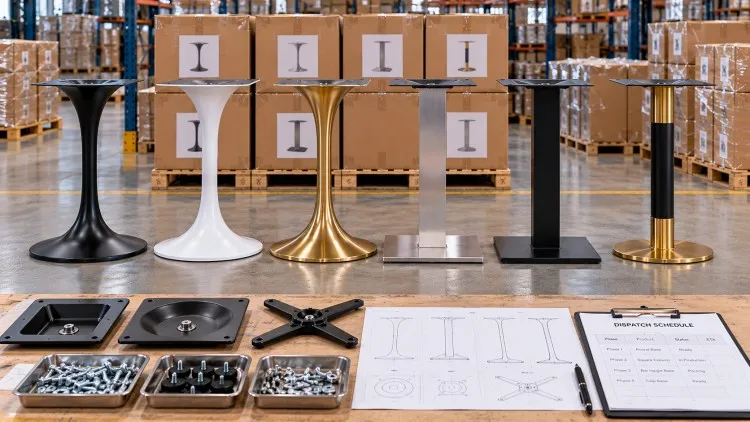
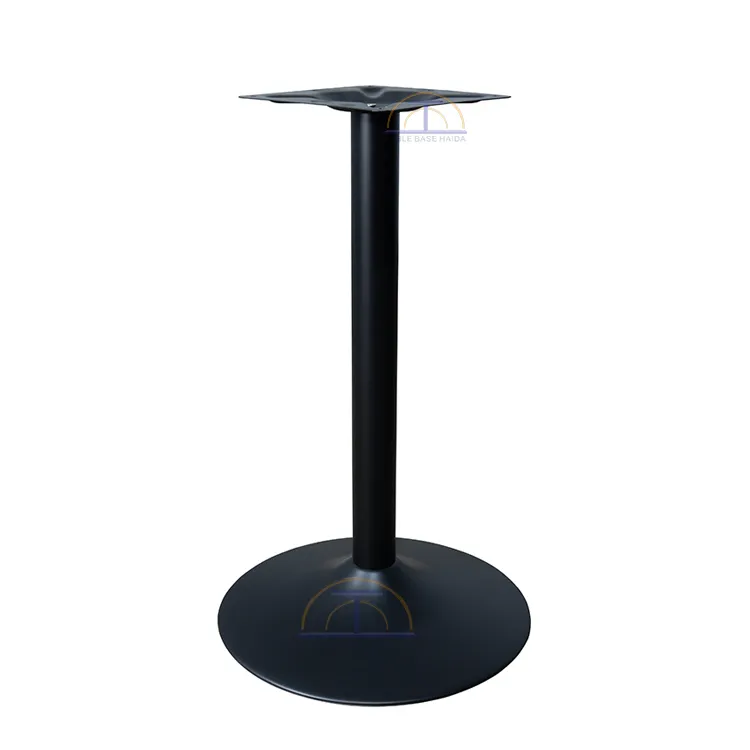
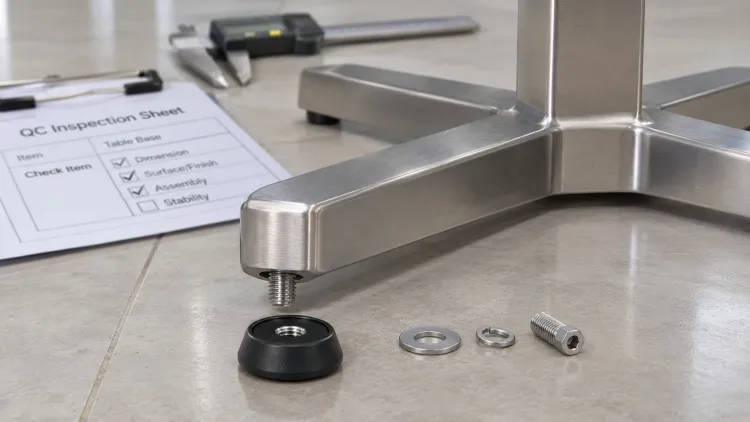
A round or square floor plate may have its contact system concealed beneath the base, while an X-base, four-leg or three-leg design has more visually identifiable ends or feet. The inspector should follow the exact model drawing instead of assuming every structure uses the same number or type of glides.
For floor cleaning crews, the practical question is whether there are exposed edges, missing covers, loose feet or contact areas that collect grit. These observations should be recorded by model and location.
8. Test Movement and Cleaning Routines
Some restaurants move tables at every shift, while others leave them in fixed positions for months. Run a short trial that mirrors the real movement route: lift or move the table according to venue instructions, place it back, inspect the floor and check the glide contact again.
Do not assume that a glide designed to protect a stationary table is suitable for dragging a heavy assembled table across the floor. If frequent movement is expected, agree on handling practices and floor protection with the venue and flooring supplier.
9. Include Outdoor Drainage and Abrasion
Patio tiles, textured pavers and joints can produce different contact conditions from smooth indoor flooring. Dirt and grit beneath the feet can increase abrasion, while trapped moisture or damaged hardware may complicate long-term maintenance.
Specify the intended exposure and cleaning routine and ask whether the selected foot components are suitable. Avoid assuming that all aluminum or powder-coated table bases share one outdoor glide specification.
10. Product Examples: Four Base Structures to Review
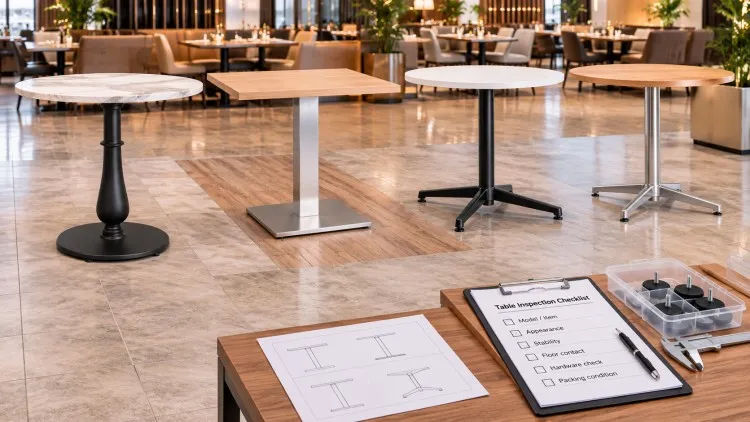
The HD-J137 cast iron round pedestal represents a heavy round floor-plate configuration. For this type, confirm the underside contact design, any specified leveling component and the approved floor condition before installation.
The HD-J251 four-leg steel base has a distinct four-point stance. Its inspection plan should identify each intended foot-contact position and check whether any specified caps or glides are securely fitted.
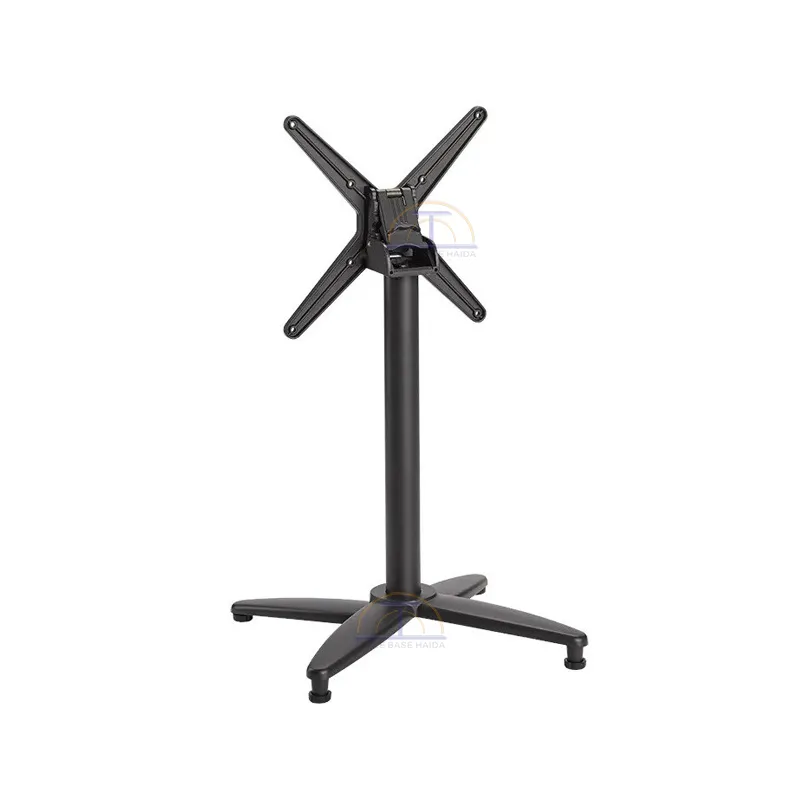
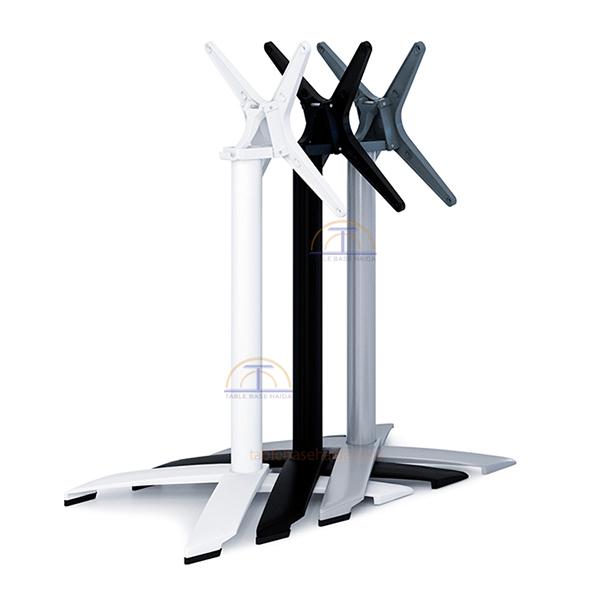
For flexible café settings, the HD-J153 folding aluminum X-base illustrates why frequent repositioning and folding should be considered alongside floor contact. Confirm the exact foot and adjustment configuration for the selected version rather than assuming all folding bases are identical.
The HD-J245 three-leg cast iron claw base provides a different decorative contact geometry. Its floor-interface review should examine the three supporting ends and the movement procedure used in bistro operations. These are inspection examples, not claims that all four models include the same glide type.
11. Approve a Site Sample Before Rolling Out
For a new floor finish or a large multi-store project, assemble representative tables using the actual base, tabletop and proposed foot components. Test on the installed flooring after it has been completed and protected according to the contractor’s guidance.
Record the model and foot-part code, observed contact, ability to level, movement marks and any cleaning interaction. Approve the combination before repeating it across dozens or hundreds of tables.
12. Make Floor-Contact Checks Part of Opening and Routine Service
At opening, record any missing feet, exposed edges or tables that need readjustment. During normal operations, assign staff to notice new wobble, uneven contact, damaged caps and marks on the floor around frequently moved tables.
Clean accumulated dirt around contact points using methods approved for the flooring and component material. If a glide repeatedly loosens or becomes damaged, investigate the connection rather than simply replacing it without recording the issue.
13. Keep the Correct Replacement Part Available
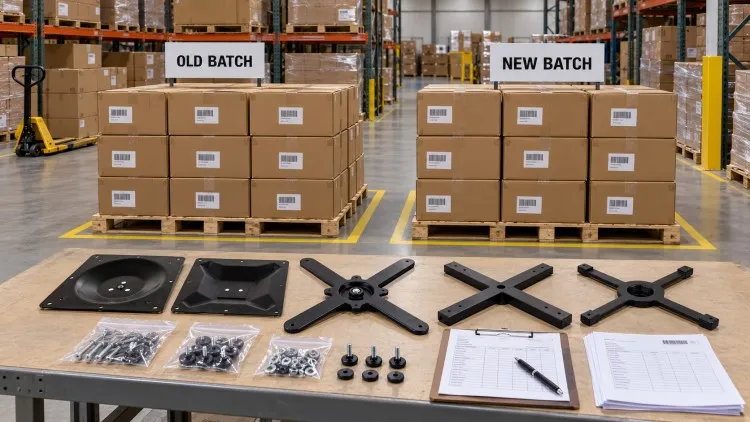
Glides, foot caps and adjustment parts are small, but different designs may use different threads, attachment methods and contact profiles. A visually similar replacement is not necessarily a safe or functional match.
The existing Table Base Spare Parts Kits guide covers how dealers can organize replacement inventory. For floor protection, the additional requirement is to link each installed location to its approved foot-part code and replacement instruction.
14. Add Floor Details to the Buyer RFQ
A practical table-base inquiry should specify venue type, floor finish, indoor or outdoor use, how often tables move, tabletop size and weight, requested foot or glide function and any flooring-contractor restriction. Ask the supplier to identify the exact approved glide component instead of quoting “adjustable feet” without a reference.
If floor protection is business-critical, include a site-sample acceptance step and a replacement-part reference in the purchase order. The RFQ does not need an invented universal hardness rating or thread size; it needs a verified model-specific answer.
15. How Haida Supports Floor-Contact Planning
Haida supplies commercial table bases in cast iron, steel, stainless steel and aluminum for restaurants, cafés, hotels and wholesale furniture programs. Buyers can share floor type, tabletop details, selected base models and maintenance expectations when discussing an order.
For a project where floor contact matters, contact Haida with your base models, flooring details and foot-component requirements so the relevant configuration and available options can be confirmed before bulk approval.
16. FAQ: Floor Glides and Commercial Table Bases
Q1. Are adjustable glides the same as self-leveling feet? No. Ordinary threaded feet are adjusted manually. Automatic or hydraulic systems use a different mechanism and should be specified only when the selected product supports it.
Q2. Can one glide type protect every restaurant floor? No universal guarantee should be assumed. Floor finish, grit, movement frequency and cleaning chemicals can all affect the result; approve the real combination with the flooring supplier.
Q3. Will new glides solve every unstable table? Not necessarily. Incorrect base spread, tabletop weight distribution, loose fasteners or a damaged structure may require a different corrective action.
Q4. What should a buyer record for replacement glides? Keep the base model, selected variant, approved foot-part code, attachment details, installation location and any site-test reference.
17. Conclusion
Floor glides are small components with visible consequences. A practical specification connects the approved base, actual flooring, contact hardware, site sample and replacement record. It helps dining teams protect floors without turning a minor adjustment into a new stability problem.
For hospitality buyers and furniture dealers, the strongest approach is to verify the floor-contact interface before bulk installation and keep the approved part identifiable throughout daily use.