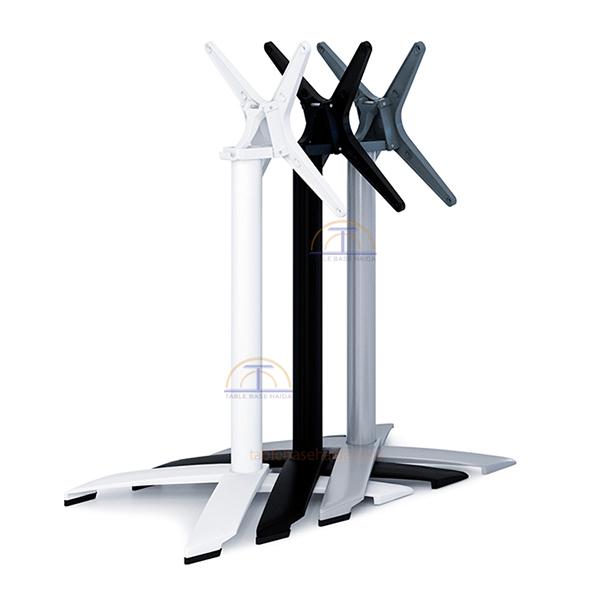
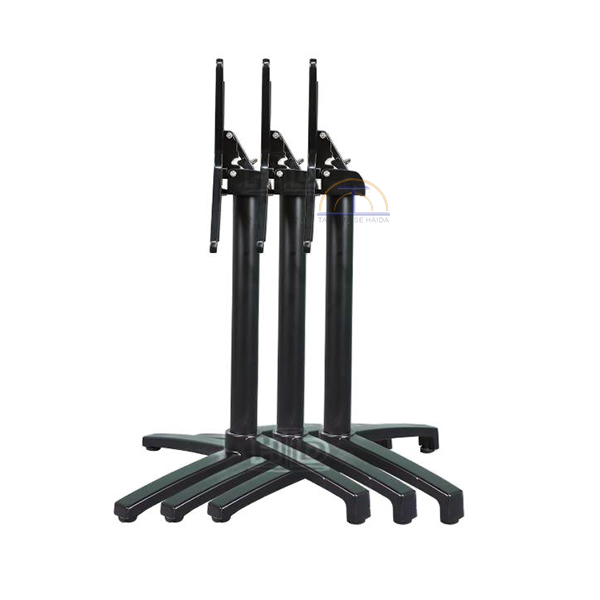
1. Why Table Base Care Belongs in Restaurant Operations
Commercial tables are cleaned, moved and touched throughout the working day. Yet the metal bases below them often receive attention only after a stain, loose connection or visible corrosion appears. A simple finish-care routine can help staff spot early issues before they become disruptive repairs.
This guide is for restaurant operators, hotel facilities teams, dealers and buyers. It focuses on care after installation: approved cleaning methods, environmental exposure, visual inspection and escalation. It is not a factory coating acceptance standard or a substitute for the exact manufacturer care instructions.
2. Start With the Actual Finish, Not Just the Metal
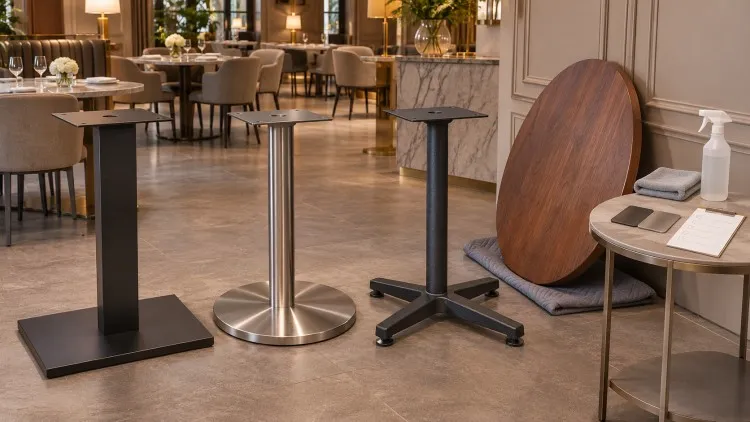
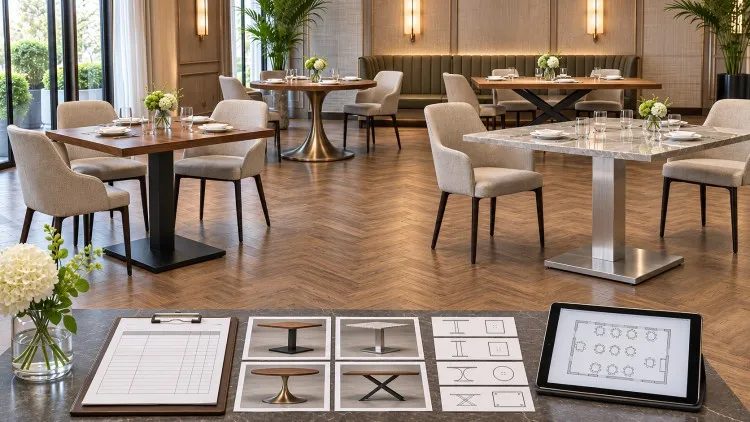
Two bases made from steel may have very different approved surface systems. A powder-coated column, a brushed stainless cover, a polished metal accent and an anodized aluminum leg should not automatically receive the same cleaner or abrasive pad. Record both the substrate and the visible finish.
During sourcing, the Commercial Table Base Finish Inspection Guide helps establish the accepted surface before delivery. Once the table is operating, the venue should convert that approved finish reference into a short cleaning instruction for its own staff.
3. Create a Low-Risk Daily Cleaning Routine
For many intact metal finishes, a clean soft cloth with water or a mild detergent approved by the finish supplier is a sensible starting point. Remove loose grit before wiping, use only the moisture needed and dry the surface where the approved instructions require it. Try any new product on a hidden area first.
Write the routine as an operational sequence rather than a vague rule to “clean regularly”: identify the product, remove debris, wipe the surface, remove residue, inspect visible damage and record exceptions. The actual frequency should reflect traffic, cleaning chemicals and the environment, not an invented universal interval.
4. Care for Powder-Coated Steel Table Bases
Powder coating creates a finished outer layer, but its condition still matters. On a steel base, check for chips near floor plates, edges, weld transitions and areas struck by chairs or cleaning equipment. If the coating is broken and bare steel becomes exposed, corrosion risk can rise.
Avoid aggressive scouring and unapproved solvents. Where damage is found, document the location and contact the supplier about a compatible repair process; a random aerosol paint may not match the original texture, color or protection system.
5. Inspect Coated Cast Iron Without Assuming It Is Rust-Proof
Cast iron bases are valued for their weight and established commercial forms, but a coated casting still needs attention at edges, feet, threaded connections and points where heavy pieces are handled. Accumulated dirt can hide coating damage, so clean carefully before judging the condition.
Do not grind or chemically strip an installed part simply to improve its appearance. Visible rust, cracking, a loose column or deformation warrants a separate condition review; cleaning alone cannot establish whether a structural component remains safe.
6. Clean Brushed and Polished Stainless Steel Differently
Stainless steel resists corrosion but is not stain-proof in every environment. For routine care, use a cleaner compatible with the particular grade and finish, remove residues and dry when required. On brushed surfaces, follow the direction of the grain with a soft cloth instead of rubbing across it.
Polished or decorative stainless may reveal fingerprints, haze and fine scratches more readily. Avoid steel wool and unapproved abrasive restoration methods: foreign iron contamination or an altered grain can create new problems. Escalate significant scratches or staining to the product supplier before attempting refinishing.
7. Confirm the Finish System on Aluminum Bases
Aluminum may be anodized, polished or coated. Each finishing system can respond differently to detergents, abrasion and weather exposure. A general instruction for stainless steel should not be copied onto anodized aluminum without confirmation from the manufacturer.
For frequently moved patio tables, inspect the contact points where bases touch each other during carrying or storage. Grit and hard contact can mark the finish even when the aluminum itself does not form the same type of red rust as steel.
8. Review Cleaning Chemicals Before Staff Use Them
Restaurant cleaning teams may use degreasers, sanitizers, descalers and floor-cleaning products near table bases. A chemical suited to a tiled floor or food-contact tabletop is not automatically approved for powder coating, brushed stainless or aluminum components.
Keep a cleaning-product list and obtain compatibility guidance from the finish or product supplier. Pay particular attention to strong acids, chlorine-containing cleaners, aggressive solvents and abrasive pads. Follow the chemical label, workplace safety instructions and any applicable hygiene requirements; do not improvise mixtures.
9. Identify the Highest-Exposure Areas in a Dining Venue
The most exposed table base may not be the one nearest the entrance. Consider bar spills, wet mopping around floor plates, grease near serving routes, chair impacts at corners, cleaning carts and seasonal outdoor moisture. Map those risk zones against the actual furniture layout.
A brief visual check after heavy cleaning or an unusual spill is often more useful than waiting for a single annual inspection. Record a change in finish, loose hardware, water retention or visible corrosion so maintenance can investigate promptly.
10. Treat Outdoor and Coastal Locations as Separate Cases
Covered courtyards, exposed terraces, poolside spaces and coastal restaurants place different demands on finishes and hardware. The Outdoor Table Base Buying Guide helps compare materials for these conditions; after purchase, the maintenance plan should reflect the actual salt, rain, drainage and cleaning exposure.
Do not describe a standard coated base as suitable for every seaside application. Confirm the selected finish system, corrosion precautions and storage instructions with the supplier. If seasonal furniture is stored, inspect and clean it before placing it in a dry, protected location.
11. Use a Simple Check for Edges, Joints and Undersides
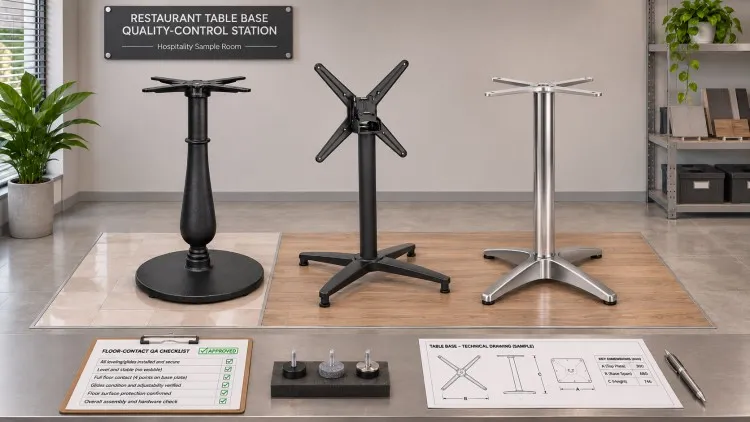
A quick maintenance walk should cover visible vertical surfaces and less obvious locations: floor-plate edges, welded joints, underside contact points, bolt heads, cover seams and areas that retain dirt or moisture. These are sensible inspection zones rather than universal failure locations.
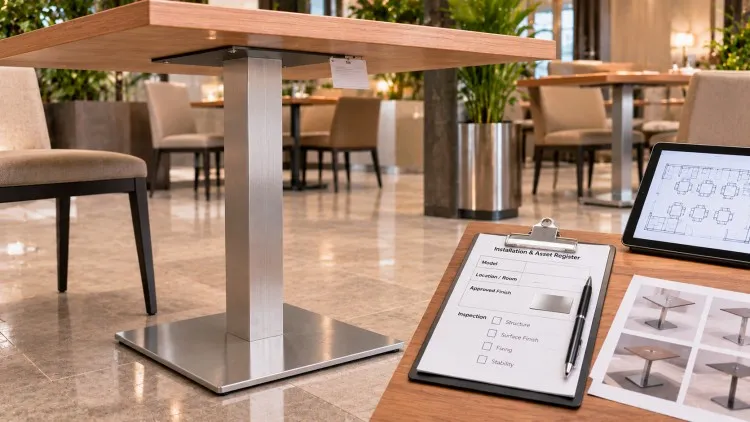
Take a clear photograph whenever the finish changes or the part seems damaged. Record the model, location, date and apparent issue, then compare with the approved product reference. Avoid assigning a cause based only on a single close-up image.
12. Distinguish Cleaning, Cosmetic Damage and Structural Risk
Light dirt or removable residue usually belongs in the cleaning workflow. A persistent stain, coating chip or surface discoloration calls for finish evaluation. A cracked component, unexpected movement, visibly loose critical connection or major deformation requires the table to be taken out of use until it is reviewed by a qualified party.
A cleaning team should not be expected to certify the structural safety of a base. The handover rule is to document the condition and identify the person authorized to approve a repair, replacement or return to service.
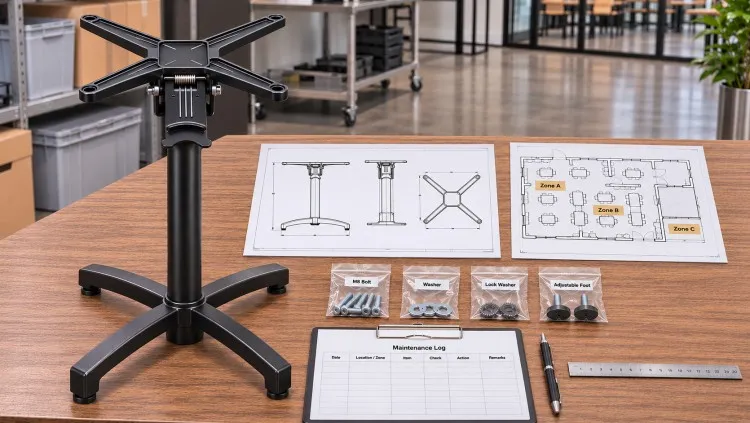
13. Four Haida Models Illustrate Different Care Questions
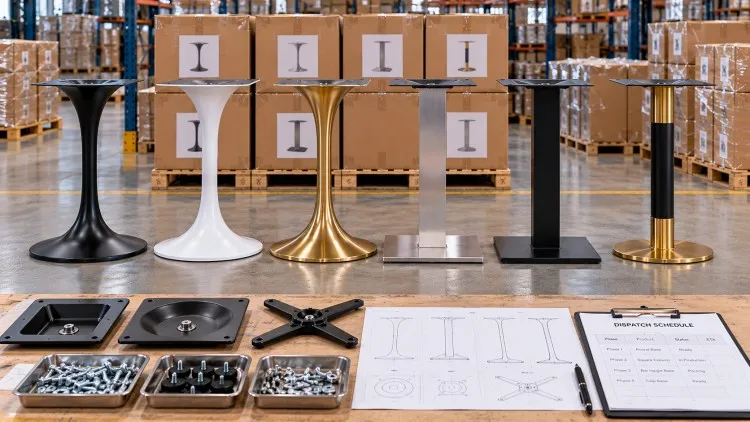
The HD-J114 powder-coated steel rectangular table base provides a practical coated-steel case. Inspect coating condition at its broad floor plate, edges and visible central support, especially where equipment or chairs may strike the base.
The HD-J053 coated cast iron X-base represents a heavy cast-iron structure. Its four-prong floor footprint and coated surfaces make cleaning around foot ends, contacts and handled edges an important part of a location-specific routine.
The HD-J311 stainless steel disc pedestal offers brushed and polished finish choices. Staff should confirm the approved finish before cleaning; wiping along a specified brushed direction is different from caring for a highly reflective surface.
The HD-J147 aluminum X-base is listed with anodized or polished finish directions for outdoor applications. Its lightweight structure illustrates why staff should check the exact finish and daily handling routine rather than treating all aluminum bases as having identical care requirements.
14. Include Finish Care in New Store Handover
For a restaurant chain or hospitality project, hand over the base model, approved finish, acceptable cleaner or supplier reference, restricted cleaning methods, inspection contact and replacement reporting route. A one-page instruction at the venue can be more useful than a long generic product manual.
If different rooms use different finishes, label the instructions by location or SKU. The objective is consistency across shifts, cleaning contractors and newly opened branches, without imposing one chemical procedure on every material.
15. Record Early Damage Before It Spreads
An effective record can be short: venue or room, model, finish, incident date, photograph, cleaning product used, visible condition, action owner and disposition. This helps distinguish a new mark from pre-existing transport damage or routine wear without jumping to conclusions.
Where repair or refinishing is proposed, confirm whether it affects appearance, coating continuity or the suitability of the component for continued service. A local cosmetic repair should not be used to hide a connection or structural problem.
16. How Haida Can Support Maintenance-Aware Procurement
Haida supplies commercial table bases in coated steel, cast iron, stainless steel and aluminum for restaurants, cafés, hotels and furniture dealers. Buyers can discuss the intended setting, cleaning frequency, finish preference, local exposure and operating procedures when approving a model.
For a project requiring coordinated finish information, contact Haida with your selected base models, cleaning environment and finish requirements. Specific chemical compatibility, repairs and corrosion performance should be confirmed for the actual model and selected finish before being adopted as site instructions.
17. FAQ: Restaurant Table Base Cleaning and Care
Q1. Can one cleaning product be used on all metal table bases? Not without verification. Powder-coated steel, cast iron, stainless steel and anodized aluminum may require different approved products and handling methods.
Q2. Is stainless steel completely rust-proof? No. Corrosion resistance depends on the grade, surface condition and exposure. Chloride contamination, residue and unsuitable cleaning can still cause staining or corrosion concerns.
Q3. What should staff do when powder coating is chipped? Record the location, keep the area clean and dry as appropriate, and ask the supplier for the approved inspection or repair route instead of applying an unverified touch-up product.
Q4. When should a table be removed from service? When a critical connection is visibly loose, a component is cracked or deformed, or the table shows abnormal movement. Arrange qualified inspection before returning it to use.
18. Conclusion: Make Finish Care Repeatable
A good table base maintenance routine is not built around a miracle cleaning product. It starts with the actual finish, approved cleaner, realistic exposure conditions, visual checks and a clear route for damage that cannot be solved by routine wiping.
For restaurants, hotels and dealers, consistent instructions by model and location can reduce avoidable finish damage, improve condition records and help staff know when to request technical support.