1. Why Finish Inspection Deserves Its Own Process
For commercial table base orders, finish is not only a decorative detail. It affects whether a batch looks consistent across a restaurant, hotel or furniture program, and it influences how easily scratches, dents, weld areas and handling marks can be noticed after installation.
A finish can look acceptable on one approved sample but vary during mass production because the substrate, surface preparation, coating batch, brushing direction, polishing process, handling and packing conditions may change.
This guide focuses on finish-specific inspection. Structural dimensions, hardware, stability, packing and labeling should still be controlled through the broader pre-shipment inspection process.
2. Start With an Approved Physical Finish Reference
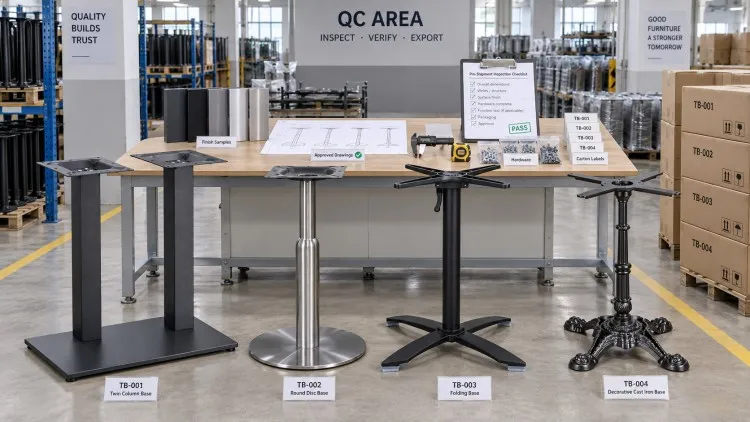
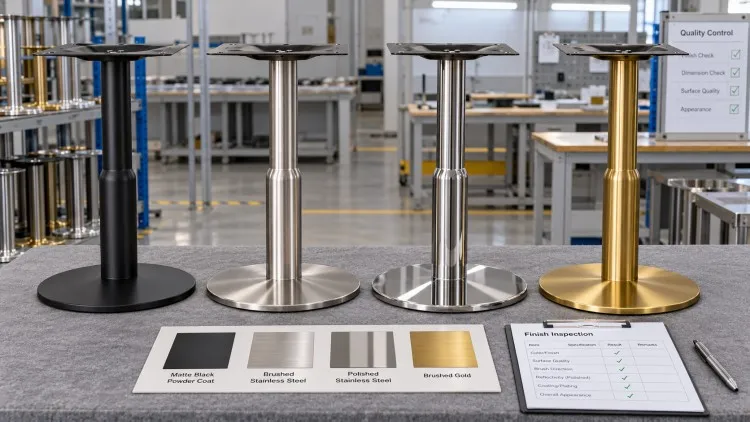
Finish inspection should begin with an approved physical reference whenever appearance is commercially important. A digital photo alone is not a reliable production standard because camera exposure, screen brightness and surrounding light can change the way color, gloss and metallic reflection appear.
The approved finish reference should identify the product model, substrate material, finish type, color or color code, texture or gloss level, brushing direction when applicable, approval date and revision.
The existing Commercial Table Base Sample Approval Checklist can be used earlier in the project to establish this physical finish reference before bulk production.
3. Record the Finish Specification Before Production
A buyer should avoid using only broad descriptions such as “black,” “gold,” “brushed” or “polished.” These words describe a direction, but they do not fully define the approved production appearance.
A practical finish specification should record the substrate, finish process, color reference, gloss or texture, approved sample ID, visible-surface expectation, protected areas, masking requirements, packing protection and any project-specific acceptance notes.
If the buyer requires coating thickness, corrosion testing, adhesion testing or another technical performance test, the method and acceptance criteria should be defined separately. Visual inspection should not be used as a substitute for a specified laboratory or process test.
4. Inspect Powder-Coated Table Bases
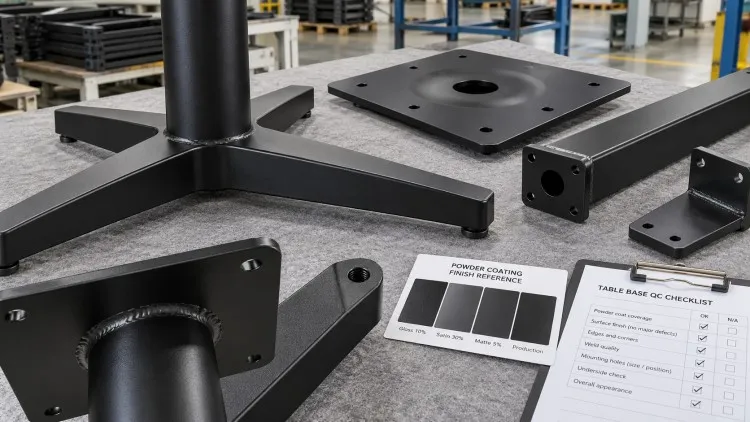
Powder-coated steel and cast iron table bases should be compared with the approved color and surface effect under reasonably consistent lighting. Inspect complete units from different parts of the production batch rather than checking only one convenient carton.
Key visual checks include color consistency, matte/sand/gloss effect, even coverage, unexpected texture variation, bare metal, chips, scratches, contamination, heavy coating buildup around holes, thin coverage on edges, and coating condition around welds and joints.
Where mating surfaces, threads or hardware interfaces must remain functional, verify that coating or masking does not interfere with assembly.
5. Pay Extra Attention to Edges, Welds, Holes and Undersides
Many finish differences are easiest to find away from the main front-facing surface. Edges, corners, weld transitions, underside areas and mounting holes often reveal incomplete preparation, thin coverage, coating buildup or handling damage.
For welded structures, check whether grinding and coating around the joint match the approved workmanship level. For floor plates and top plates, inspect both the visible edge and the underside where cartons, pallets or assembly tools may have caused marks.
6. Inspect Brushed Stainless Steel by Direction and Consistency
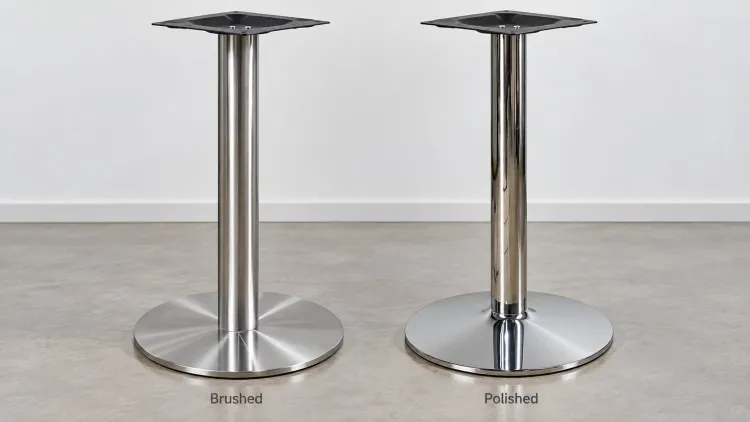
Brushed stainless steel should not be judged only by whether the surface is “silver.” The direction, density and continuity of the brushed pattern strongly affect the final appearance.
Compare grain direction between the floor plate, column, decorative cover and other visible components. Look for cross scratches, local rework marks, abrupt changes in grain, inconsistent brightness, dents, fingerprints, joint marks and damaged protective film.
Straight-grain and circular-brushed surfaces create different visual effects, so the inspection record should state which approved direction applies to each visible component.
7. Inspect Polished Stainless Steel for Reflection Quality
Polished stainless steel makes handling and surface defects more visible. A bright finish can show scratches, haze, swirl marks, fingerprints, dents or local polishing differences that may be less noticeable on a brushed surface.
Inspect polished components from more than one viewing angle. Compare adjacent parts for reflection consistency and check whether protective film or wrapping has remained intact until the correct packing stage.
Do not create a universal scratch tolerance during inspection. The buyer and supplier should define acceptable appearance with the approved sample, project viewing distance and documented acceptance standard.
8. Control Gold, Silver and Other Decorative Finish Matching
Decorative gold, brass-style, silver and custom-color table bases require component-to-component matching as well as batch-to-batch matching.
A floor plate, column and top plate may each reflect light differently because of shape and surface direction, but they should still belong to the same approved finish system.
When the same project uses several models, compare them together before shipment. This is particularly useful for restaurant chains, hotels or furniture collections where multiple table shapes are installed in one interior.
9. Compare the Batch Under Consistent Lighting
Lighting can change how black, metallic and reflective finishes appear. Inspection should therefore avoid comparing one sample under direct sunlight with another sample under a dark warehouse light and treating the difference as a production defect.
Choose a repeatable inspection area where practical and compare several units side by side. For important decorative projects, include the approved physical sample in the same viewing area.
10. Define Visible Zones and Acceptance Priorities
Not every surface has the same visual importance after installation. A polished pedestal at eye level may need stricter appearance control than a hidden underside that never becomes visible in normal use.
For appearance-sensitive projects, the buyer can define primary visible surfaces, secondary visible surfaces and normally hidden surfaces. The inspection record should then state what type of defect is unacceptable in each zone.
11. Sample Across Different Cartons and Production Positions
Finish inspection should represent the production batch rather than one carefully selected unit. Where practical, sample from different cartons, packing times, pallet positions or production groups.
Mixed-model orders should also include each important finish, height or model combination. If a project uses the same gold finish on several products, at least some samples should be viewed together to confirm coordination.
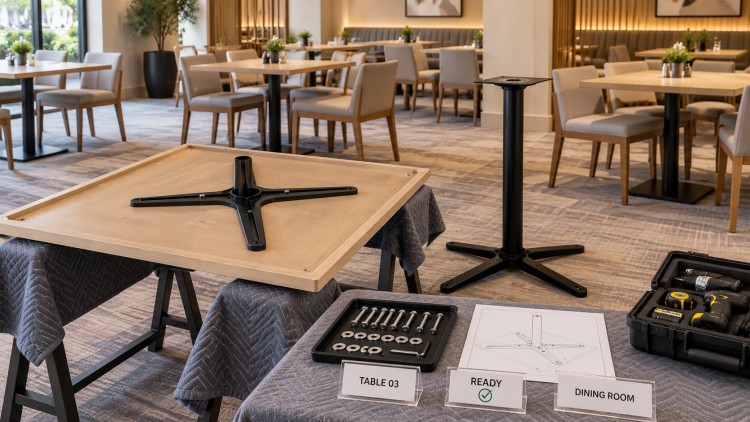
12. Protect the Finish During Assembly and Packing
A product can pass finish inspection and still arrive with damage if completed surfaces contact each other during packing or move inside the carton during transportation.
Check whether finished components are separated, whether protective film is used correctly where required, whether heavy metal parts can strike decorative surfaces, and whether hardware bags are fixed so that screws and bolts cannot move freely against the product.
The Commercial Table Base Pre-Shipment Inspection Checklist can be used to connect this finish review with the broader packing, labeling and shipment approval process.
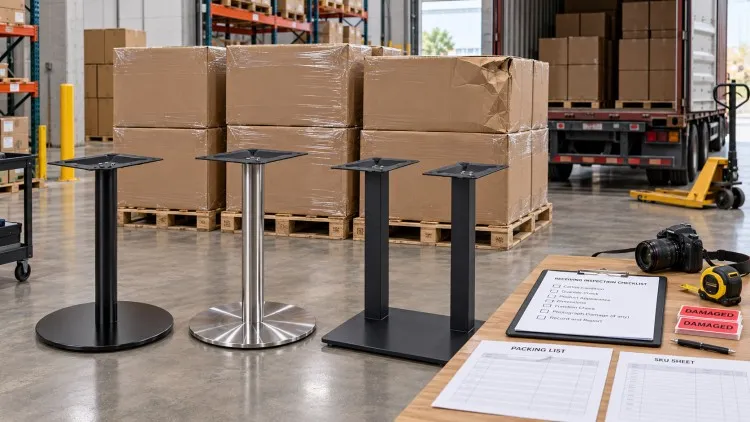
13. Recheck High-Risk Surfaces After Transportation
Some finish defects are created after factory inspection rather than during production. Polished metal, brushed decorative covers, sharp coated edges and large floor plates are especially sensitive to carton movement, abrasion and impact.
At warehouse receiving, prioritize cartons with crushing, punctures, water exposure or other visible damage. Compare any transport-related finish issue with pre-shipment photos and the original packing condition before deciding how the problem should be classified.
14. Product Examples for Different Finish Types
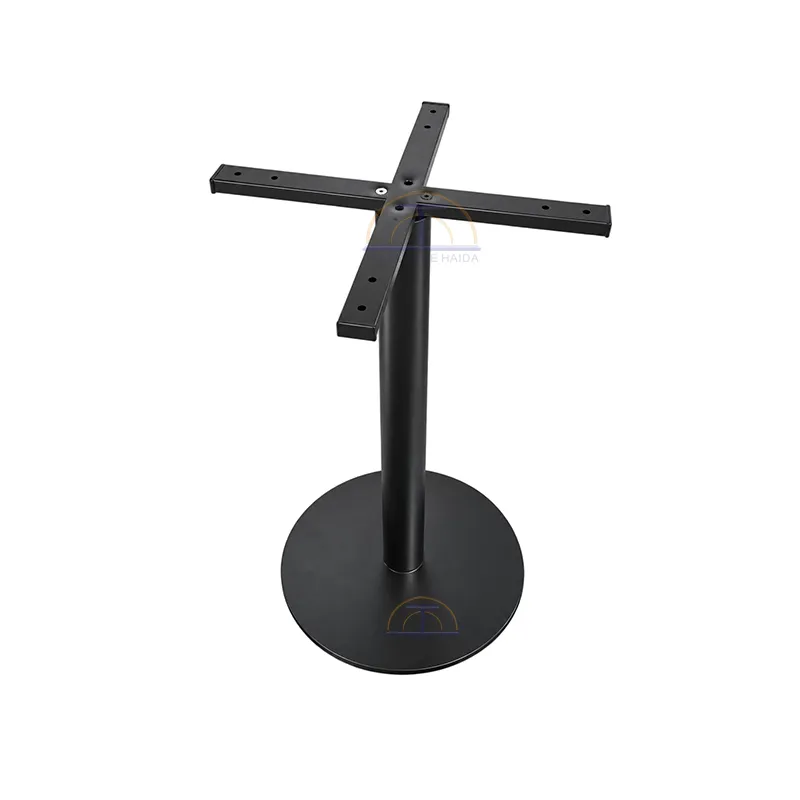
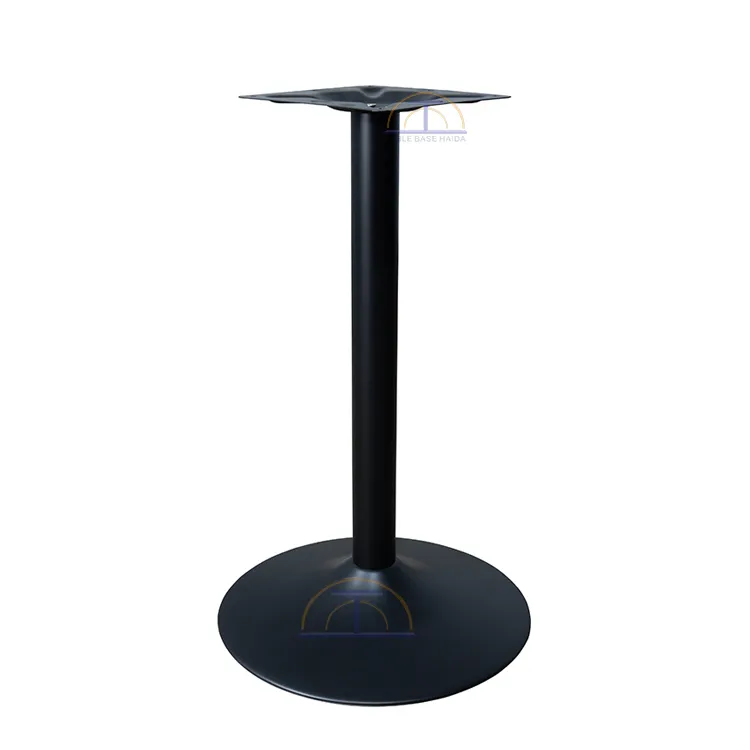
HD-JN10 1080mm Bar Height Steel Table Base uses a powder-coated finish, making it a practical reference for checking coated steel surfaces, edge coverage, texture and assembly interfaces.
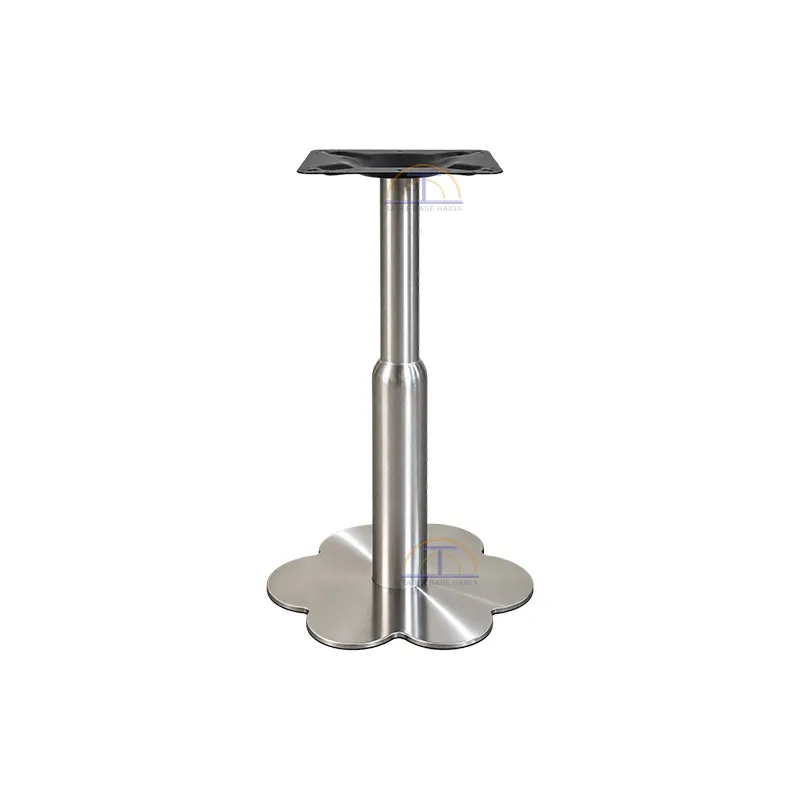
HD-JN09 Flower Shaped Stainless Steel Table Base is shown with a brushed silver finish. Its decorative floor plate and center column make grain direction and component-to-component consistency especially visible.
HD-J226 Brushed Gold Tulip Table Base uses a brushed gold appearance and is available with brushed or powder-coated finish directions depending on the selected material and project configuration.
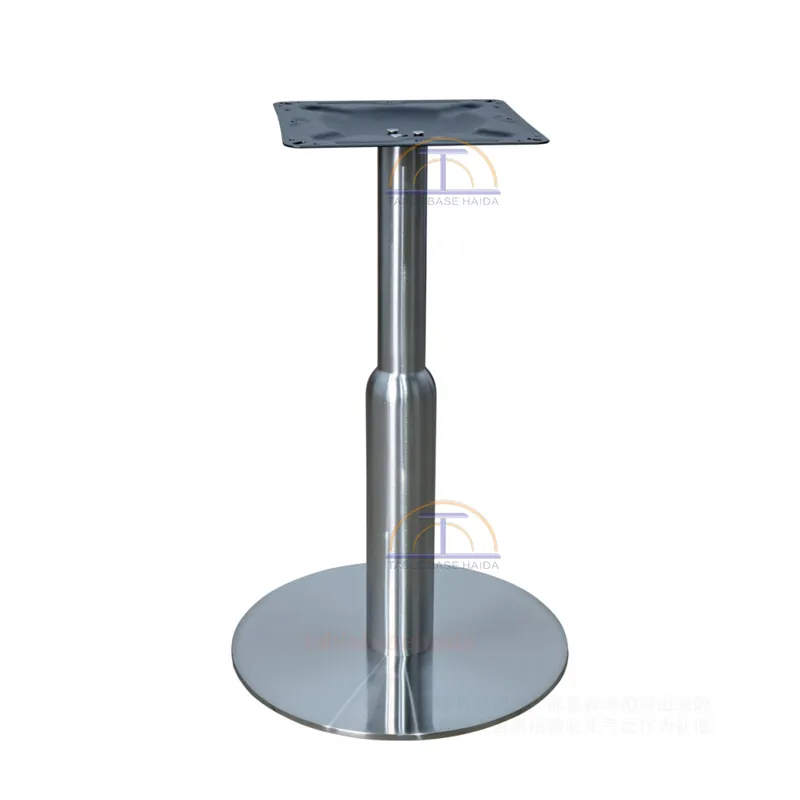
HD-J311 Stainless Steel Disc Pedestal Table Base supports brushed, polished and powder-coated finish options, making it useful for comparing different inspection priorities.
These products illustrate different finish-control questions rather than universal acceptance standards. Final inspection requirements should always follow the approved order specification and finish reference.
15. Create a Finish Inspection Record by Model and Batch
A finish inspection becomes more useful when the result can be traced to a model and production batch. The record should identify what was inspected, which reference was used and what action was taken if a difference was found.
Useful fields include PO number, model, buyer SKU, material, finish description, approved sample or color reference, batch number, inspected quantity, visible-zone result, scratches/dents result, edge/weld result, protection/packing result, photo reference and final disposition.
16. Define the Corrective Workflow Before Shipment
When a finish issue is found, the next step should not be an undefined request to “make it better.” Identify the affected model, quantity, batch and defect type, then agree whether the product requires cleaning, local rework, recoating, component replacement, segregation or reinspection.
For appearance-critical orders, reworked pieces should be compared again with the approved reference before shipment. A repair that removes the original defect but creates a visible color or texture difference is not necessarily a successful correction.
17. How Haida Supports Finish-Controlled Table Base Orders
Haida produces commercial table bases in cast iron, steel, stainless steel and aluminum, with powder-coated, brushed, polished and other project-specific surface directions available depending on the selected product.
For bulk or project orders, buyers can provide the model, material, finish reference, color or texture requirement, quantity, tabletop application and target market. These details help establish a clearer sample and production reference before mass production.
For a finish-sensitive order, contact Haida for finish-controlled table base support with the approved sample requirements and project details so the surface standard can be discussed together with structure, packing and bulk-production control.
18. FAQ
Q1: Is a digital color photo enough for finish approval?
Not for appearance-critical orders. Photos are useful records, but a physical sample or clearly controlled reference is more reliable because lighting and screens change perceived color and gloss.
Q2: What should be checked on a powder-coated table base?
Check color and texture consistency, coverage, scratches, chips, contamination, edge coverage, weld areas, holes and any coating buildup that could affect assembly.
Q3: What is the main difference between inspecting brushed and polished stainless steel?
Brushed surfaces require close control of grain direction and continuity. Polished surfaces require more attention to reflection consistency, haze, swirl marks, scratches and handling damage.
Q4: Should every surface use the same visual acceptance rule?
Not necessarily. Appearance-sensitive projects can define primary visible, secondary visible and normally hidden zones, then document the acceptance expectation for each area.
Q5: Why should packing be included in finish inspection?
Because many scratches and dents occur after finishing, during assembly, packing, pallet handling or transportation. A good finish-control process must protect the approved surface until the product reaches the buyer.
19. Conclusion
Commercial table base finish inspection should connect the approved physical reference, production batch, visible surfaces, handling condition and packing protection. Powder-coated, brushed and polished surfaces require different inspection priorities, but the underlying principle is the same: define the standard before production, compare representative units against that standard and document any corrective action before shipment.