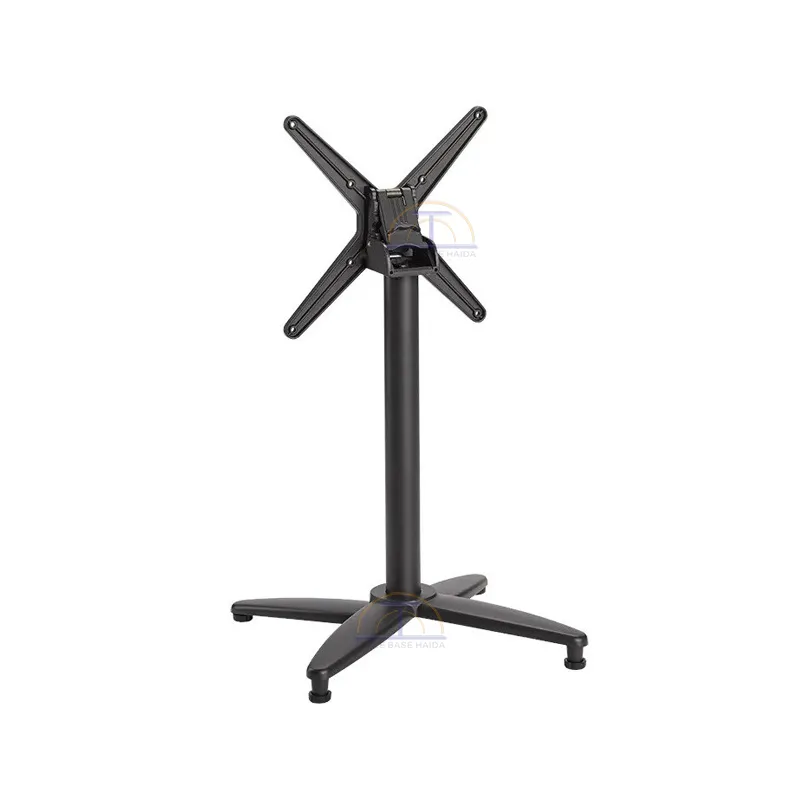
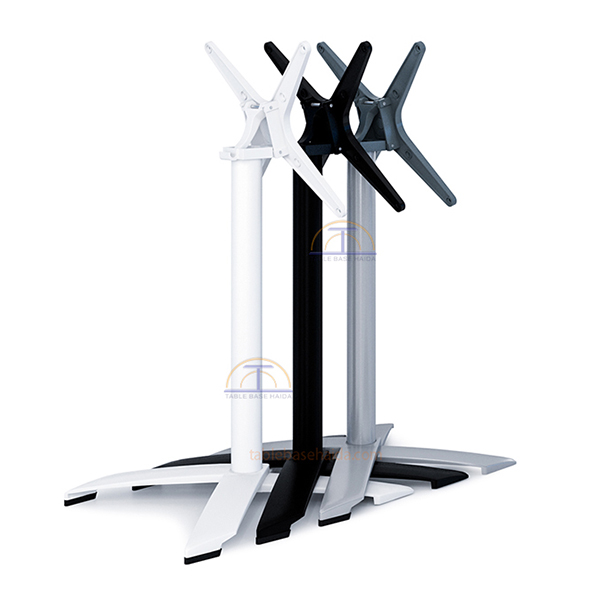
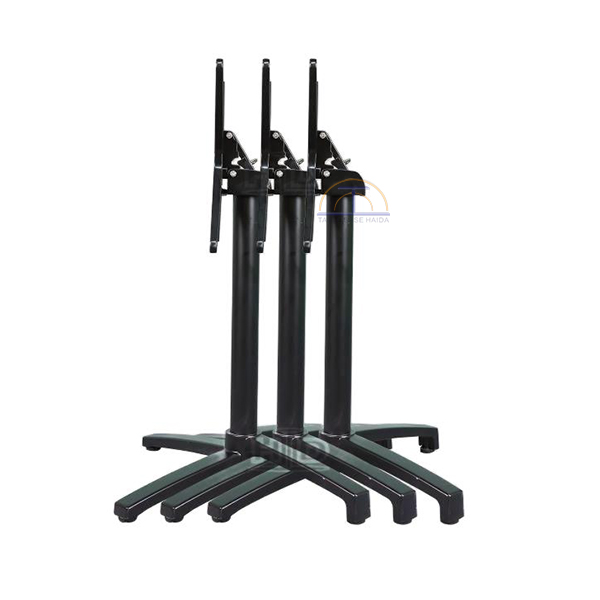
1. Why Flexible Venues Need a Different Table Base Strategy
Restaurants, hotel banquet areas, cafes and event spaces do not always use one fixed floor plan. A breakfast area may become a meeting space, a banquet room may change from classroom seating to dining, and a cafe terrace may need to clear part of the floor after service. In these environments, the table base affects more than stability. It affects how quickly staff can reset the room, how much storage space is required, how often finishes are damaged during handling and how easily the same furniture can support different operating modes. Folding and stackable table bases should therefore be evaluated as part of an operating system, not simply as another table-base style.
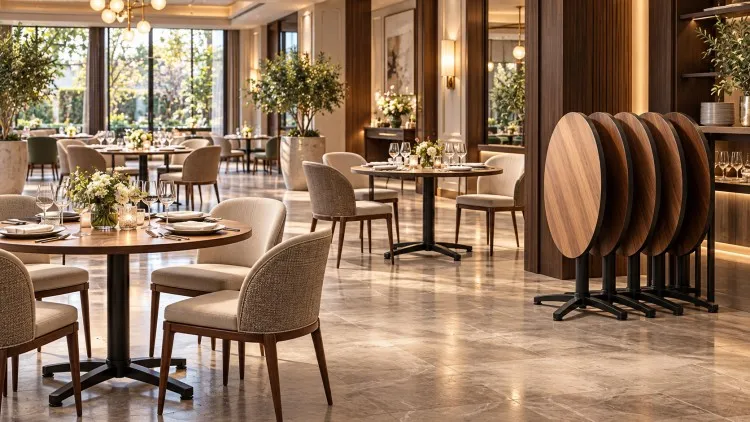
2. Start With the Venue Changeover Plan
Before choosing a folding mechanism, define how the venue actually changes during a normal week. Record which zones move, how often they move, how many tables are involved, where the tables are stored and how many staff members normally handle the changeover. A venue that moves six cafe tables once per day has a very different requirement from a hotel ballroom that resets dozens of tables between events. The existing Restaurant Seating Capacity & Table Size Guide can help establish the basic relationship between guest count, table size and floor layout before flexibility requirements are added.
3. Folding, Nesting and Stacking Are Not the Same Function
Buyers should separate three terms that are often mixed together. A folding base allows the tabletop or base structure to move into a more compact position. A nesting system allows several complete tables to move closer together because their frames or tops overlap without major interference. A stackable system allows units to be placed in a controlled stacked arrangement. One product may provide only one of these functions, or combine several of them. Procurement documents should state the exact required function instead of using ‘folding’ as a general label.
4. Measure Storage by the Complete Table, Not the Base Alone
A compact folded base does not automatically create a compact stored table. The final storage footprint depends on tabletop diameter or width, folding direction, top thickness, handle position, frame geometry and whether adjacent tables can nest without the tops colliding. During sample approval, measure the floor area required for a realistic group of complete tables, such as 10 or 20 units, in the intended storage orientation. This gives the operations team a more useful figure than the folded dimensions of one loose base.
5. Changeover Time Is a Practical Procurement Metric
For flexible hospitality spaces, reset time can be measured during the sample stage. Ask staff to fold, move, store, retrieve and reopen several complete tables using the same route and storage room planned for the project. Record where the process slows down: release handles that are difficult to reach, heavy tables that require two people, bases that catch on door thresholds, or folded tables that are hard to align in storage. The goal is not to chase the fastest mechanism in isolation, but to reduce friction across the complete changeover process.
6. Balance Handling Weight With In-Use Stability
Material choice changes the handling profile. Cast iron can provide substantial floor mass and is useful where buyers prioritize a planted feel during service, but the complete table may be heavier to move repeatedly. Aluminum reduces handling weight and is often practical for terraces, cafes and event spaces that reconfigure furniture frequently. The correct choice depends on tabletop weight, floor condition, wind exposure where relevant, staff handling expectations and how often the table is moved. Lightweight should not be treated as automatically better, and heavier should not be treated as automatically more commercial.
7. Review the Folding Mechanism as a Moving Component
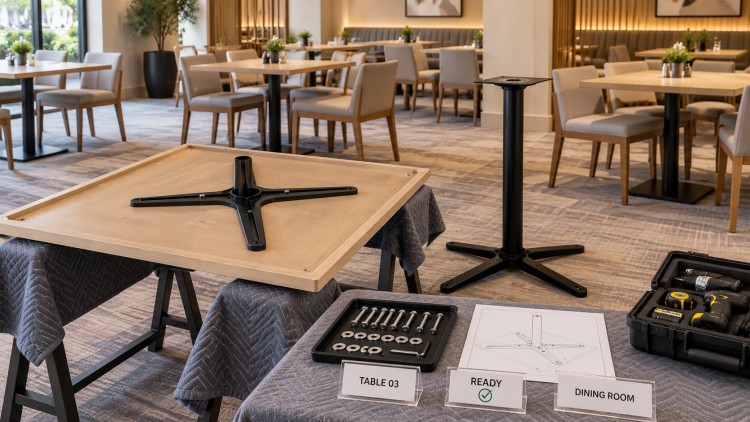
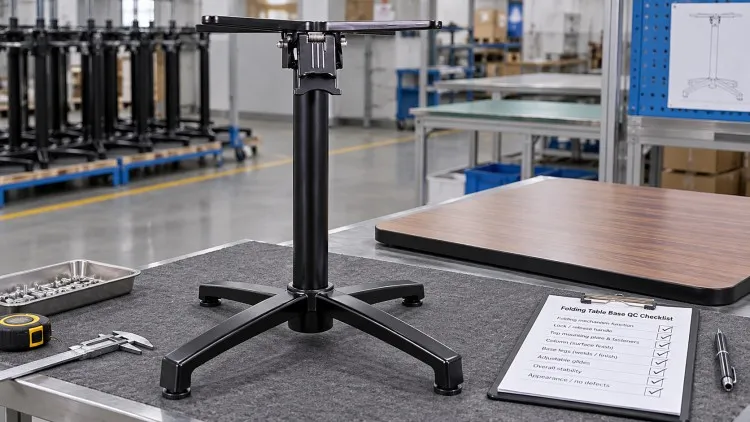
A folding table base has moving parts, so appearance inspection alone is not enough. Buyers should operate the sample repeatedly and check the lock, release action, hinge alignment, fasteners and any areas where metal parts contact each other. The mechanism should reach a clear open position and a clear stored position without unexpected looseness or interference. Also check whether the operating point is easy to access when the tabletop is installed and whether staff can use it without placing fingers in obvious pinch zones.
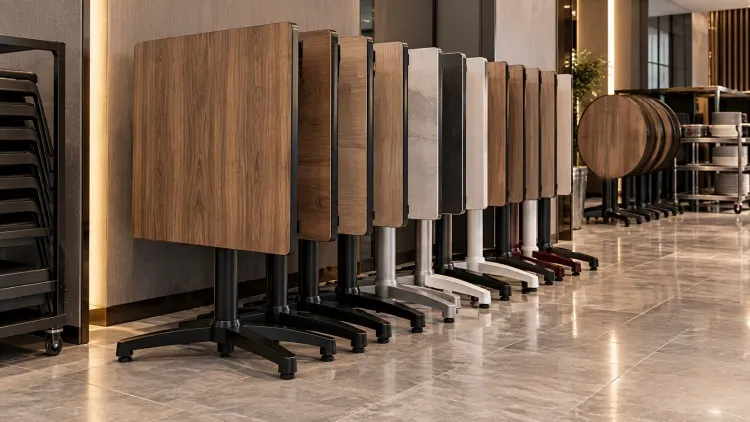
8. Check Nesting Contact Points Before Bulk Production
Nesting can save floor area but may also create repeated contact between adjacent tables. Identify where folded frames, columns, feet or tabletops touch when units are stored together. If painted or decorative surfaces rub directly against each other, the storage system may create scratches even when the product finish is acceptable at shipment. Sample approval should therefore include the nested position, not only the open dining position. Where necessary, protective pads, controlled spacing or a storage rack can be included in the operating plan.
9. Coordinate the Folding Top With the Tabletop
The folding top plate and tabletop must be treated as one system. Confirm tabletop size, thickness, material, underside reinforcement, mounting-hole position, edge clearance and the direction the top moves when folded. A folding mechanism can work correctly as a loose component but become restricted after a thicker tabletop, apron, cable box or reinforcement block is installed. For basic tabletop-to-base matching, the 2-Top & 4-Top Table Base Sizing Guide provides a useful starting point, but the folding mechanism still needs its own clearance check.
10. Adjustable Height Adds Flexibility but Also Adds Control Points
Some multi-use venues want one table system to support dining, cafe and bar-height functions. Adjustable-height folding bases can reduce the number of furniture types the venue needs to store, but the project should control the approved height positions, tabletop pairing, locking method and staff instructions. A height-adjustable system is most useful when the operating team actually has a repeatable reason to change height; otherwise, the additional mechanism can add complexity without creating real value.
11. Product Examples for Different Flexible-Space Requirements
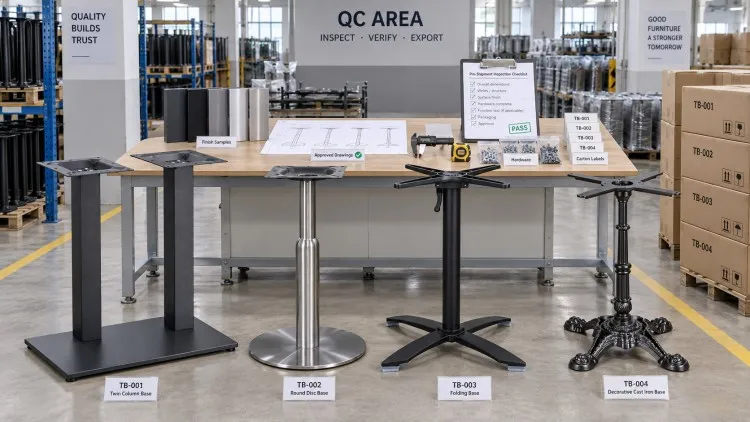
Different folding structures suit different operating priorities. The HD-J245 Foldable 3-Leg Claw Base uses cast iron, a folding top structure and a decorative three-leg profile, making it relevant for bistro-style venues that want a heavier base while still improving after-hours storage. The HD-J277 Adjustable Height Folding X-Base uses aluminum and combines folding with adjustable height, which is useful for cafes, bars and event spaces that change both layout and table height. The HD-J153 Industrial Folding Aluminum X-Base provides a simpler lightweight folding direction for cafes and outdoor commercial spaces. The HD-J278 X-Base Adjustable Aluminum Lift Table Leg combines a foldable aluminum structure with a 700-1090 mm published height range, making it relevant for outdoor or multi-mode venues that need more height flexibility. These examples represent different operating directions rather than universal recommendations; the final match should be confirmed against the actual tabletop and project workflow.
12. Build a Simple Changeover SOP for Staff
The same furniture performs better when the operating method is standardized. A simple SOP can define who releases the mechanism, how the table should be lifted or rolled, the correct storage orientation, the maximum number of units allowed in one row or rack, where protective pads are placed and how tables are reopened before service. For hotel or chain operations, the SOP can also identify which model belongs to each room or zone so that furniture is not mixed after events.
13. Include Mechanism Checks in Routine Maintenance
Folding and adjustable mechanisms should be included in the venue’s normal furniture inspection. Check fasteners, hinge points, locking action, release handles, glides and visible contact wear. If a table begins to feel different from the rest of the batch, remove it from service and inspect the mechanism before the difference becomes a larger operational problem. Maintenance records do not need to be complicated, but they should identify the model, location, issue and action taken.
14. Put Operational Requirements Into the RFQ
A buyer should not request only ‘folding table bases’ and expect the supplier to infer the operating requirement. The RFQ should define tabletop size and material, target height, folding direction, whether nesting or stacking is required, expected indoor or outdoor use, storage-room constraints, finish, quantity, packing method and any special mechanism test. If the venue has narrow doors, ramps, lifts or a specific storage rack, those limits should be shared before the model is finalized.
15. Common Mistakes in Folding and Stackable Table Base Projects
Common problems usually come from approving the product in isolation. Buyers may check one open table but never test ten folded tables together; select a lightweight base without checking the tabletop weight; approve the mechanism without installing the production tabletop; ignore contact wear during nesting; choose an adjustable model without defining approved heights; or overlook the route between the dining area and storage room. The most reliable approval process tests the complete table in the same movement and storage pattern the venue will use after installation.
16. How Haida Supports Flexible Restaurant and Hospitality Projects
Haida manufactures cast iron, aluminum, steel and stainless steel table bases for restaurants, hotels, cafes, bars and furniture dealers. For flexible-space projects, buyers can provide the tabletop size and material, target height, required folding or nesting function, indoor/outdoor use, storage constraints, finish and quantity. Haida can then help compare suitable structures, confirm mounting details and prepare bulk-order specifications before production. For a folding or stackable table base project, contact Haida with the floor plan, tabletop schedule and operating requirements so the base can be reviewed as part of the complete table system.
17. FAQ
Q1: What is the difference between a folding and a stackable table base?
A folding base moves into a more compact position. A stackable or nesting system is designed so multiple complete units can be stored together efficiently. A product may be foldable without being truly stackable, so buyers should confirm the exact storage geometry.
Q2: Are aluminum folding bases always better for banquet spaces?
No. Aluminum can reduce handling weight, which is useful for frequent resets, but the final choice still depends on tabletop weight, stability requirements, floor conditions and the way staff move the tables.
Q3: What should be tested before approving a folding table base?
Test the complete table with the production-style tabletop. Operate the lock and release mechanism, verify folding clearance, check stability in the open position, measure the stored footprint and test several tables together in the planned storage arrangement.
Q4: Can one folding base be used for both dining and bar-height layouts?
Only if the base is designed and approved for those height positions. Adjustable-height folding models can support multiple operating modes, but the approved heights, tabletop pairing and locking method should be controlled in the project specification.
Q5: How can hotels reduce damage when folding tables are stored together?
Identify the contact points in the folded or nested position and control how the tables touch. Protective pads, spacing rules, racks or carts can reduce repeated rubbing between painted frames, metal parts and tabletop edges.
18. Conclusion
Folding and stackable table bases create value when they reduce the real operating cost of changing a space. The important questions are not only whether the base can fold, but how the complete table moves, how tightly multiple tables store, how the mechanism holds up to repeated handling and whether the tabletop, finish and staff workflow are compatible with the design. For restaurants, hotels and banquet venues, the best procurement process is to test the complete table, measure the real storage footprint and approve the changeover method before bulk production.