1. Why Table Base Specs Matter for Restaurant Chains
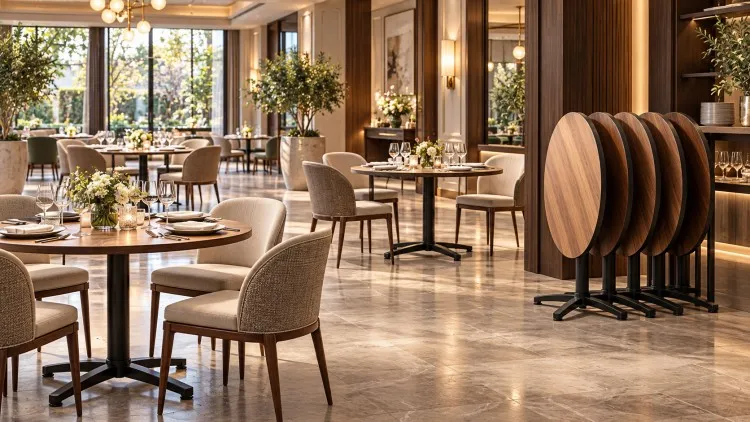
For a single restaurant, choosing table bases may be a simple purchasing decision. For a restaurant chain opening multiple stores, table base specifications become part of the brand rollout system.
If every store chooses different table base models, finishes, heights or hardware, the chain may face inconsistent appearance, difficult replacement, confusing installation and higher after-sales costs.
A clear table base specification helps restaurant chains keep style, stock, installation and maintenance consistent across locations.
2. Start with a Standard Table Base Specification Sheet
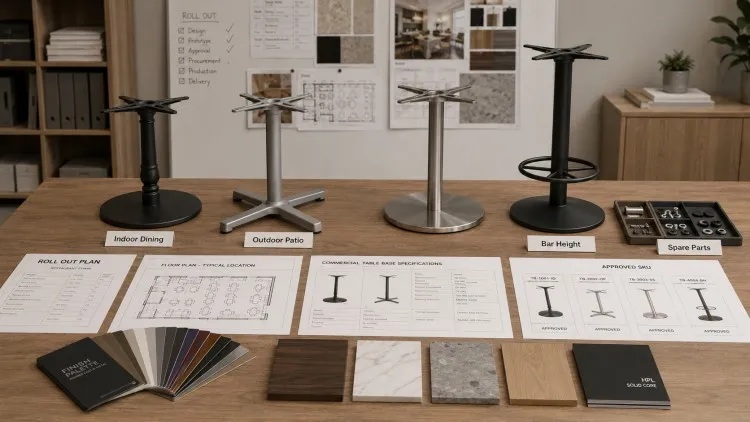
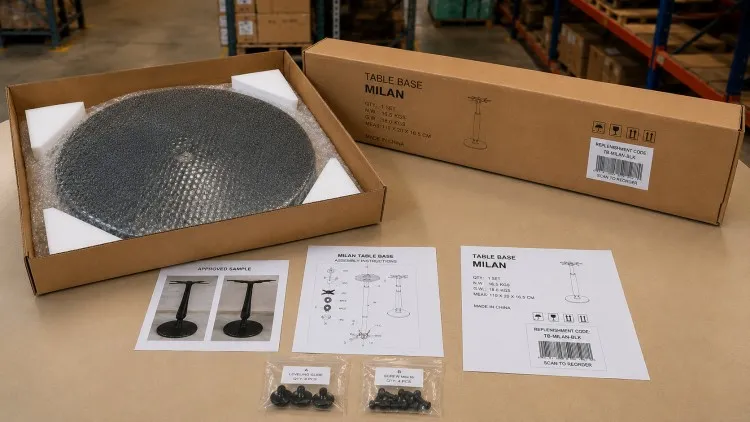
Before placing orders for multiple stores, restaurant chains should create a standard table base specification sheet. This document should define the approved models, dimensions, finishes, compatible tabletop sizes, packing requirements and replacement parts.
The goal is to make sure the purchasing team, design team, contractor and supplier all follow the same reference.
A standard specification sheet should include:
- Approved table base model
- Material and finish
- Standard height
- Base size and top plate size
- Recommended tabletop size
- Hardware bag contents
- Packing method
- Spare parts list
- Approved photos or sample reference
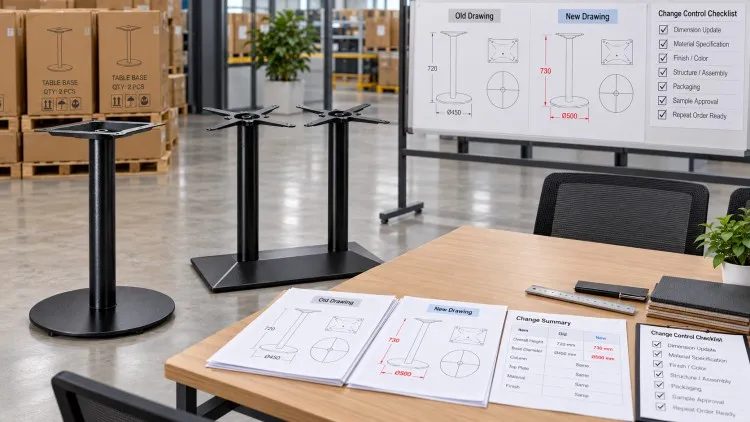
This specification sheet should be updated only when the brand officially changes the approved table base standard.
3. Lock the Core SKU for Repeat Store Openings
Restaurant chains should avoid changing table base SKUs too frequently. A locked core SKU makes repeat orders, stock planning and replacement easier.
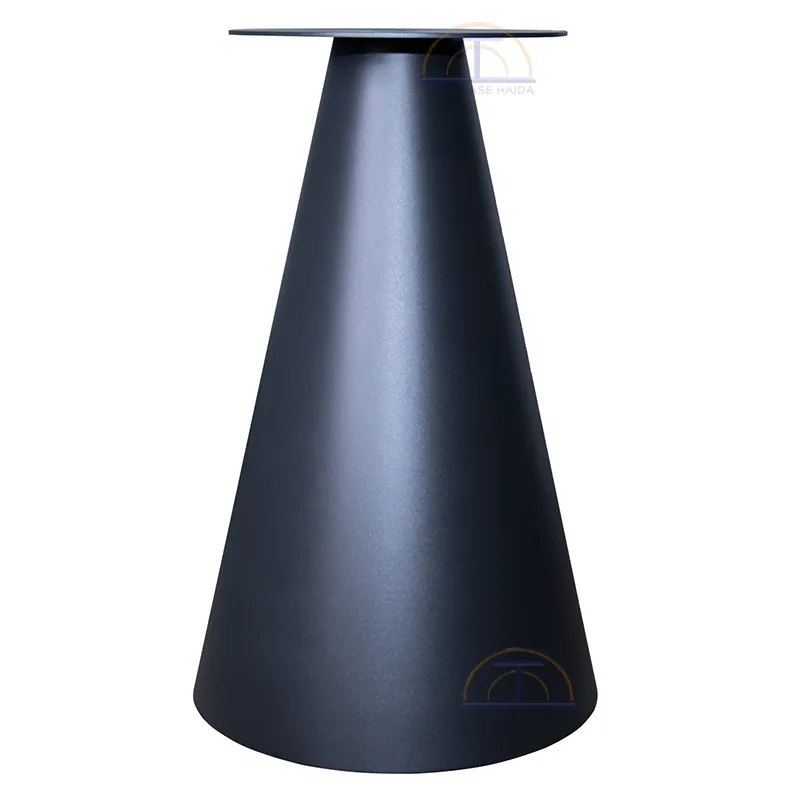
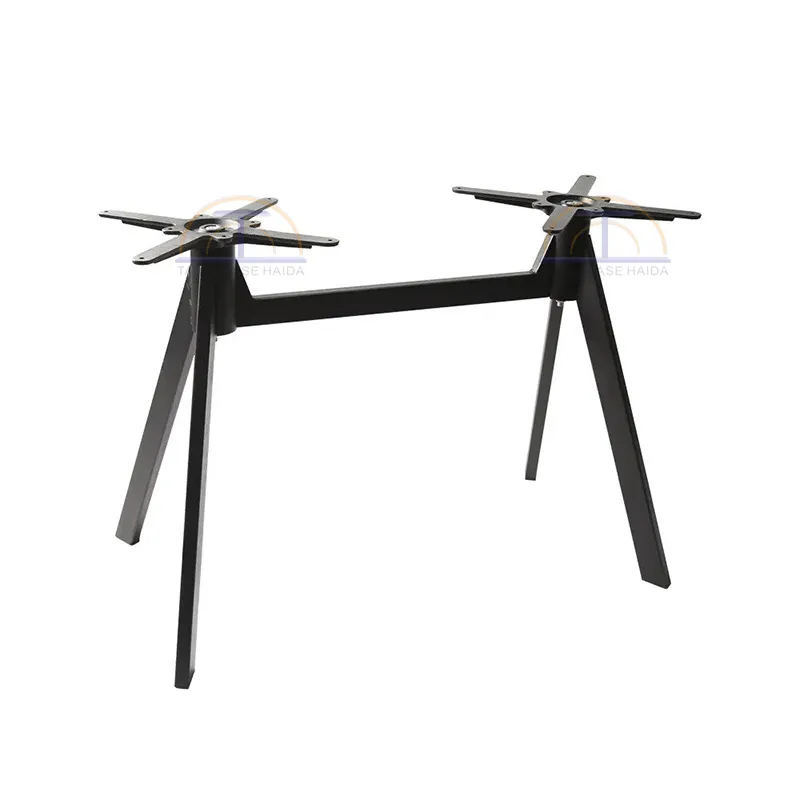
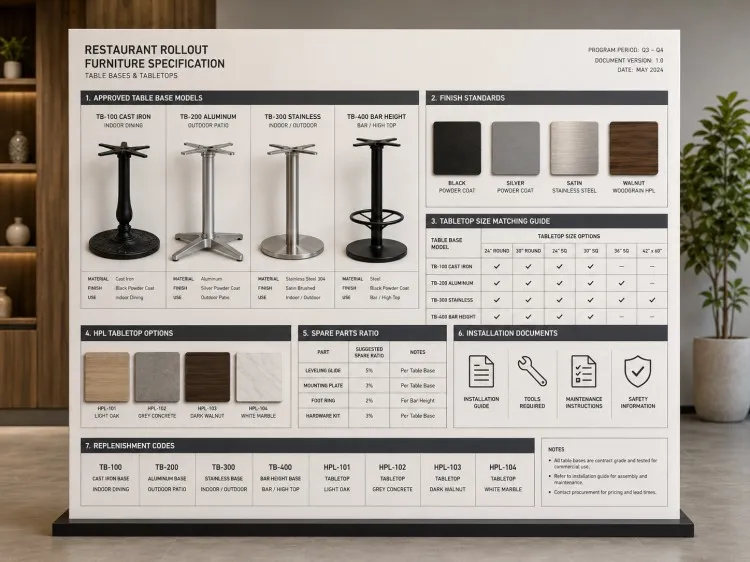
For example, a chain may approve one core indoor dining base, one bar-height base and one outdoor patio base. These models can become the standard table base package for new store openings.
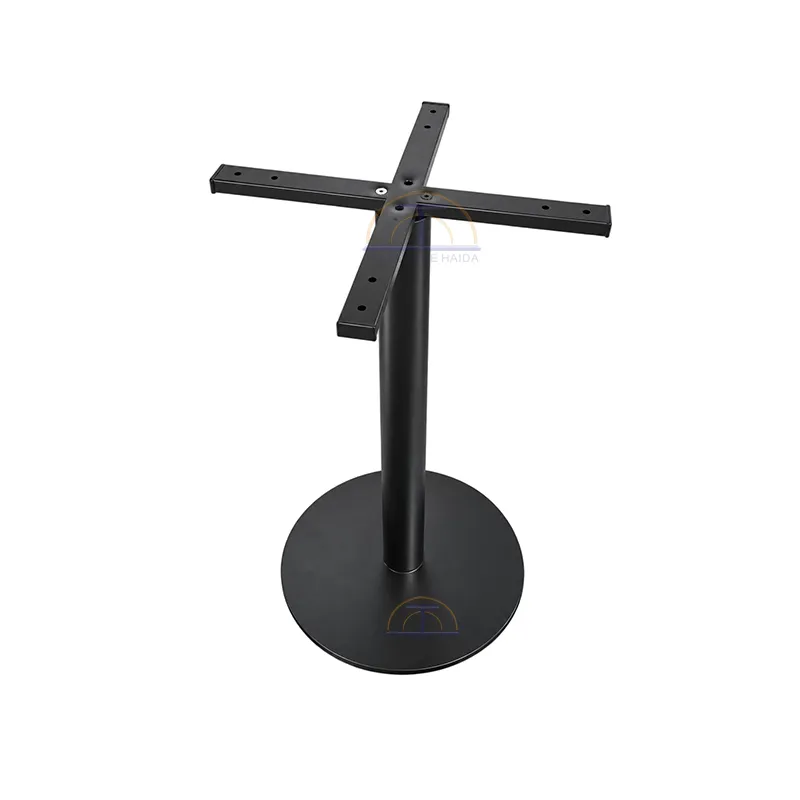
For indoor dining areas, many chains may choose stable cast iron table bases for standard restaurant seating. For outdoor patio areas, chains may select lighter aluminum table bases to support flexible layout and easier movement.
A simple chain rollout SKU structure can include:
- Indoor dining table base
- Outdoor patio table base
- Bar-height table base
- Replacement glides and screws
- Spare hardware bag
By limiting the number of approved SKUs, the chain can reduce ordering mistakes and simplify future store expansion.
4. Keep Finish and Color Consistent Across Locations
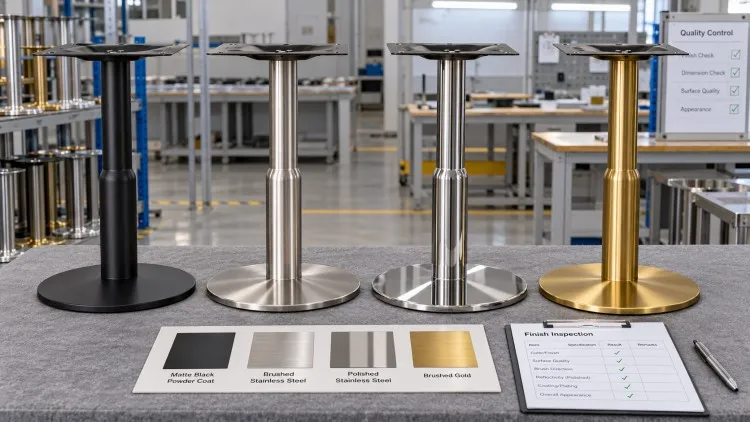
Finish consistency is important for restaurant chains because furniture is part of the brand image. A black powder-coated table base, brushed stainless steel base or special color finish should look consistent across different stores and order batches.
If the color changes from one batch to another, the dining area may look inconsistent even if the table base structure is correct.
Restaurant chains should keep approved finish samples, color codes, photos and supplier confirmation records.
Finish control should include:
- Approved color or finish sample
- Powder coating color code, if available
- Gloss level
- Texture requirement
- Brushed or polished direction for stainless steel
- Batch photo confirmation
For higher-end dining areas, stainless steel table bases can be specified with clear finish requirements such as brushed or polished surface.
5. Standardize Compatible Tabletop Sizes
A table base specification should not be separated from the tabletop specification. The base and tabletop must work together for stability, appearance and installation.
Restaurant chains should define which table base works with each tabletop size and material. This is especially important when stores use different table layouts, such as 2-top tables, 4-top tables, bar tables and outdoor tables.
Tabletop compatibility should include:
- Tabletop shape
- Tabletop size
- Tabletop material
- Approximate tabletop weight
- Recommended base spread
- Mounting hole requirements
- Indoor or outdoor application
For chains using lightweight commercial tops, HPL table tops can be matched with suitable indoor or outdoor table base options based on size, weight and application.
6. Create a Spare Parts Ratio for Every Rollout
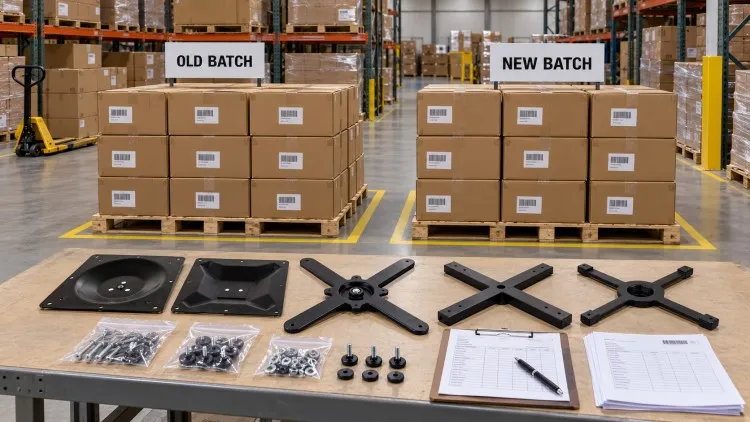
Spare parts planning is often ignored during restaurant rollouts. However, replacement glides, screws, bolts and hardware bags can help stores solve small maintenance issues quickly.
Instead of ordering spare parts only after problems appear, restaurant chains should set a spare parts ratio with every table base order.
Common spare parts include:
- Leveling glides
- Adjustable feet
- Screws and bolts
- Washers and nuts
- Mounting plates
- Spare hardware bags
A simple spare parts ratio can be based on the number of table bases ordered. For example, a chain may request extra glides and hardware bags with each store-opening shipment.
This helps reduce downtime, avoid urgent small orders and improve maintenance efficiency.
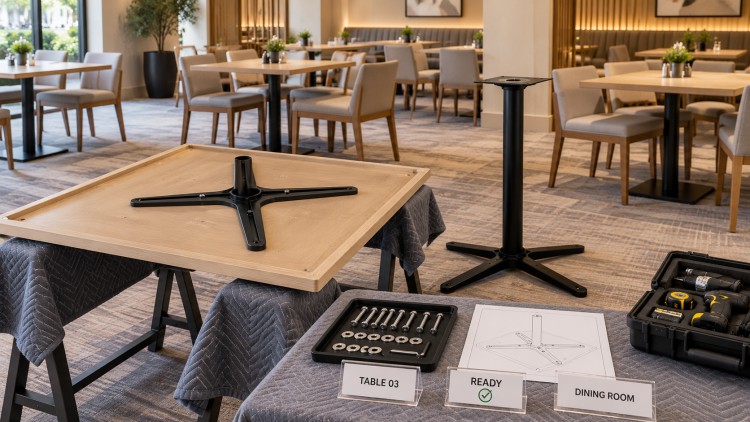
7. Standardize Installation Documents
Even when the product is correct, unclear installation can create problems during multi-store rollouts.
Restaurant chains should use the same installation document for the same approved table base SKU. This helps contractors and store teams install products consistently.
Installation documents should include:
- Product model and version
- Parts list
- Hardware bag content
- Step-by-step assembly guide
- Required tools
- Mounting notes for tabletops
- Leveling adjustment method
- Maintenance notes
For KD-packed table bases, the installation document should match the actual hardware bag and packing method.
8. Use Replenishment Codes for Repeat Orders
When a chain opens multiple stores, reorder communication must be simple. A clear replenishment code helps the purchasing team reorder the same product without repeating all specifications each time.
A replenishment code can include material, base type, height, finish, tabletop match and packing version.
Example replenishment code:
CI-X-720-BK-KD
This code can represent cast iron, X-base, 720 mm height, black finish and KD packing.
The code should be used in purchase orders, cartons, internal stock sheets and supplier communication.
9. Separate Standard Store Specs and Project Exceptions
Not every store has the same layout. A flagship store, outdoor-heavy location or special hotel restaurant project may require different table base specifications.
Restaurant chains should separate standard store specifications from project exceptions. This keeps the core system stable while still allowing flexibility for special locations.
Standard specs can cover:
- Regular indoor dining tables
- Standard bar tables
- Common outdoor patio tables
- Regular spare parts package
Project exceptions can cover:
- Special color finish
- Custom base size
- Heavy tabletop support
- Fixed or mounted bases
- Special packing or labeling
This structure helps chains avoid confusion between normal reorder items and special project requirements.
10. Keep Supplier Communication Consistent
A good table base rollout depends on clear supplier communication. Restaurant chains should send the same approved specification sheet, sample photos, finish requirements and packing notes for each order.
This reduces the risk of suppliers quoting or producing based on old information.
Supplier communication should confirm:
- Approved SKU and version
- Quantity per store
- Finish and color standard
- Tabletop compatibility
- Hardware bag details
- Packing and carton mark
- Spare parts ratio
- Delivery schedule
Before every new production batch, the chain should confirm whether the specification is unchanged or updated.
11. How Haida Supports Restaurant Chain Table Base Standardization
For restaurant chains, table base standardization is not only about choosing a model. It is about building a repeatable procurement system that supports multiple store openings, consistent brand appearance and easier maintenance.
Haida can support chain restaurant buyers with table base material options, finish confirmation, tabletop matching, sample review, packing details and repeat-order communication.
Buyers can compare different product categories, including cast iron table bases, aluminum table bases, stainless steel table bases and HPL table tops, before locking the final chain rollout specification.
To discuss a multi-store restaurant furniture rollout, buyers can contact Haida for table base specification support with store quantity, tabletop size, preferred material, finish requirement and opening schedule.
12. FAQ
Q1: Why should restaurant chains standardize table base specifications?
Standardized table base specifications help restaurant chains keep appearance, installation, replacement parts and repeat orders consistent across multiple locations.
Q2: How many table base SKUs should a restaurant chain approve?
A chain can start with a limited number of approved SKUs, such as one indoor dining base, one outdoor base, one bar-height base and a standard spare parts package.
Q3: How can chains keep table base color consistent across stores?
Chains should keep approved finish samples, color codes, gloss requirements, batch photos and supplier confirmation records.
Q4: Should spare parts be ordered with every rollout?
Yes. Spare glides, screws, bolts and hardware bags can help stores handle small maintenance issues quickly without waiting for urgent replacement orders.
Q5: What should be included in a table base specification sheet?
A table base specification sheet should include model, material, finish, height, base size, top plate size, compatible tabletop size, hardware, packing, spare parts and approved photos.
13. Conclusion
For restaurant chains, table base standardization supports more than purchasing. It supports store design, brand consistency, installation efficiency, spare parts planning and long-term maintenance.
A clear table base specification system should define approved SKUs, finish standards, tabletop compatibility, spare parts ratio, installation documents and replenishment codes.
When every store follows the same standard, restaurant chains can reduce purchasing mistakes, simplify supplier communication and make future rollouts easier to manage.