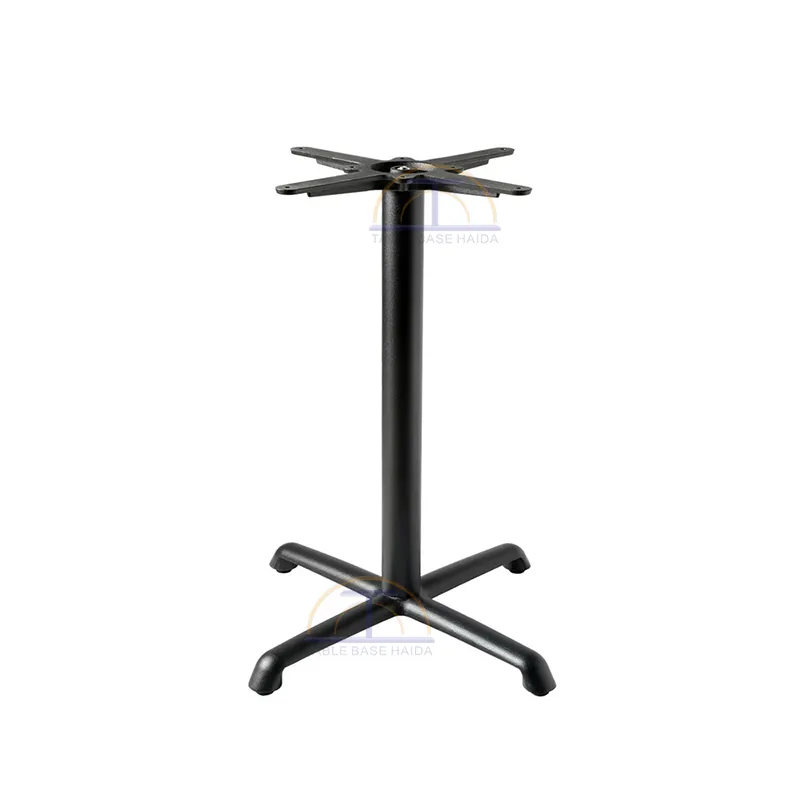
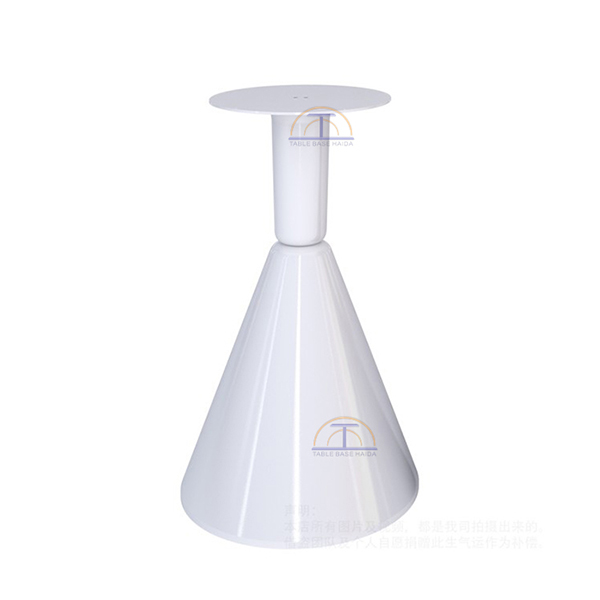
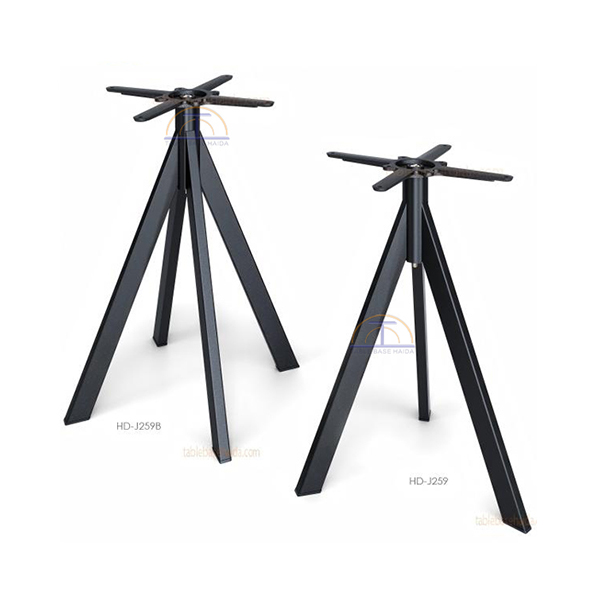
For furniture wholesalers, table bases should not be selected only by appearance. A profitable product line needs a clear SKU matrix that covers different customer needs, price levels, materials, heights, finishes and application scenarios.
A strong table base SKU matrix helps wholesalers reduce slow-moving stock, improve reorder planning, simplify sales recommendations and serve more types of restaurant, café, hotel and commercial furniture buyers.
The goal is not to carry as many models as possible. The goal is to build a focused, balanced and repeatable product line.

1. Start with the Good-Better-Best Structure
A practical SKU matrix should begin with a Good-Better-Best structure. This helps wholesalers serve different customer budgets without making the product line too complicated.
Good level products are usually standard, cost-effective models for regular restaurant and café projects.
Better level products offer stronger stability, better finish options or more flexible applications.
Best level products are suitable for premium restaurants, hotels, brand projects and buyers who care more about design, finish consistency or long-term durability.
A simple matrix may include:
| Level | Buyer Type | Product Focus |
|---|---|---|
| Good | Small restaurants, cafés, budget projects | Standard cast iron or steel bases |
| Better | Furniture dealers, mid-range restaurants | More finish options, stronger structure |
| Best | Hotels, brand chains, premium projects | Stainless steel, special finish, custom support |
2. Build the Matrix by Application Scenario
A wholesaler should not build the SKU matrix only by material. Application scenarios are often more useful for sales teams and customers.
Common scenarios include indoor restaurant dining, outdoor café and patio dining, bar and counter height seating, hotel dining and banquet areas, food courts, furniture dealer stock programs and project-based commercial furniture orders.
For example, indoor restaurant buyers may prioritize stability and cost control. Outdoor buyers may prioritize corrosion resistance, lightweight handling and stackable or foldable structures. Hotel buyers may care more about finish consistency and premium appearance.
3. Cover Core Materials Without Overloading Inventory
A balanced table base product line should include several core material groups, but each group should have a clear role.
Cast iron table bases can serve stable indoor dining, café and classic restaurant applications. They are useful for wholesalers who need reliable standard models.
Aluminum table bases can support outdoor, patio, café and flexible seating programs. They are useful when buyers need lighter handling or outdoor-oriented options.
Steel table bases can cover modern commercial furniture projects where cost, strength and design flexibility matter.
Stainless steel table bases can support higher-end restaurants, food service areas and hospitality projects that need a clean, premium and durable appearance.
The key is to avoid carrying too many similar SKUs in the same material. Each model should have a clear reason to exist.
4. Plan Standard Height and Bar Height Options
Height is one of the most important dimensions in a table base SKU matrix. Wholesalers should separate standard dining height and bar height models clearly.
A basic product line can include:
| Height Type | Typical Use | SKU Planning Suggestion |
|---|---|---|
| Standard dining height | Restaurants, cafés, hotel dining | Keep as core stock |
| Bar height | Bars, cafés, high tables | Keep selected models |
| Adjustable height | Flexible cafés, event spaces | Use as value-added SKUs |
| Folding height-adjustable type | Multi-use commercial areas | Use for niche or project buyers |
For most wholesalers, standard dining height should remain the main stock category. Bar height and adjustable models can be selected more carefully according to local demand.
For flexible café, bar or multi-use settings, a model such as the Adjustable Height Folding X-Base HD-J277 can be positioned as a value-added SKU rather than a basic stock item.
5. Choose Finishes That Match Market Demand
Finish selection affects both sales and inventory risk. A wholesaler does not need every color. It is better to focus on finishes that match the target market.
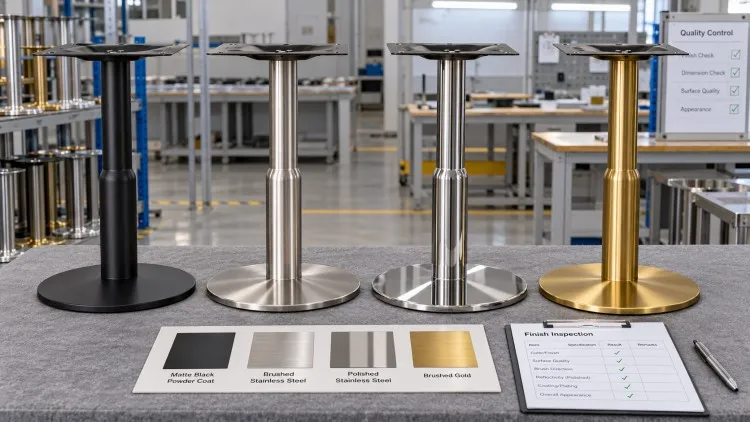
Common finish groups include matte black, glossy black, white, brushed stainless steel, polished stainless steel, chrome, gold or special decorative finishes, and custom powder coating.
For many restaurant furniture dealers, black powder coating can be a practical core finish because it works with many tabletop styles. Stainless steel or brushed finishes can be positioned as premium options. Special colors should usually be handled as project or OEM orders instead of regular stock.
6. Match Table Bases with Tabletop Categories
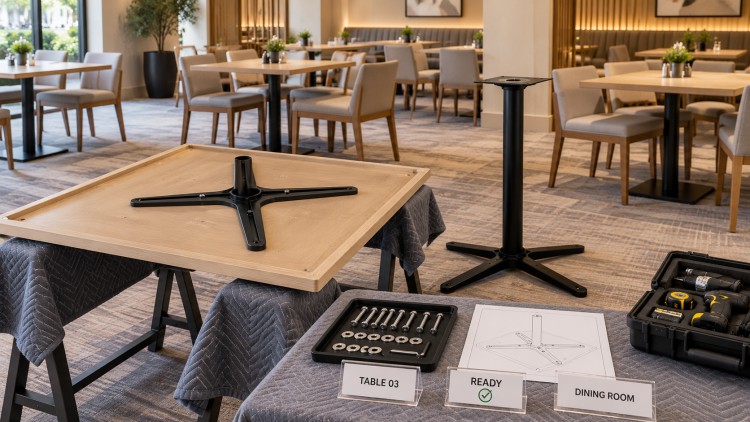
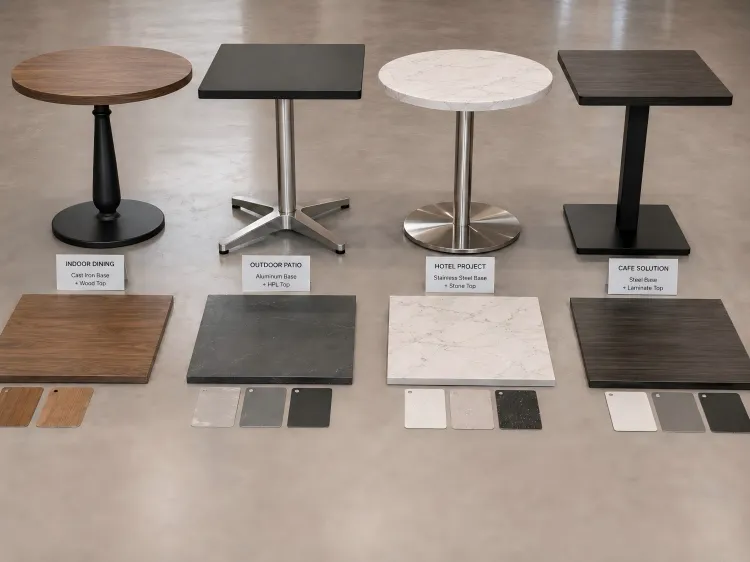
Wholesalers can improve sales by offering table bases together with compatible tabletop options. This makes it easier for restaurant buyers to order complete sets.
The SKU matrix should consider small square tops, round café tops, rectangular dining tops, HPL tabletops, sintered stone tops, wood or wood-look tops and outdoor tabletops.
For example, lightweight outdoor bases can be paired with HPL table tops or WPC tabletops for patio dining. Heavy-duty indoor bases can be paired with large wood, stone or sintered stone tops.
This approach turns the SKU matrix from a simple product list into a more useful sales solution.
7. Add Spare Parts and Replacement Items
A profitable table base program should include spare parts and replacement items. These small items can reduce after-sales friction and support repeat orders.
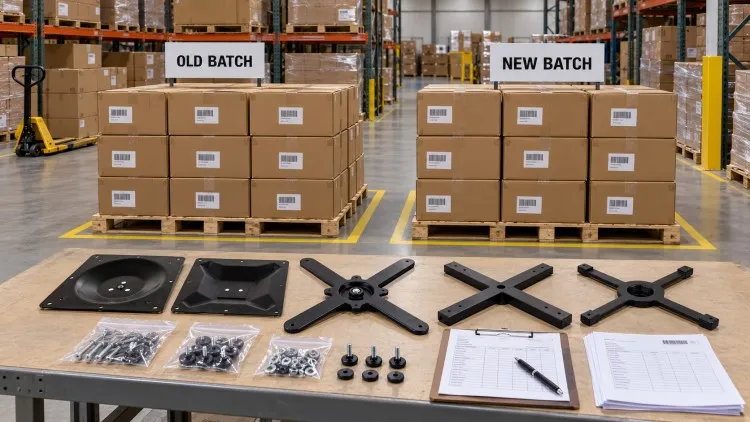
Useful spare parts may include leveling glides, adjustable feet, screws and bolts, mounting plates, spiders, columns, end caps, plastic floor protectors and spare hardware bags.
For wholesalers, spare parts can be stocked separately or packed together with bulk table base orders. This helps customers solve small maintenance issues without replacing the entire base.
8. Use SKU Codes That Sales Teams Can Understand
SKU codes should help the sales team, warehouse team and customers understand the product quickly. A confusing SKU system can slow down quoting, picking and reordering.
A practical SKU code can include material, base shape, height, finish, size, version and packing type.
For example:
CI-X-720-BK-KD
This can mean cast iron, X-base, 720 mm height, black finish and KD packing.
This type of SKU system makes it easier to manage quotations, stock sheets, catalogs and repeat orders.
9. Separate Stock SKUs and Project SKUs
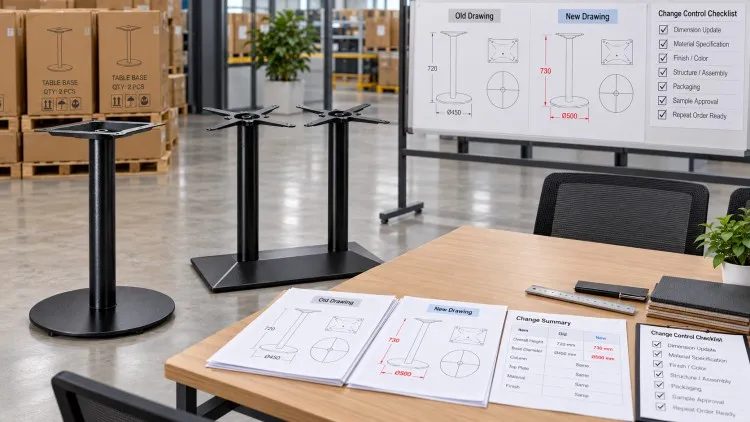
Not every model should become a stock SKU. Wholesalers should separate regular stock items from project-based items.
Stock SKUs should be stable, easy to sell and suitable for frequent reorders.
Project SKUs can include special colors, custom sizes, premium finishes, private label packaging or large project requirements.
A healthy product line usually has a smaller number of core stock SKUs and a wider range of project options available by request. This keeps inventory risk under control while still allowing the wholesaler to serve different customers.
10. Sample SKU Matrix for Furniture Wholesalers
Below is a simple example of how a furniture wholesaler can structure a table base SKU matrix.
| SKU Group | Material | Height | Application | Stock Role |
|---|---|---|---|---|
| Core Dining Base | Cast iron | Dining height | Indoor restaurant | Main stock |
| Outdoor Café Base | Aluminum | Dining height | Patio / outdoor café | Seasonal stock |
| Modern Steel Base | Steel | Dining height | Café / office / modern restaurant | Design option |
| Premium Dining Base | Stainless steel | Dining height | Hotel / premium restaurant | Higher-end option |
| Bar Base | Cast iron or steel | Bar height | Bar / high table | Selected stock |
| Folding Base | Aluminum or cast iron | Dining height | Flexible café / event | Project or seasonal SKU |
| Spare Parts Kit | Mixed accessories | N/A | Maintenance / after-sales | Add-on SKU |
This type of matrix helps sales teams recommend products faster and helps buyers compare options more clearly.
11. Common Mistakes When Building a Table Base SKU Matrix
Many wholesalers make the mistake of adding too many similar models. This creates warehouse pressure and makes sales recommendations harder.
Another common mistake is carrying too many colors without knowing the real market demand. Special colors may look attractive in a catalog, but they can become slow-moving stock if they are not supported by stable orders.
Wholesalers should avoid:
- Too many similar SKUs
- Too many special colors in stock
- No clear Good-Better-Best structure
- No spare parts planning
- No separation between stock and project SKUs
- No link between table bases and tabletop options
- No reorder plan for best-selling models
12. How Haida Supports Wholesale Table Base Programs
For wholesalers and furniture dealers, building a table base SKU matrix requires more than choosing individual products. It requires matching materials, finishes, heights, packaging and spare parts with real market demand.
Haida can support B2B buyers with different commercial table base categories, including cast iron table bases, aluminum table bases, steel table bases and stainless steel table bases. Buyers can also combine table bases with matching table top solutions to build a more complete furniture program.
For wholesalers, the right SKU matrix should be simple enough for sales teams to use, but complete enough to serve different restaurants, cafés, hotels and project buyers.
If you are planning a wholesale table base program, you can request a quote for your table base SKU matrix and share your target market, product levels, preferred materials and expected order quantity.
FAQ
How many table base SKUs should a wholesaler start with?
A wholesaler can start with a focused group of core SKUs instead of carrying too many models. A practical starting range may include core dining height bases, selected outdoor bases, a few bar height options and spare parts.
Should wholesalers stock special colors?
Special colors should usually be handled as project or OEM orders unless there is stable market demand. Core colors such as black, white or stainless steel finishes are usually easier to manage as regular stock.
Why should spare parts be included in the SKU matrix?
Spare parts help reduce after-sales problems and create repeat orders. Items such as glides, screws, mounting plates and spare hardware bags can improve customer support without requiring full product replacement.
Should table bases and tabletops be planned together?
Yes. Many restaurant and café buyers prefer complete solutions. Matching bases with suitable HPL, wood-look, sintered stone or outdoor tabletops can make the product line easier to sell.
What is the biggest mistake in table base SKU planning?
The biggest mistake is adding too many similar products without a clear sales role. Every SKU should serve a specific buyer type, price level, application or replacement need.
Conclusion
A profitable table base SKU matrix helps furniture wholesalers control inventory, support sales teams, improve reorder planning and serve more commercial furniture buyers.
Instead of carrying too many random models, wholesalers should build a structured product line based on Good-Better-Best levels, application scenarios, materials, heights, finishes, tabletop compatibility and spare parts.
For long-term B2B growth, the best SKU matrix is not the largest one. It is the one that is easy to sell, easy to restock and easy for buyers to understand.