1. The Hidden Danger of “Top-Heavy” Tables
For restaurant owners and commercial furniture importers, the biggest risk isn’t a scratch on the finish—it is a tipping table. A mismatch between the tabletop diameter and the base spread leads to instability, spilling hot drinks and risking guest safety.
To ensure absolute stability, professional buyers follow the “Spread Rule” and calculate the “Overhang” limit. This guide explains the physics behind a wobble-free dining experience.
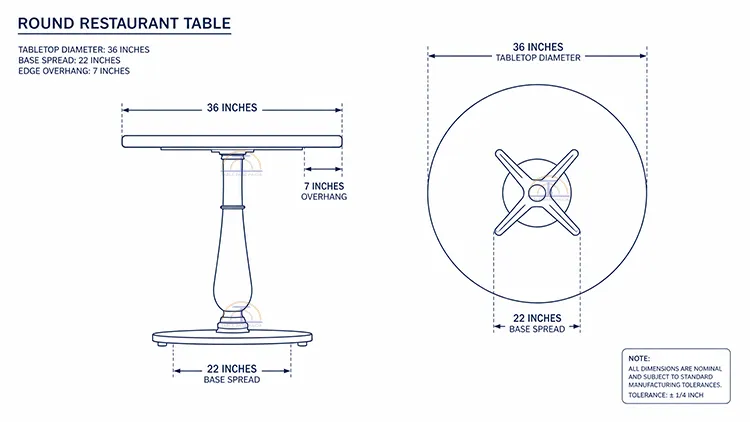
2. What is the “Spread Rule”?
The “Spread” is the footprint diameter or diagonal width of the table base.
-
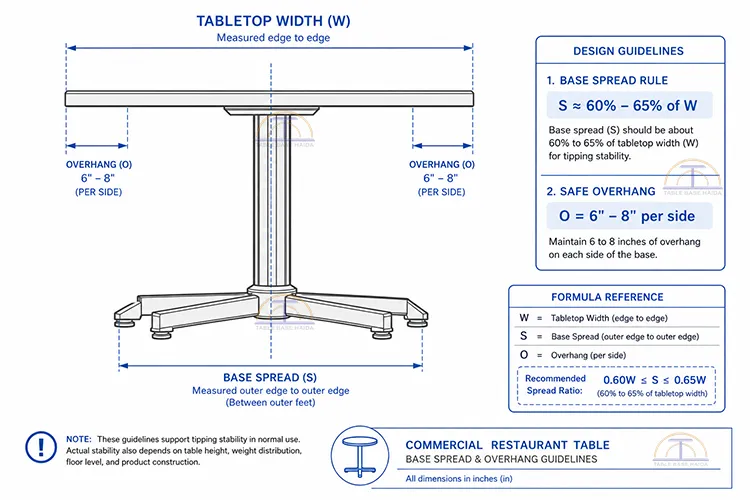
Standard Dining Rule: For standard wood or laminate tops, the base spread should be at least 60% to 65% of the tabletop’s width.
-
Heavy Material Rule (Stone/Quartz): If you are using granite, marble, or quartz, the spread must increase to 70%+ of the tabletop width to lower the center of gravity.
3. Calculating the Overhang Limit
Overhang is the distance from the edge of the table base to the edge of the tabletop. This is where a guest exerts the most downward pressure when leaning.
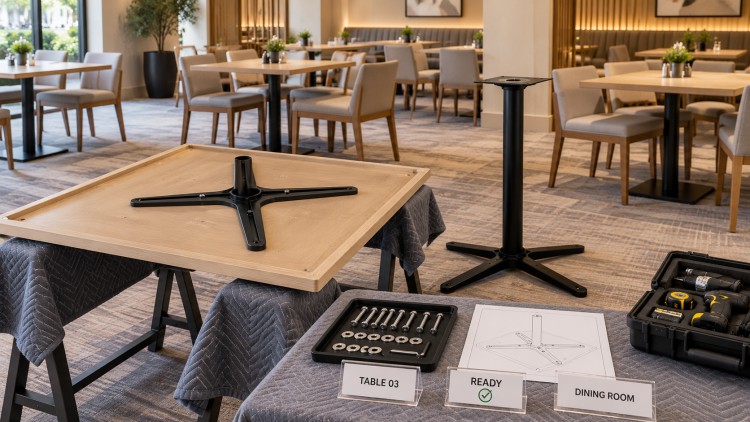
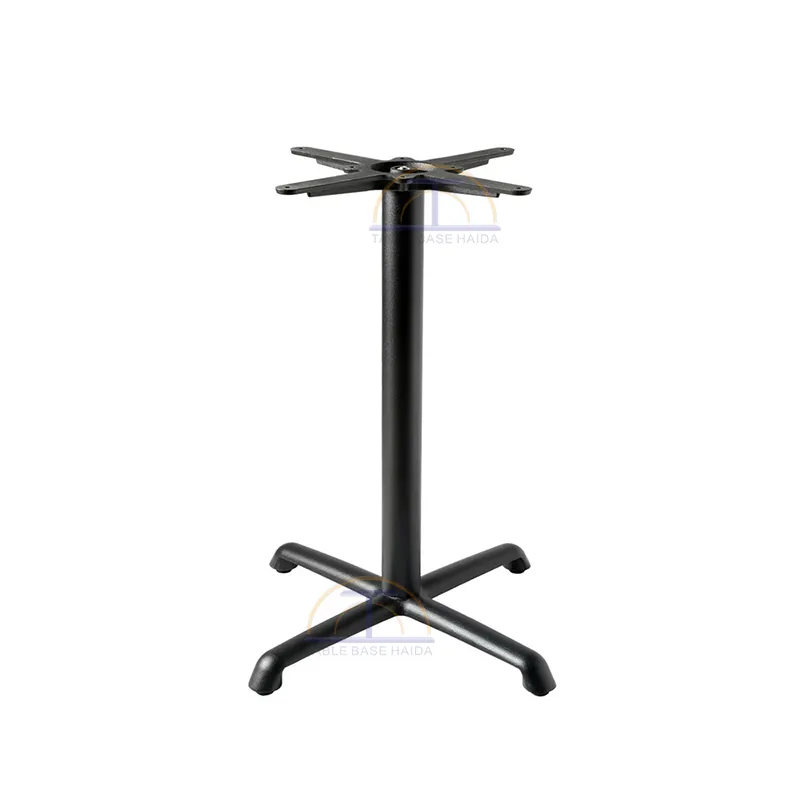
The Safe Limit: In commercial settings, the overhang should never exceed 8 inches (20 cm). Any overhang larger than this creates a leverage effect that can easily flip a light-weight base. For large tables, we recommend switching from a single pedestal to a Heavy-duty cast iron X-base to ensure the footprint extends far enough toward the edges.
4. Bar Height Sensitivity: The “Leverage Multiplier”
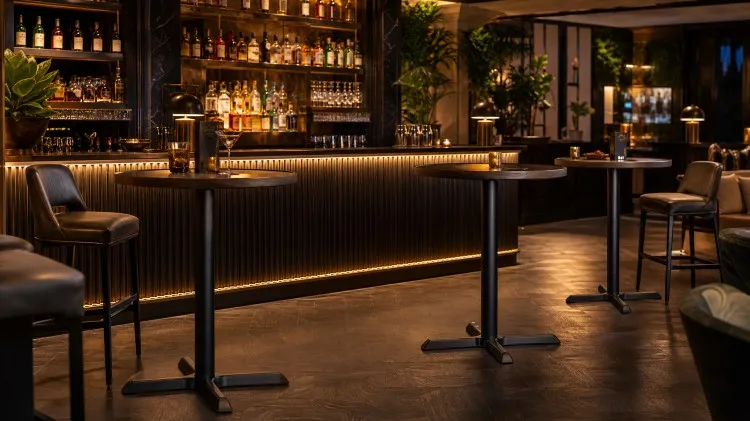
Height amplifies instability. A table base that is stable at 30″ dining height may become dangerous at 42″ bar height.
As a rule of thumb, when ordering tall table bases, you must specify a base that is at least one or two sizes larger than what the dining height requires. Upgrading to a heavier bottom plate, such as the heavy-duty cast iron X-base HD-J053, is the best way to prevent high-top bar tables from wobbling in busy venues.