ADA Compliant Table Bases for Restaurants: Dimensions, Base Types and Buyer Checks
For restaurants, cafés, hotels, and public dining spaces in the U.S., ADA compliance is not only about layout planning. The table base itself can affect whether a dining table provides the required forward approach, knee clearance, and usable wheelchair space.
That is why buyers should evaluate table bases as a functional part of accessibility, not only as a style or finish decision.

Why does the table base matter for ADA compliance?
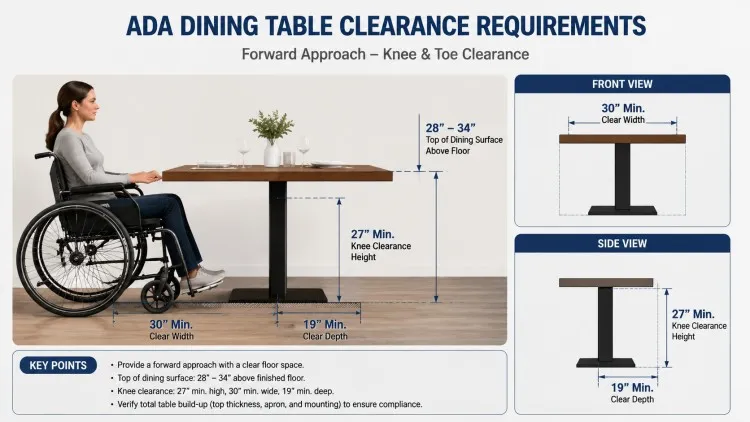
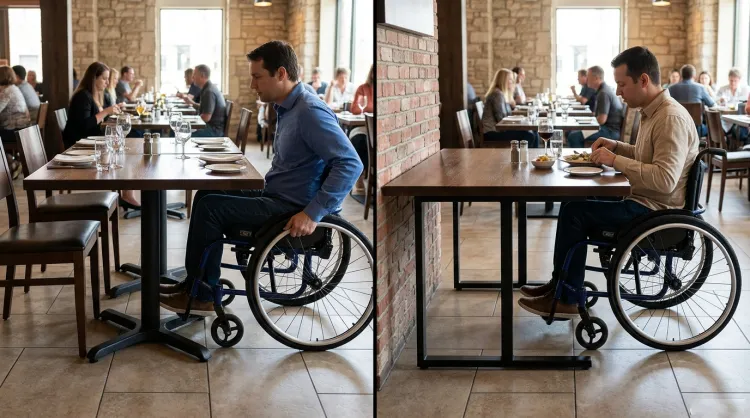
ADA dining rules focus on usable access under and around the table, not only on tabletop size. In practice, a tabletop may look large enough, but the wrong base can still block wheelchair approach.
Wide feet, intrusive cross members, or a center structure that occupies the needed leg space can make an otherwise attractive commercial table harder to use. For projects that are still comparing structural directions, buyers often start by reviewing broader options such as steel table bases or stainless steel table bases.
What are the key ADA dimensions buyers should check?
For restaurant buyers, the most practical reference points are the usable dimensions under the table. In most discussions, buyers focus first on under-table clear height, clear width, and clear depth for knee space.
A useful habit is to review the full table build-up, not only the base height. The tabletop thickness, apron, mounting plate position, and any reinforcement under the top can all affect whether the final installed table still works as intended for accessible dining.
Which base structures are usually easier to use for accessible dining?
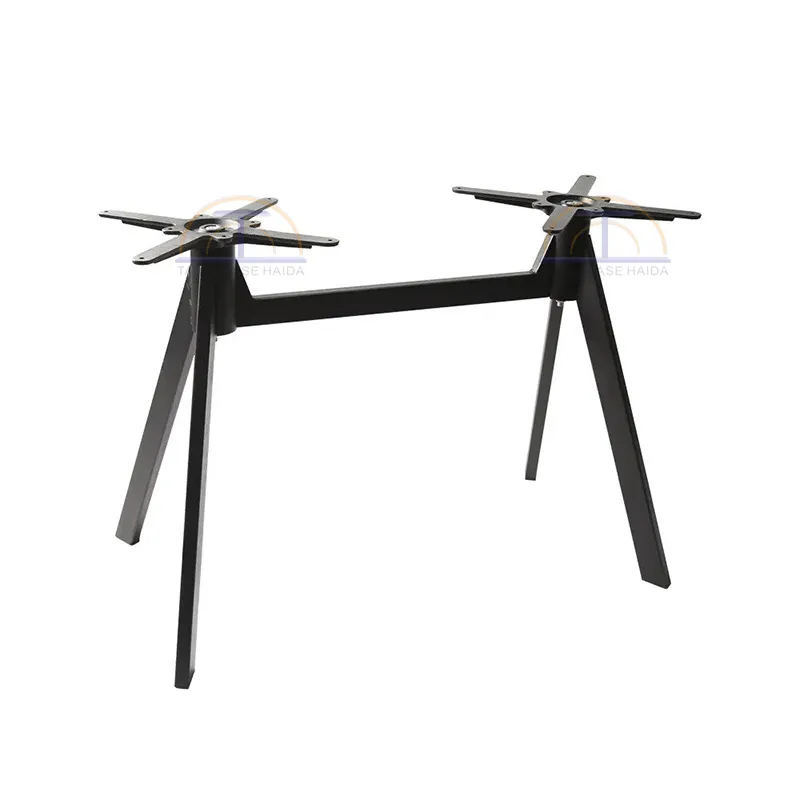
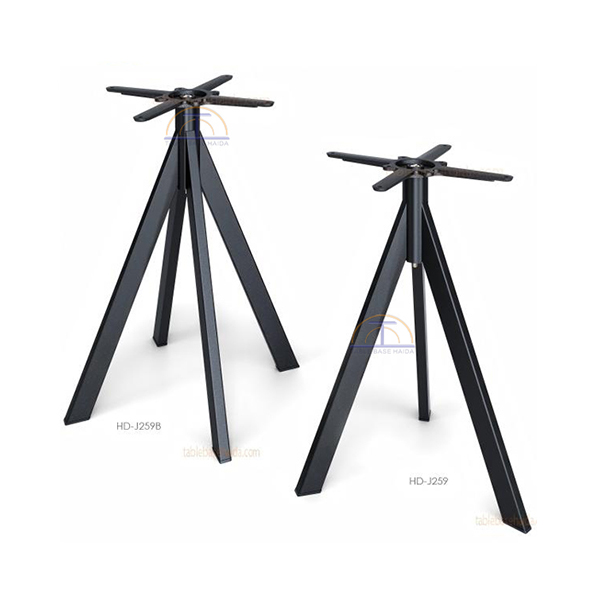
Base structures that keep more of the perimeter open are usually easier to adapt for accessible dining layouts. End-base, corner-leg, and some cleaner pedestal or offset-support structures generally create fewer conflicts with wheelchair approach.
For projects that prefer a cleaner modern look, a model such as HD-J124 can be easier to evaluate because its support geometry is more straightforward than heavier decorative pedestal styles.
Which structures often create problems?
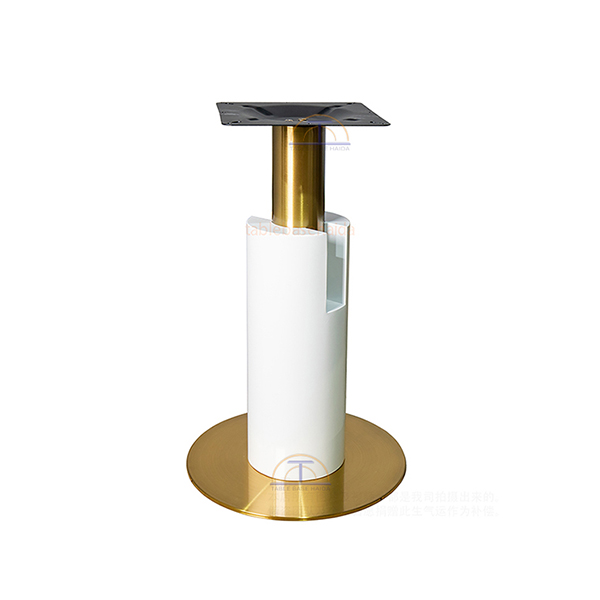
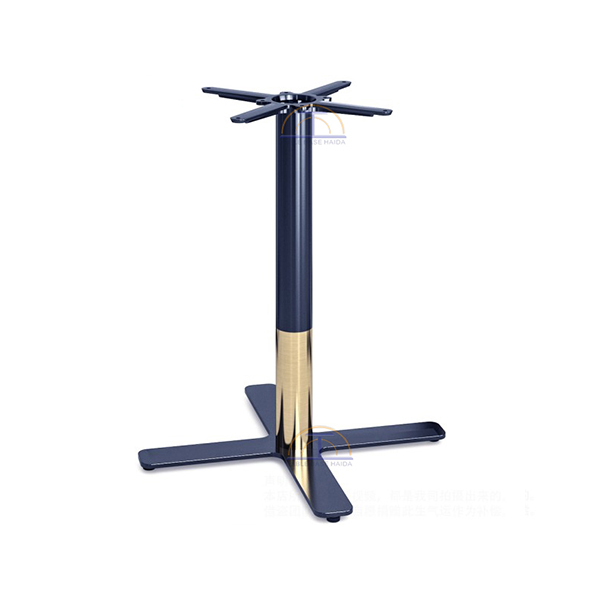
The most common mistake is assuming that a centered base automatically means accessible. In reality, a large round disc, an oversized spider foot, or an X-style base with arms extending into approach space can reduce the usable area for knees, feet, or wheelchair positioning.
That does not mean pedestal bases always fail. It simply means buyers should check the actual footprint, the paired tabletop size, and the remaining clear space under the table instead of judging only by appearance.
How many accessible tables are typically required?
For buyers, accessible dining should be planned at the order stage rather than added only after layout problems appear. Even when most of the project uses standard dining tables, the accessible portion should be identified early.
That makes it easier to confirm the right base structure, tabletop size, and installation details before production starts.
What should buyers confirm before placing the order?
-
First, confirm the full installed dining height, including the tabletop and any under-top structure. The total combination matters more than the base alone.
-
Second, review whether the base leaves enough unobstructed space for forward approach and knee clearance. This matters even more when the project uses thicker tops, decorative pedestal feet, or small-format tables.
-
Third, ask whether the chosen base geometry matches the intended top size and use condition. If the project also needs heavier-duty support for indoor commercial use, buyers may compare that against broader categories such as cast iron table bases before finalizing the specification.
Closing notes
ADA compliance for restaurant tables is not only about meeting a requirement. It is also about choosing a base structure that allows real forward approach, real knee space, and practical day-to-day usability.
For commercial buyers, the safer approach is to evaluate the table as a complete system: base footprint, support geometry, top size, top thickness, and final installed height.