Pedestal Table Base vs 4-Leg Base: Which Is Better for Commercial Use?
When restaurant buyers compare table bases, pedestal and 4-leg designs come up in almost every project. Both are practical for commercial use, but they serve different priorities — and choosing the wrong one can create ongoing problems with stability, legroom, or daily operations.
This guide breaks down the key differences to help B2B importers and project managers match the right base to their tabletop, venue type, and specific order requirements.

What is a pedestal base?
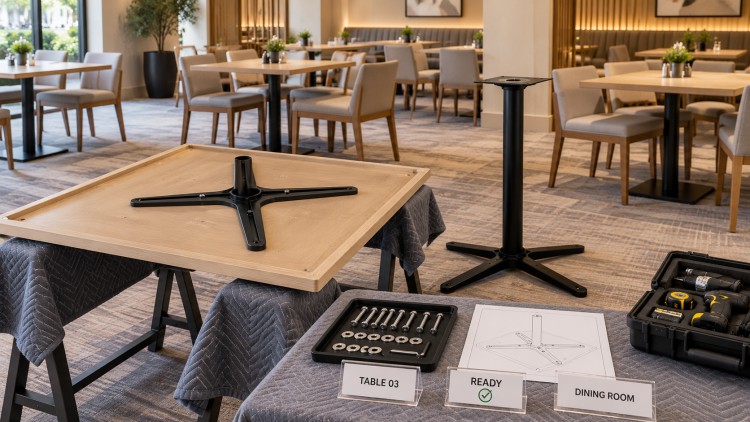
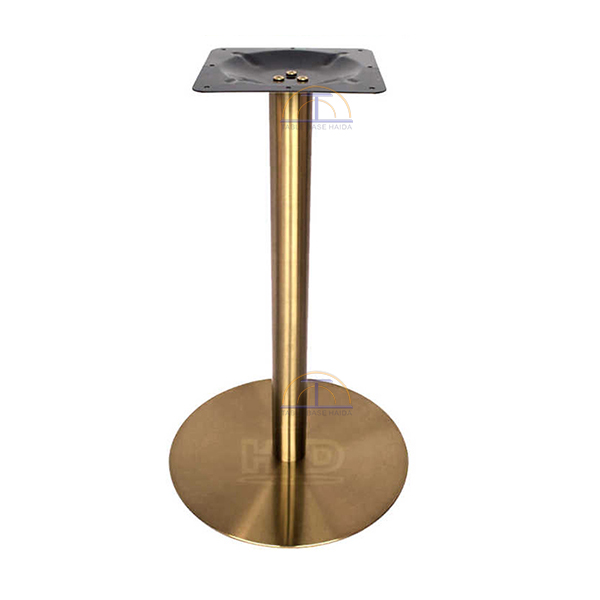
A pedestal base uses a single central column that connects to a weighted disc, spider plate, or decorative base at the bottom. The entire support runs through the center of the table, leaving the floor space around the base open.
This design is widely used in restaurants, cafes, and hotel dining rooms where legroom and clean sightlines under the table are important. Pedestal bases are available in cast iron, steel, and stainless steel, each suited to different venue aesthetics and load requirements.
What is a 4-leg base?
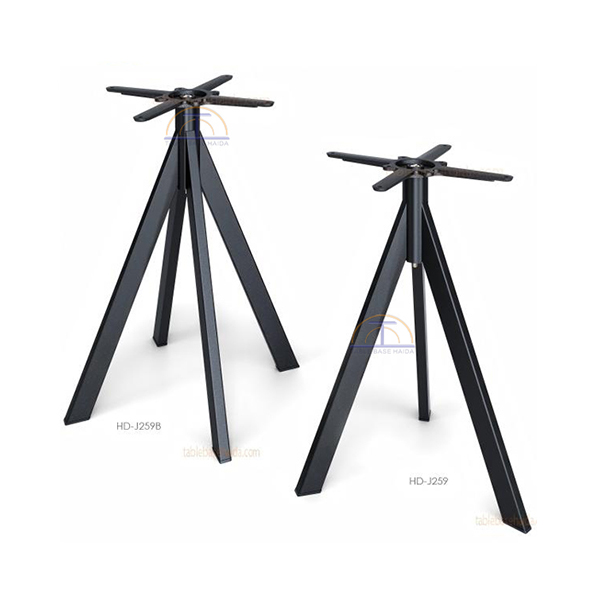
A 4-leg base uses four individual legs — either extending from a central hub or standing independently — to support the tabletop. The legs spread outward from the center, creating multiple floor contact points.
This structure is commonly used in cafes, bistros, and office canteens where tables are in fixed positions and operators value a reliable, cost-effective setup. 4-leg bases often come in cross (X) or square configurations and are available across cast iron and steel ranges.
Stability comparison
Stability is where the two designs differ most noticeably in real restaurant use.
A pedestal base concentrates all load through one column, which means the disc or base plate must be heavy enough and wide enough to counterbalance the tabletop. A heavy cast iron pedestal, like the Heavy-Duty Pedestal Table Base HD-J068, is designed specifically for this — the weight sits low, which helps resist tipping even when guests lean on the table edge.
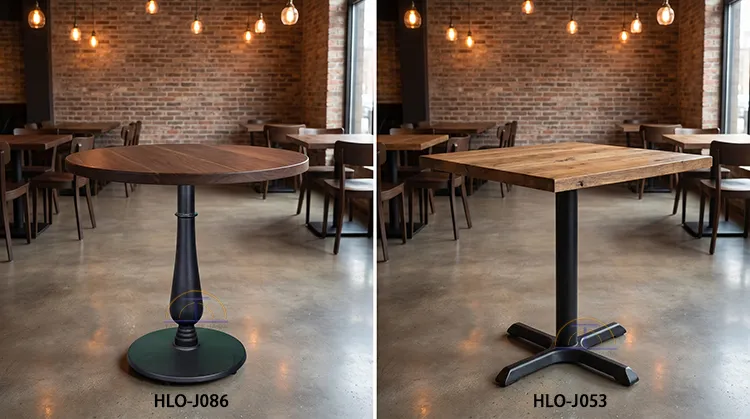
A 4-leg base distributes the load across four contact points, which generally makes it more forgiving on uneven floors and more resistant to side-force wobble under repeated daily use. A well-built cast iron X-base like the Heavy-Duty Cast Iron X-Base HD-J053 combines this wider footprint with the material weight that commercial dining environments typically demand.
Legroom and seating layout
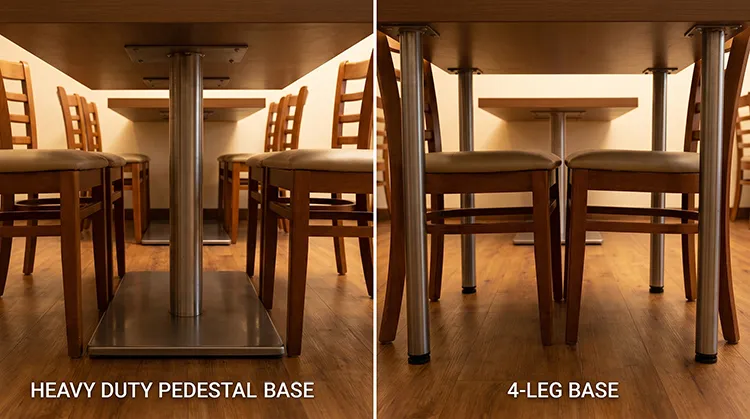
Legroom is one of the most common reasons buyers choose pedestal over 4-leg in restaurant projects.
With a pedestal, guests can sit at any position around the table without a leg in the way. This is especially important for round tabletops, booth-adjacent seating, and layouts that need to seat 3 or 4 people around a 2-top base.
A 4-leg base always has legs at specific positions, which can restrict where guests sit and how chairs approach the table. In tight dining rooms or where banquette seating is involved, this can become a real layout constraint.
Tabletop size compatibility
The relationship between base spread and tabletop size matters for both designs, but the rules apply differently.
- For pedestal bases, the critical factor is the disc or base plate diameter relative to the tabletop. A pedestal designed for a 700mm round top typically needs a base plate spanning at least 50–60% of that diameter to prevent tipping under edge load.
- For 4-leg bases, the arm-to-arm spread determines how well the base supports the tabletop. Industry practice generally recommends the tabletop not exceed the base spread by more than about 300mm on any side — a guideline worth confirming with your supplier when ordering large tops. Browse the Cast Iron Table Base or Steel Table Base categories to compare available spread dimensions.
Weight and day-to-day handling
For venues that reconfigure tables regularly — event dining rooms, hotel banquet floors, large cafes — daily handling weight matters.
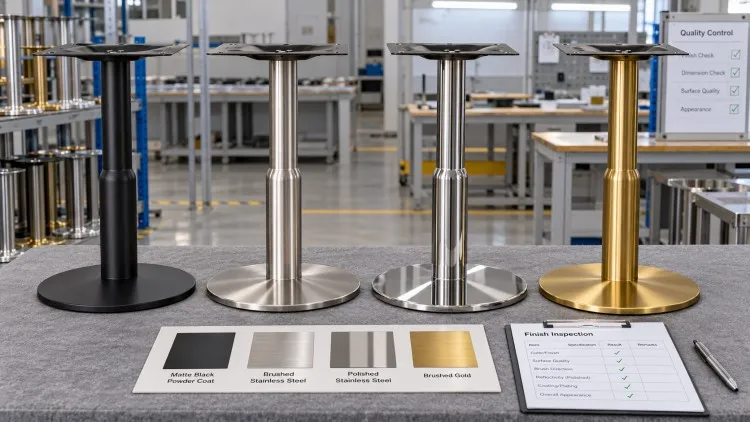
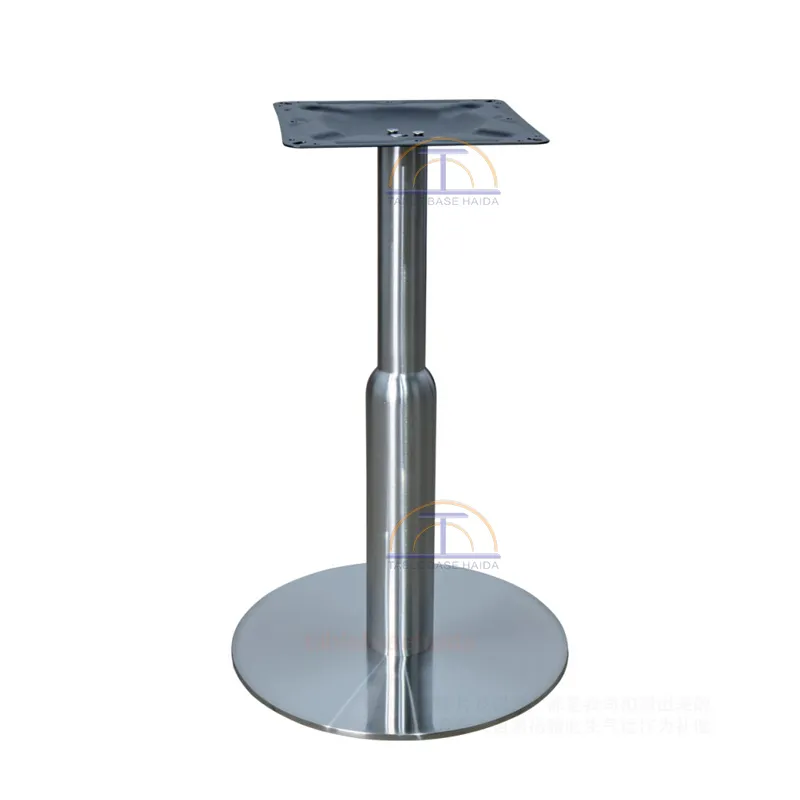
Heavy cast iron pedestals offer maximum stability but can be difficult to move frequently. For projects that need a lighter option without sacrificing visual weight, a stainless steel pedestal like the Brushed Stainless Steel Table Base HD-J123 offers a premium look at a more manageable weight for upscale dining environments.
4-leg cast iron bases are generally heavier than their stainless or steel counterparts, but their distributed footprint can make them slightly easier to slide across a floor when repositioning compared to a heavy single-disc pedestal.

Which base fits which venue?
| Venue type | Better fit | Reason |
|---|---|---|
| Full-service restaurant | Pedestal | Max legroom, round tops common |
| Bistro / café | 4-leg (X or square) | Stable, cost-effective, square tops typical |
| Hotel dining room | Pedestal (stainless / heavy cast iron) | Premium look, varied top shapes |
| Fast casual / food court | 4-leg | Fixed layout, durability, easy to spec |
| Event / banquet space | Pedestal (lighter material) | Flexible layout, need to move tables |
| Outdoor terrace | 4-leg (weather-treated) | Wind stability, multiple floor contact points |
Key questions before ordering
Before finalizing your base choice, confirm these details with your supplier:
- Tabletop shape and size — Round tops almost always pair better with pedestal bases; square or rectangular tops can go either way.
- Expected guest load per table — Heavy tops like granite or sintered stone change the load calculation for both base types. See our guide on choosing bases for heavy tabletops for more detail.
- Floor condition — Uneven floors benefit more from 4-leg bases with adjustable glides. If you run into wobble issues post-installation, the Metal Table Base Installation Troubleshooting Guide covers the most common fixes.
- How often will tables be moved? — High-frequency repositioning favors lighter bases or designs with glide feet.
- Seating arrangement — If guests need access from all sides of the table, pedestal is the safer choice.