How to Choose the Right Table Base for Heavy Tabletops: Granite, Marble, Quartz, and Sintered Stone
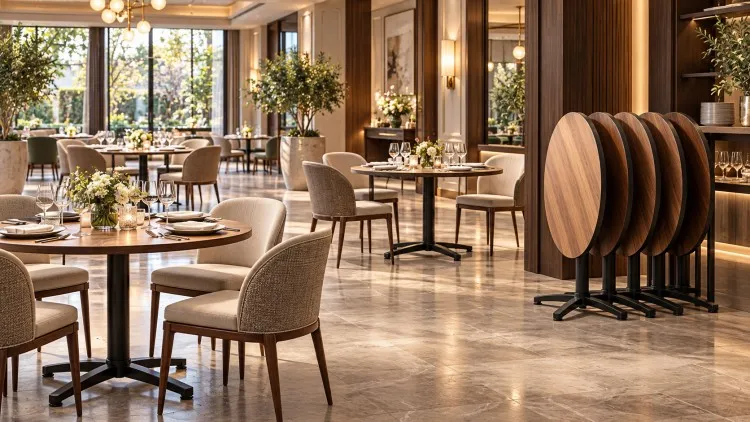
For premium restaurants, hotel banquet areas, boutique cafés, and high-end retail spaces, heavy tabletops in granite, marble, quartz, and sintered stone are part of the project’s visual identity. They bring weight, texture, stability, and long service life.
But these tops also create a buying-side risk that is often underestimated: the heavier the top, the more the base has to do. Choosing the wrong base is not just about wobble. It directly affects structural safety, guest experience, tabletop longevity, and the real risk of tipping.
This guide is written for B2B buyers actually specifying bases for heavy tops, and focuses on the four real decision factors: material, base spread, connection structure, and stability.

1. For Heavy Tops, the Wrong Base Material Cannot Be Patched Later
For heavy tabletops, only two base materials are genuinely suitable: cast iron and heavy-duty steel. They are not chosen because they “look heavy.” They are chosen because they deliver low center of gravity, high load capacity, and the structural rigidity needed to resist long-term downward pressure from stone tops.
Aluminum bases perform very well for outdoor and lightweight applications, but they are not the right answer for granite, marble, quartz, or sintered stone. Their lower weight cannot provide enough counterbalance for top-heavy stone tables, which raises the risk of shifting balance, wobble, or tipping. This is not a quality issue with aluminum. It is simply the wrong material category for this use case.

2. Cast Iron: The Default Safe Choice for Heavy Stone Tops
For most heavy stone tops, cast iron is the safest default direction. Its mass, density, and resistance to vibration provide the counter-support a stone tabletop needs to survive long-term leaning, chair movement, repeated cleaning, and other small but cumulative forces.
For commercial projects where stability is the top priority, the heavy-duty cast iron X-base HD-J053 is a strong starting point. It features footprint options such as 560×560 and 760×760 that are designed for the structural demands of stone tabletops in commercial use.
3. Long Heavy Tops: One Base Is Not Enough — Twin-Column Structures Are More Appropriate
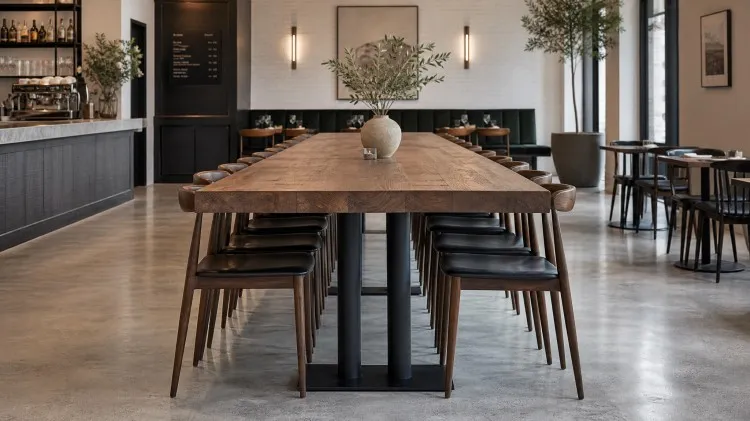
When a heavy tabletop becomes rectangular, such as a long dining table, banquet table, or conference table, a single central column cannot provide enough longitudinal support. The two ends of the table take on much more leverage during real use.
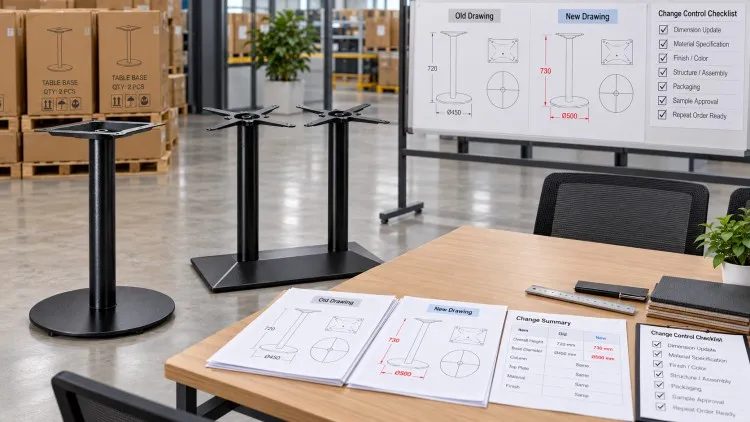
For these long heavy tops, a twin-base or twin-column structure is more appropriate. The heavy-duty twin-column base HD-J044 is built for exactly this scenario, using a cast-iron twin-column structure on a wide rectangular plate to distribute weight across two contact points, which keeps long stone tops balanced rather than concentrating stress on one center post.
4. Modern Projects: Heavy-Duty Steel Bases Are a Valid Alternative
Not every heavy-tabletop project needs a traditional or industrial visual. Many modern restaurants, premium offices, negotiation areas, and hotel dining spaces want a base with cleaner lines and a more contemporary look, while still handling the weight of stone or thick tops.
For those projects, a heavy-duty steel structure works well. The heavy-duty steel table base HD-J300 uses a wide cross-shaped footprint that balances load-bearing with a minimalist modern appearance, and pairs with both round and square tops, making it a practical match for large stone or thick wooden tabletops in modern interiors.
5. Base Spread Is the Real Variable That Decides Stability
Once the material is correct, the next factor that decides whether the table stays stable is not “how heavy the base is.” It is how wide the base spread is. The wider the spread, the harder it is for edge leverage to tip the table.
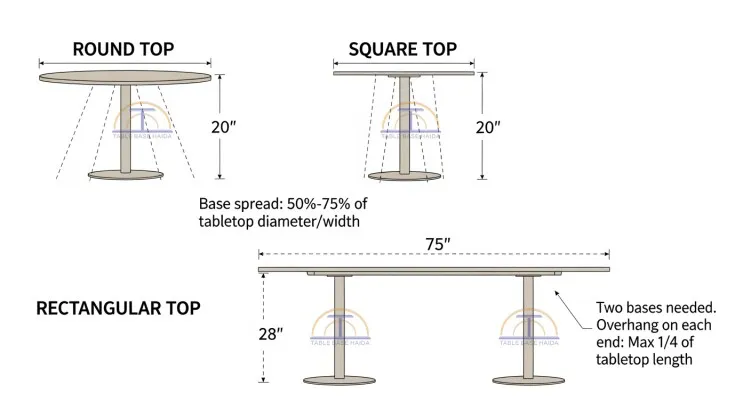
For round or square heavy tops, base spread should be at least 50%–75% of the tabletop’s diameter or width, and closer to 75% as the top gets larger (over 36 in / 90 cm). For rectangular heavy tops, two bases are usually required, positioned so that the overhang on each end is no more than 1/4 of the total tabletop length. For example, a 36″ (91 cm) square marble top should sit on a base with a spread of at least 22″ (56 cm), and a 30″ (76 cm) spread is even safer.
6. The Top Plate (Spider) Is Where Stone Weight Actually Transfers to the Column
The load capacity of a heavy tabletop does not depend on the base plate alone. It depends on how the top plate transfers tabletop weight into the column and then into the footprint.
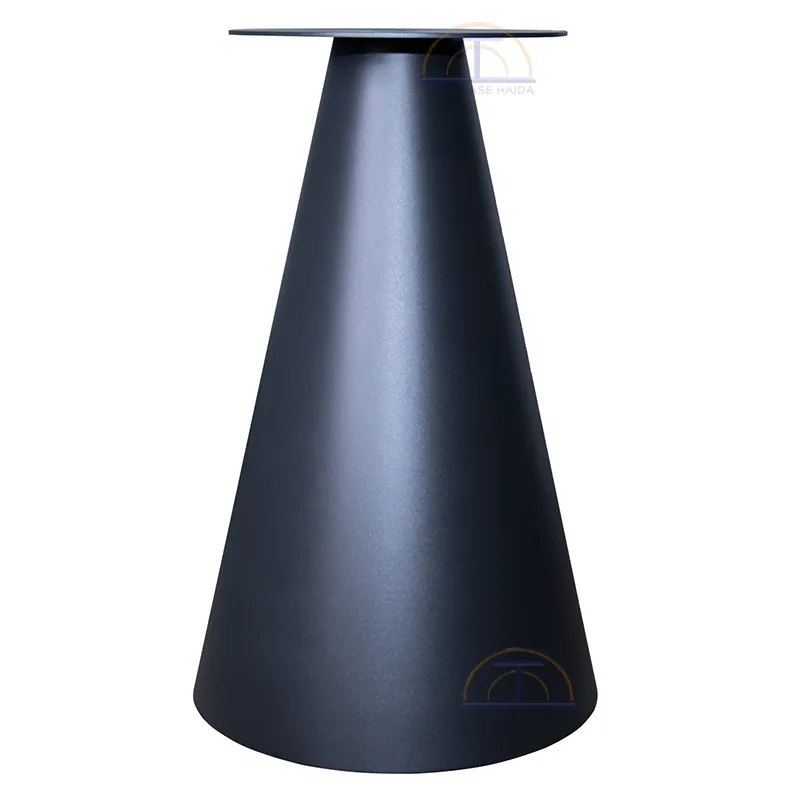
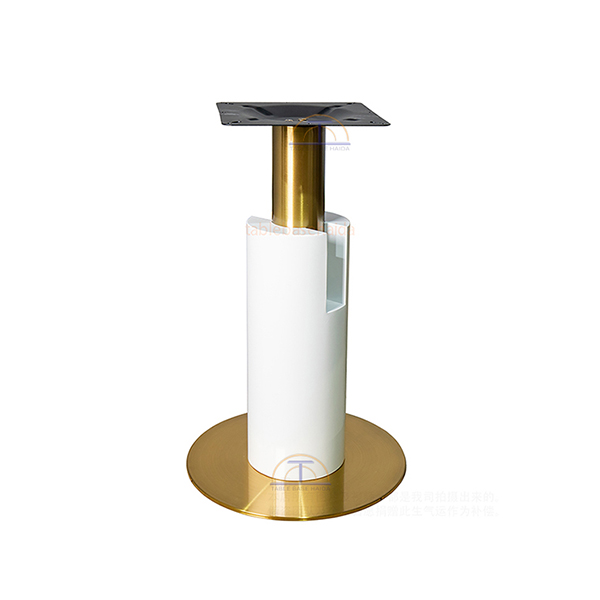
The larger and thicker the top plate (spider), the more screw holes it offers, and the more evenly the load is distributed, the less likely the top is to sag, crack, or vibrate over time. For round heavy tops, the heavy-duty pedestal table base HD-J068 offers a 300/450mm top plate and is specified for 600/700/800mm tabletops, which makes it a clean example of a full top-to-column-to-base load path.

7. Decorative Projects Can Still Support Heavy Tops — If the Structure Is Right
Some projects need more than support. They also need decorative character. French bistros, vintage-style restaurants, and boutique hotel rooms often want a base that looks distinctive while still carrying stone or other heavy tops.
In this kind of setting, the tiger paw cast iron table base HD-J086 is a relevant option. It combines a cast-iron base structure with a decorative tiger-paw foot, preserving visual identity while still providing the stability heavy stone tops require. It is a “style + load capacity” direction rather than a purely functional one.
8. Leveling Glides and Floor Adaptation Are the Last Critical Step for Stone Tables
Even with the right material, the right base spread, and a strong top plate, an uneven floor will still create small daily wobbles in a stone-topped table. Over time, this affects the dining experience and creates uneven stress on the tabletop, base structure, and connection hardware, which shortens the life of the entire table.
That is why in heavy-tabletop projects, leveling glides are not optional. They are required. A corrosion-resistant, on-site adjustable glide is what finally locks the stability of the full assembly into place.
9. Quick Selection Checklist for Heavy Tabletops
-
Choose the material first: cast iron or heavy-duty steel only. Avoid aluminum for stone tops.
-
Base spread should be at least 50%–75% of the tabletop size, closer to 75% as the top gets larger.
-
Long rectangular tops should use two bases or a twin-column structure.
-
The top plate (spider) should be large enough and have well-distributed screw holes.
-
The column should be thick enough, with a load rating that clearly exceeds the tabletop weight. Adjustable leveling glides should be specified for every installation point.
-
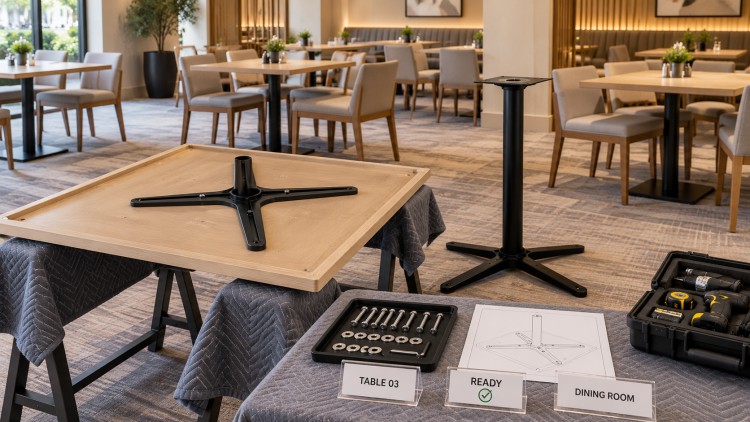
Before bulk ordering, build a full sample table with the real tabletop and real chairs, then verify stability on site. For large-scale heavy stone shipments, coordinating secure sea shipping container packing is essential to prevent fracture damages during ocean transit.
Final Recommendation
- A heavy tabletop is only worth the investment if the base under it can actually carry it. For standard round or square heavy tops, heavy-duty cast iron X-base HD-J053 is a strong starting point. For long or oversized heavy tops, heavy-duty twin-column base HD-J044 is more appropriate.
- For modern projects that need a balance between visual style and structural load, heavy-duty steel table base HD-J300 is a good fit. For round stone tops and restaurant pedestal tables, heavy-duty pedestal table base HD-J068 is a natural extension. For bistros and boutique interiors that need a decorative load-bearing solution, tiger paw cast iron table base HD-J086 is worth evaluating in parallel.