1. Why Delivery Scheduling Needs Its Own Control
A hotel or restaurant project may approve the correct commercial table bases yet receive them in the wrong sequence. The lobby café may be ready in the first week, while the bar and terrace are still under construction. A single purchase order total does not tell the site team which cartons can be installed next.
This guide addresses the execution period after specifications are approved: shipment milestones, partial deliveries, quantity reconciliation, exceptions and written handover. It does not replace a general FF&E bill of quantities, warehouse damage inspection or tabletop assembly guide.

2. Distinguish the Four Dates Buyers Commonly Mix Up
An estimated factory completion date is not the same as an approved shipment date. Shipment date is not the same as arrival at a port, and port arrival is not the same as delivery to a hotel loading dock. The project should state each date separately, along with the assumptions and responsible party.
Use at least four milestone fields: production ready, authorized to ship, expected arrival and required on-site date. Add an installation-ready date only when the installer and site manager have confirmed the room or outlet can receive furniture. Treat transport times as planning estimates until a forwarder confirms the booking.
3. Link Each Shipment to an Approved Project Item
The existing Hospitality FF&E BOQ for Commercial Table Bases explains how to define models, top sizes, venue codes and overall quantities. Delivery control starts with that approved information and adds a shipment ID, phase, carton count, dispatch status and destination contact to each line.
For example, one hotel purchase order may contain separate lines for the lobby, all-day restaurant, bar and outdoor terrace. Each dispatch must identify its actual item codes and quantities rather than referring only to “first container” or “second shipment.”
4. Agree on a Phase-by-Phase Release Sequence
A phased project should have a written release sequence before production is completed. The buyer can prioritize rooms that are genuinely ready while keeping later-zone items in a separately identified group. This prevents an early shipment from consuming storage capacity with products that cannot yet be used.
The sequence can change, but any change should identify the affected item codes, cartons, expected arrival and installation work. A revised phase schedule should be circulated to the buyer, factory, freight coordinator and destination team before cartons are released.
5. Separate Manufacturing Readiness From Shipping Permission
A batch can be physically completed while the buyer still has an open finish approval, packing-label correction or revised delivery window. Mark this as “production ready / shipping on hold” rather than quietly treating completion as permission to dispatch.
A simple shipment release should confirm the approved model and version, quantity, inspection result, packing list, carton labels, destination and written buyer authorization. Not every project needs a complex software system; a controlled spreadsheet with named approvals can be sufficient.
6. Reconcile Quantities Across Partial Shipments
For every item code, track four numbers: ordered quantity, previously shipped quantity, quantity in the current shipment and outstanding balance. The remaining balance must be recalculated after each confirmed dispatch. The buyer should not infer that the final shipment contains everything still missing.
If damaged stock is replaced or extra spare bases are supplied, record them on separate lines. Otherwise, a replacement can be mistaken for an additional ordered unit, creating inconsistent invoice, warehouse and installation records.
7. Treat Cartons as Ship-Set Evidence, Not Just Boxes
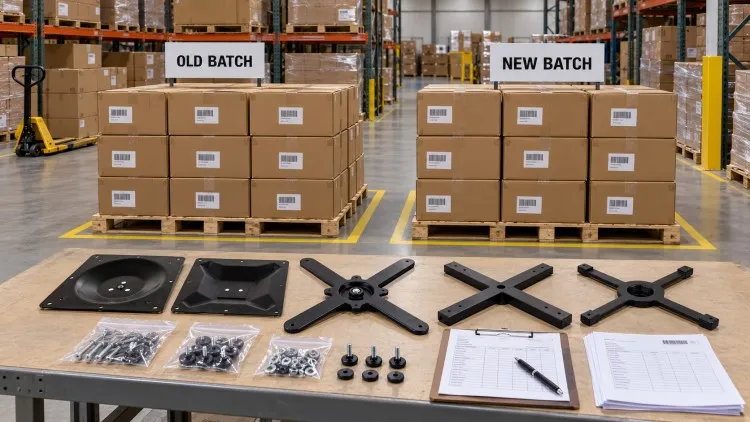
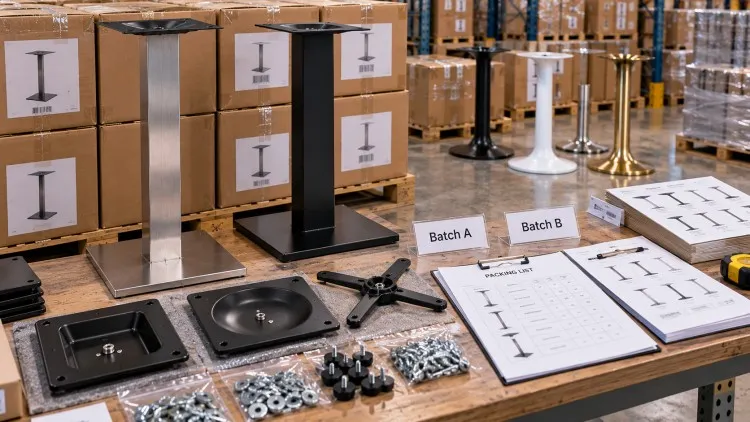
For knock-down table bases, a model may have separate floor-plate, column, top-plate and hardware components. The shipping plan needs to verify that the required set of cartons travels together, especially when a product configuration uses more than one carton per set.
Match carton marks to the shipment ID, phase and item code; keep hardware kits identified by model or approved variant. A missing top-plate carton can make an otherwise complete delivery unusable on the installation date.
8. Build the Document Pack for Each Dispatch
Do not assume that one master document pack is enough for all phased deliveries. Each dispatch should have its own packing list, commercial documents as applicable, item-by-item quantity breakdown, carton reference and agreed photo or inspection evidence.
For a shipment that includes installation hardware, share the current assembly reference and model-specific fixing information with the receiver. The objective is to let the destination team reconcile this shipment without reading the entire original purchase order.
9. Match Delivery Timing With Actual Site Readiness
The Table Base Installation Readiness Guide covers tabletop drilling, hardware checks, trial assembly and installer responsibilities. Delivery scheduling addresses a different release decision: whether the site can safely receive and store the specified cartons during that phase.
Confirm the receiving address, named contact, agreed unloading conditions, delivery window, storage area and restrictions on large or heavy components. If the space is not ready, record the holding location and who bears the storage and onward-delivery responsibilities; never assume the factory provides such services automatically.
10. Use Product Examples to Plan Different Delivery Phases
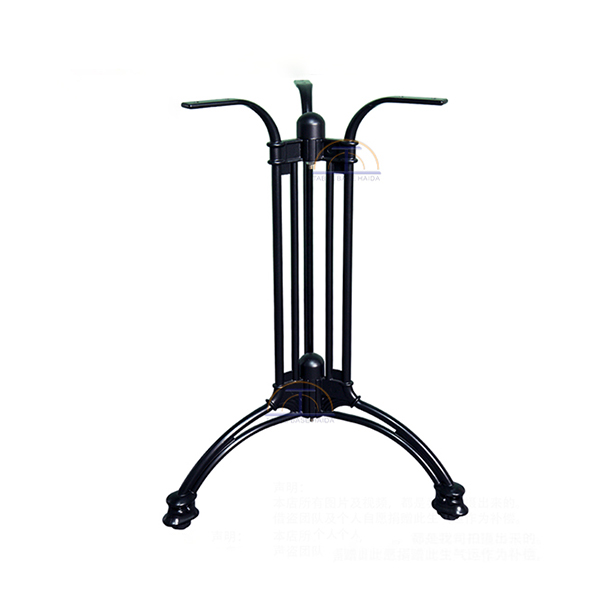
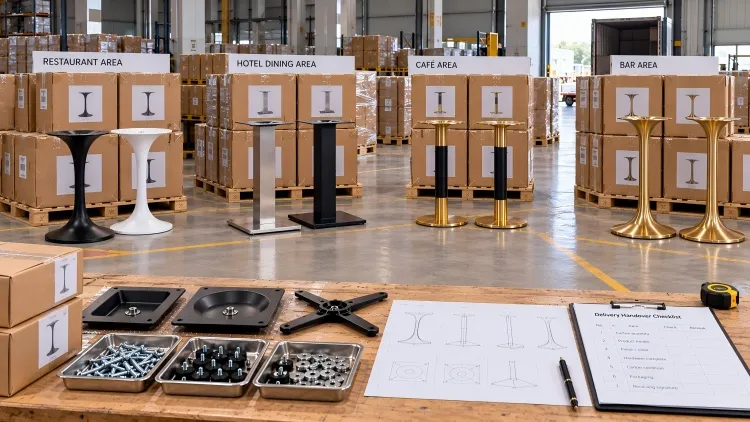
A lobby café may use the lightweight HD-J160 aluminum three-leg bistro base, while an all-day restaurant may specify the HD-JN07 cast iron cone pedestal. These examples help the buyer assign item codes by venue. They do not mean those models have fixed production or freight lead times.
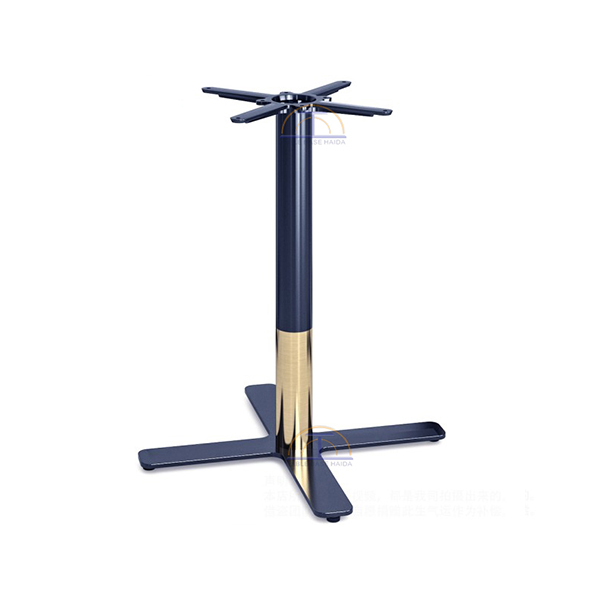
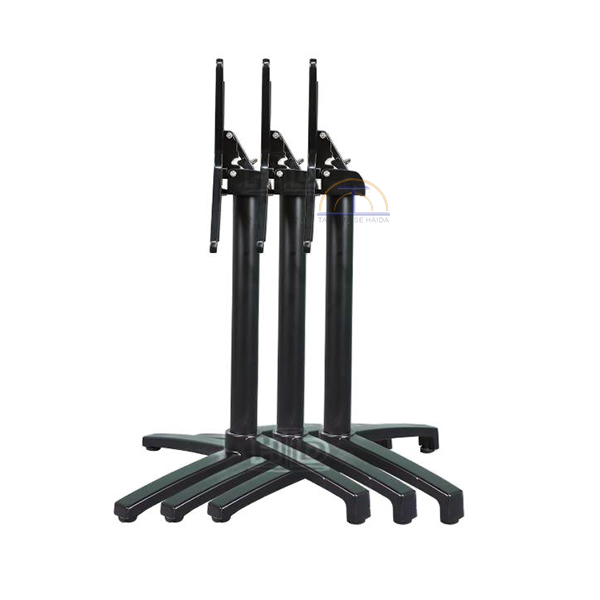
For a bar phase, the HD-JN10 steel bar-height base is primarily positioned around a 1080 mm high-table configuration, with a 720 mm option. A later terrace phase could use the HD-JN02 folding and stackable aluminum base. If each area has a different handover date, the shipment plan should preserve those distinctions.
11. Create a Simple Delay and Exception Workflow
Late sample approval, an incomplete carton group, freight booking changes or an unready receiving dock should trigger the same process: identify the affected shipment, quantify the impact, assign an owner and issue a revised written milestone. Avoid replacing a confirmed date with a vague statement such as “soon.”
A useful exception log states the original date, revised date, reason, affected item codes, proposed remedy and next update owner. When the delay affects only one area, preserve the unaffected shipments instead of moving the entire project by default.
12. Avoid Confusing Shipment, Arrival and Acceptance
A shipment can leave the factory on time yet arrive late. It can arrive on time with missing cartons, or arrive complete before the installer is allowed on site. These are different statuses and need separate evidence.
Track dispatch confirmation, transport or delivery confirmation, warehouse quantity reconciliation and installation handover separately. Damage claims and receiving inspections remain their own workflows; delivery scheduling only ensures the correct team receives the proper shipment record at each milestone.
13. Close Each Phase Before Starting Final Project Reconciliation
At the end of a delivery phase, confirm which item codes were shipped, delivered, received and handed to installers. Record missing quantities, damaged or quarantined items and any parts retained in storage for future work. A phase is not complete simply because its truck has departed.
Final reconciliation should combine the approved purchase order, all dispatch records, outstanding balances and written exceptions. This helps the purchasing team identify what remains to be shipped or resolved without reopening unrelated finished phases.
14. What to Send Haida for a Phased Table Base Order
Haida supplies cast iron, steel, stainless steel and aluminum commercial table bases for restaurants, hotels, cafés and furniture dealers. For a phased project, buyers can provide the approved model list, tabletop combinations, quantities by area, target on-site dates, finish requirements and packing preferences.
The quotation and order discussion can then identify which release information and packing references need confirmation before production. For an upcoming project, contact Haida with your BOQ and proposed delivery phases; actual production dates, transport arrangements and delivery scope must be confirmed in the order.
15. FAQ: Phased Table Base Deliveries
Q1. Can one table base purchase order be shipped in several batches?
Yes, when buyer and supplier agree on the phase allocation, remaining quantities, commercial documents and any costs or limits that apply to split shipments.
Q2. What is the difference between the ship date and the required on-site date?
The ship date refers to dispatch, while the required on-site date refers to when the project needs the goods at the agreed destination. Transit and local delivery must be planned between them.
Q3. How can a buyer prevent hardware cartons from being separated?
Use item codes and ship-set references on the packing list and carton marks, then reconcile all component cartons before dispatch and again at the receiving point.
Q4. Does factory completion mean the supplier can ship immediately?
No. Shipment still depends on agreed inspection, documentation, payment or booking requirements and buyer release instructions for that particular order.
16. Conclusion: Release the Right Units at the Right Milestone
Phased commercial table base delivery works best when every shipment is tied to an approved item, a real carton group, a written release decision and a destination that can receive it. The objective is not simply the earliest factory dispatch but a reliable sequence from production-ready stock to usable furniture at the project site.