1. Why a Repeat Order Needs More Than a Model Number
When a restaurant chain adds another store or a furniture dealer replenishes stock, the easiest purchase order is often “same model as last time.” That phrase is useful, but it does not prove that the current components match the previously approved configuration.
A commercial table base can keep its product name while the mounting plate, column, glides, finish, hardware kit or packing arrangement is revised. Some revisions are harmless for a new complete table; others affect pre-drilled tabletops, existing spare parts and consistency between locations.
Repeat-order control should therefore answer two questions separately: “Is this still the model we want?” and “Is this the same approved version—or a compatible replacement?”
2. Keep an Approved Baseline From the Original Order
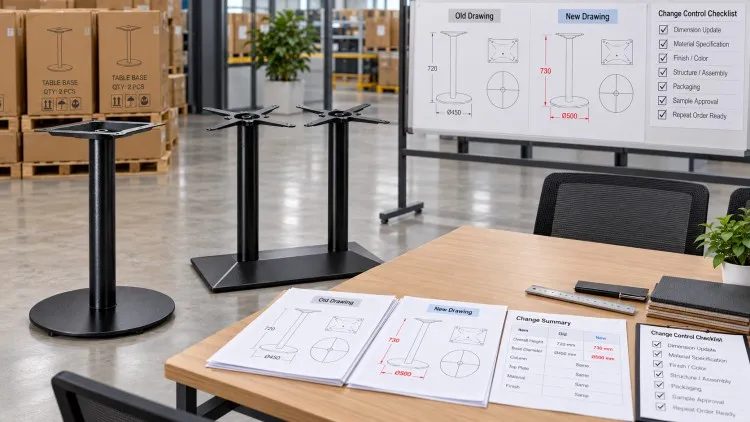
Start with the original purchase order, approved sample, final drawing, product photographs and packaging or hardware list. Record the buyer SKU alongside the supplier model so two naming systems can be matched without guesswork.
The existing Table Base SKU Matrix for Furniture Wholesalers helps organize the product range. A revision baseline serves a different purpose: it identifies which exact configuration was accepted for that SKU on a specific order.
If an earlier shipment has already been installed, keep a reference unit or dated photographs of its underside, top plate and key connections. These are often more useful for comparison than a catalog image.
3. Separate Model, Variant and Revision
A model identifies the product family. A variant specifies selectable options, such as a 720 mm or 1080 mm height, a 300 mm or 450 mm mounting plate, or a particular material and finish. A revision records an approved change to the specification or production configuration.
Do not automatically describe every available option as a product revision. Equally, do not assume two units are equivalent just because the model code is unchanged. The comparison should use the full model–variant–revision combination.
A practical reference could read “model / height / plate / finish / hardware kit / revision / effective order.” The revision code is a proposed management field; it must be agreed with the supplier rather than invented by the buyer after delivery.
4. Compare the Changes That Can Affect Compatibility
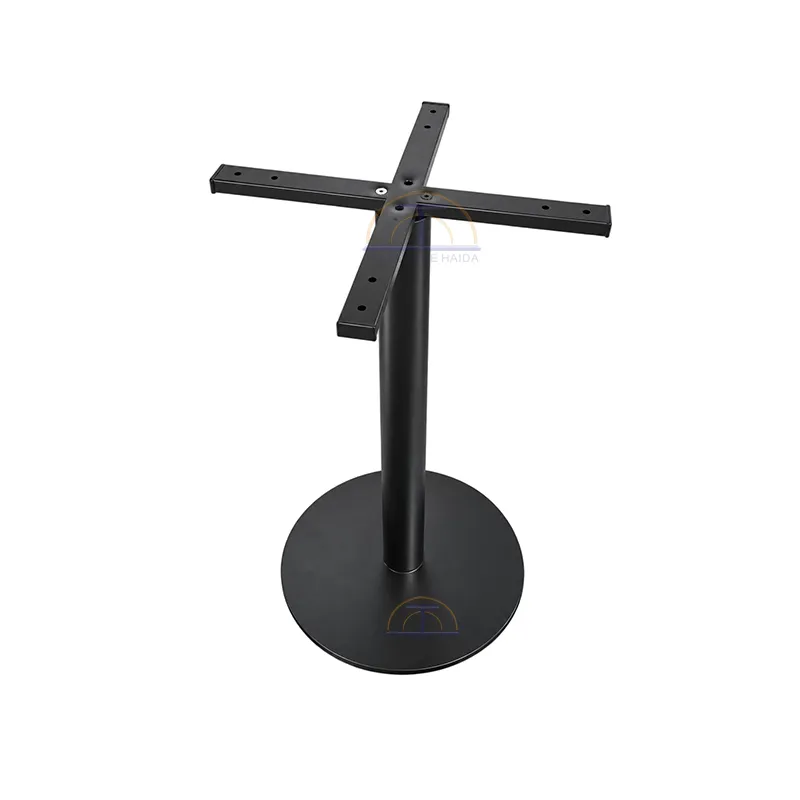
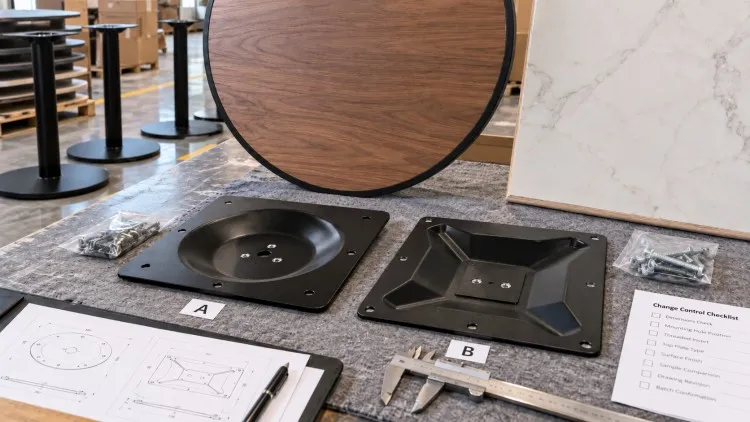
Focus on the interfaces that connect the base to the complete table: top-plate dimensions, hole spacing, insert type, column connection, foot spread, installed height, glide thread and operating mechanism. Small changes here may have greater consequences than visible styling updates.
Also compare material grade, finish reference, color and texture, packaging count, protective components and the spare hardware supplied. Classify each difference as dimensional, functional, visual, logistical or documentation-only before deciding whether it matters.
5. Build a Before-and-After Change Matrix
For every proposed revision, make a compact matrix with five columns: feature, previously approved value, proposed value, compatibility impact and approval owner. If there is no change, record “unchanged” instead of leaving a blank cell.
For example, a top-plate hole pattern moving while overall base height stays the same is a functional interface change. A carton label redesigned without changing the item or hardware may be an administrative change. These should not follow the same approval route.
A buyer should approve the change matrix before purchase-order release, not discover the differences after the new shipment reaches the warehouse.
6. Verify Existing Tabletops and Spare-Part Interfaces
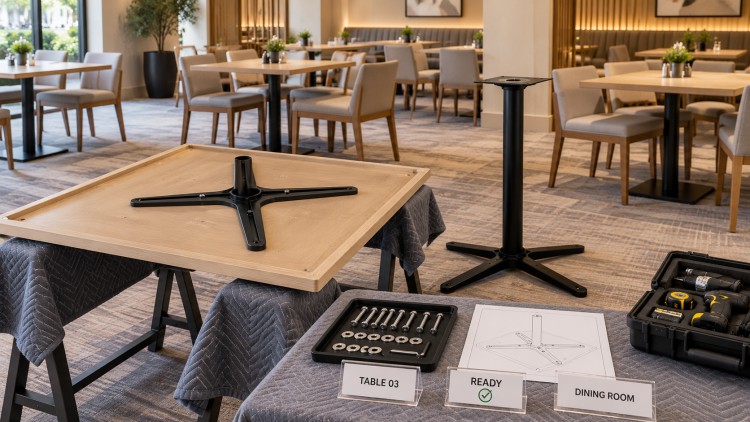
Where a new batch must connect to installed or pre-drilled tabletops, use the Replacement Table Bases for Restaurants compatibility guide to check the existing hole pattern, inserts and structural fit. Here, the additional decision is whether a new revision remains interchangeable with the original approved version.
Check the same question for maintenance items. A new glide, bolt or column connection may fit the new batch but not the parts already stocked by the dealer or maintenance team. If the parts are different, assign separate part references and communicate the split clearly.
7. Do Not Treat Appearance as a Minor Change
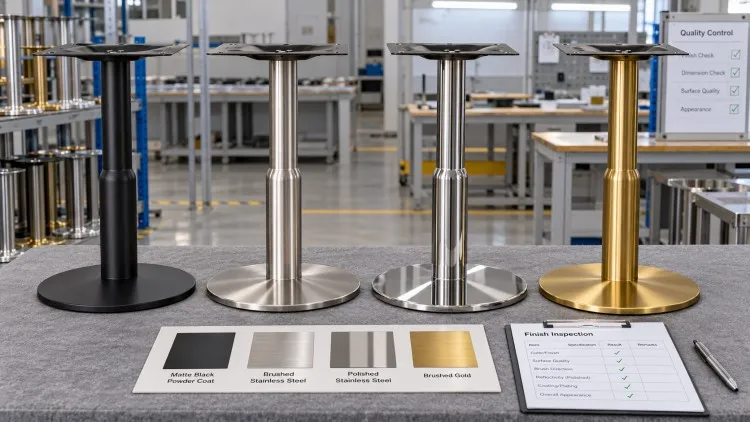
In restaurants and hotels, side-by-side visual consistency matters. Changes in brushed direction, powder-coat texture, metallic tone, floor-plate shape or column proportions can make a new batch look different from tables already installed in the same room.
Ask for physical or consistently photographed comparison samples when the new batch will be mixed with older furniture. If a finish cannot be matched exactly, discuss whether the new units should be grouped in a separate room or store rather than blended into an existing area.
8. Classify Interchangeability Before Releasing the Order
A useful decision has three levels. Fully interchangeable means the new revision can use the approved tabletop and installation parts without modification. Conditionally interchangeable means the change is acceptable only with named adapters, fasteners or installation instructions. Non-interchangeable means the new revision needs a separate configuration or project approval.
Document the decision for both complete-table installation and service parts. A base that looks acceptable as a finished table may still fail the compatibility test if maintenance teams cannot use their existing spares.
9. Use Representative Product Configurations as Comparison Cases
The HD-J053 cast iron X-base currently lists several base spreads and 300 mm or 450 mm top-plate choices. When reordering, a buyer should specify the approved spread and plate combination rather than relying only on HD-J053. No historical design change is being claimed for this model.
The HD-J133 stainless steel pedestal offers 201/304 stainless options, 500 mm or 600 mm base choices and dining/bar heights. The purchasing record should distinguish the approved material, diameter, height and surface reference.
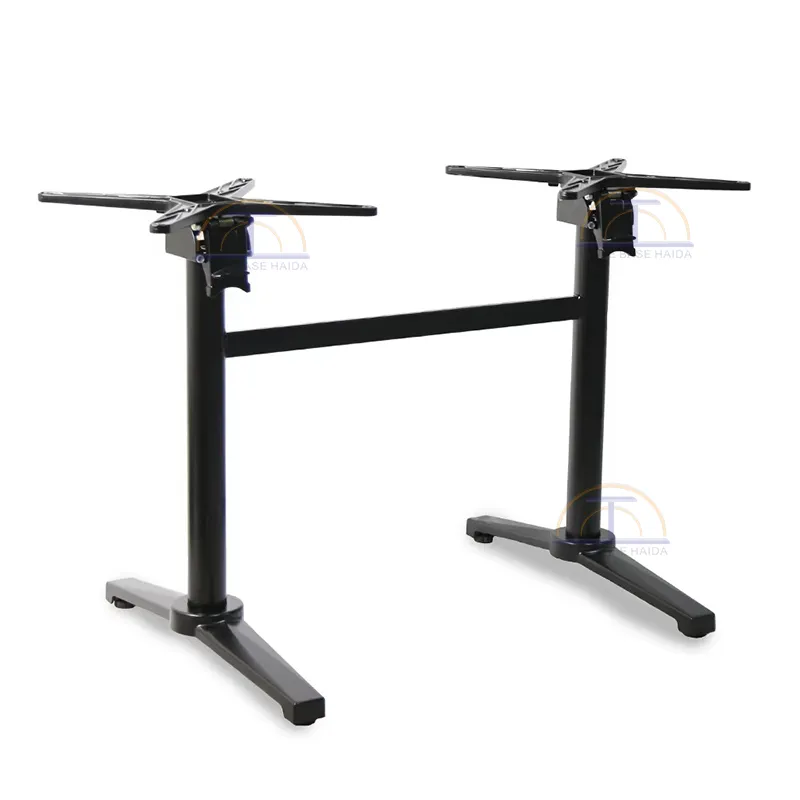
For large rectangular tables, the HD-J044 twin-column cast iron base illustrates why column spacing, floor footprint and tabletop mounting geometry should remain tied to the approved drawing. These are compatibility checks, not evidence of an existing revision.
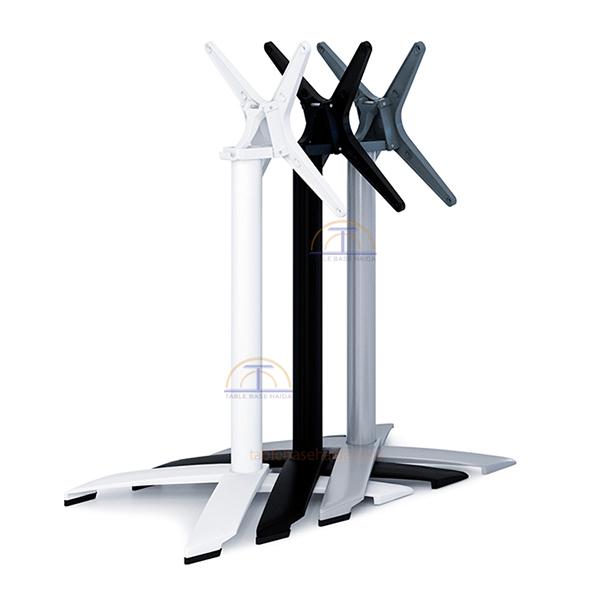
The HD-JN04 stackable folding aluminum base provides a different type of review: buyers should identify the approved folding mechanism, stacking configuration and any mechanism-related replacement parts before repeating a flexible-space order.
10. Request Revision Evidence Before Bulk Reordering
For a proposed change, request a dated revision note, a marked-up drawing or dimension comparison, updated component photographs and a hardware or spare-part cross-reference. If the change affects installation or appearance, agree on a sample check before bulk production.
The approval record should name the buyer, supplier contact, order or batch reference, accepted revision and effective date. Do not rely on an informal message such as “new model is similar” as the sole authorization.
11. Keep Old and New Stock Traceable
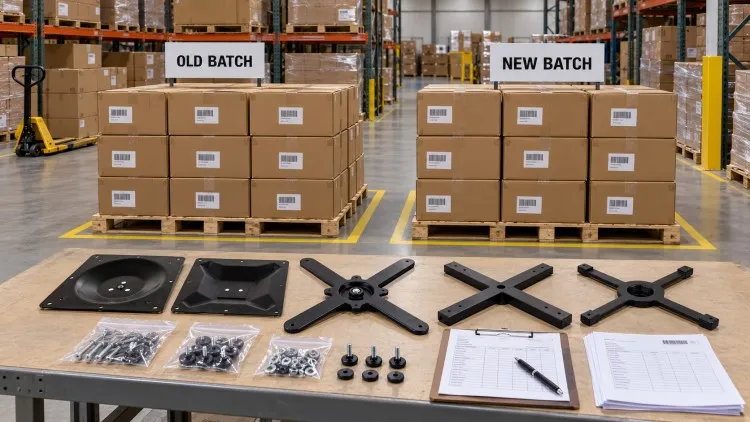
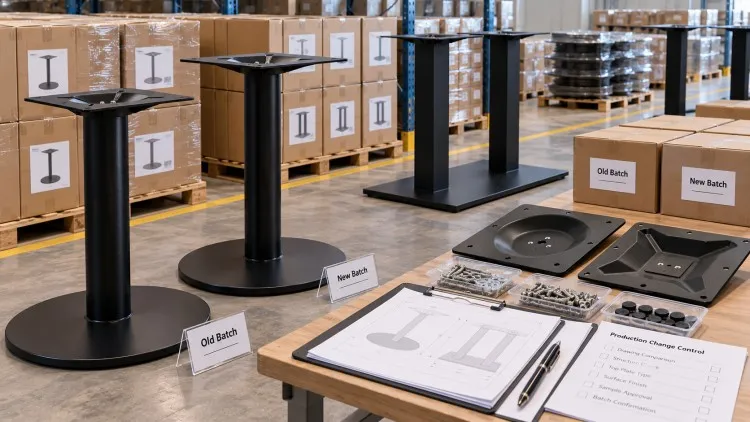
If old inventory remains in the warehouse, label the two versions clearly and decide whether they can be mixed in the same customer order. Sales descriptions, pick lists, cartons and service records should use compatible terminology.
For conditional or non-interchangeable versions, avoid picking by visual resemblance alone. Use an effective batch or carton reference and identify any different fitting kit required at installation.
12. Apply One Decision Across Repeat Store Rollouts
Restaurant chains should avoid letting each store interpret a revision independently. The central purchasing or FF&E team can approve one new-version decision and communicate it to the supplier, installers and local maintenance managers.
The rollout record should identify which stores use the original version, which receive the new one and whether future replacements may be mixed. This prevents an approved change in one site from becoming an unexpected mismatch at another.
13. What to Ask the Supplier on a Repeat-Order RFQ
Instead of writing only “repeat last order,” send the previous PO, buyer SKU, supplier model, approved configuration and a photograph of the installed table. Ask the supplier to confirm what is unchanged, what has changed and which version the new quotation covers.
Where revisions exist, request compatibility status, updated drawings, relevant spare parts, sample requirements, production batch identification and a written approval point before manufacturing. The response should make the decision auditable rather than merely reassuring.
14. How Haida Can Support Repeat-Order Coordination
Haida manufactures cast iron, steel, stainless steel and aluminum table bases for restaurant, hotel and furniture wholesale projects. Buyers can share earlier order records, drawings, tabletop specifications, finish samples and required spare parts when requesting a repeat order.
These records allow the buyer and supplier to review the proposed configuration together and identify any differences requiring written confirmation. Revision availability and interchangeability must be verified for the actual product and order rather than assumed in advance.
To review a repeat-order table base specification, contact Haida with your previous PO, product model and approved drawings.
15. FAQ: Table Base Revision and Repeat Orders
Q1. Is the same product model automatically the same version? No. A model code may identify a product family while selectable configurations or documented revisions differ. Confirm the approved specification.
Q2. Does a different finish require a revision number? Not always. A finish may be an existing selectable variant. It still needs an approved finish reference if the new units will be installed next to older tables.
Q3. What if the new mounting plate does not match the old tabletop? Stop the bulk release and obtain an approved compatibility solution, such as a verified plate option or an engineered attachment change.
Q4. Can two versions ship together? Only when the buyer has approved their interchangeability or identified separate handling, labeling and installation instructions.
16. Conclusion
Repeat-order compatibility is not simply a question of choosing the same SKU again. It is a controlled comparison between an approved baseline and the product configuration that will actually be made, packed and installed today.
For furniture wholesalers, restaurant chains and hospitality procurement teams, the strongest process is to retain the original reference, identify real changes, approve interchangeability and keep old and new batches traceable. That protects installation efficiency, appearance consistency and future service decisions.