1. Why Black Table Bases Are a Procurement Decision
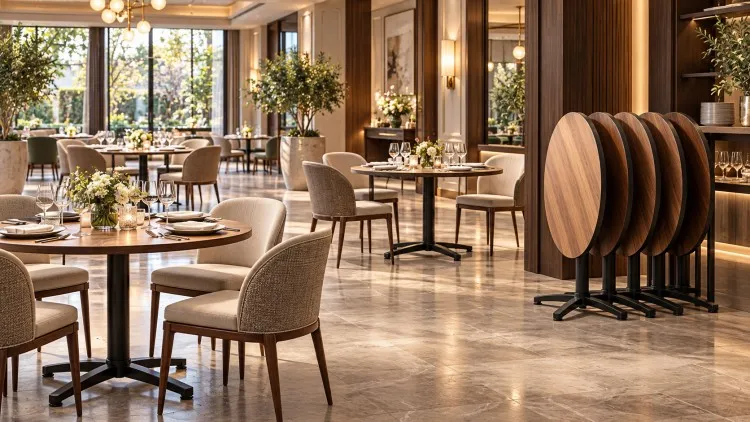
Black table bases are widely used in restaurants, cafés, bars and hospitality projects because they can coordinate with many interior styles and tabletop finishes.
However, a black table base should not be selected only because it matches the interior design.
Commercial buyers also need to confirm the base material, surface preparation, coating texture, color reference, tabletop compatibility, cleaning method and batch consistency.
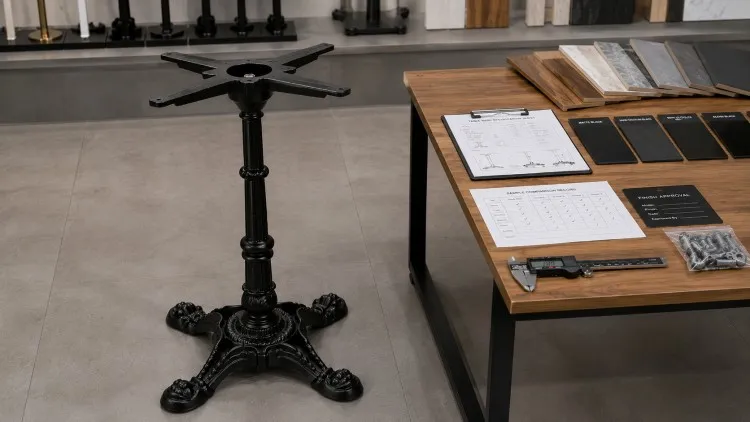
Two bases described as “black powder coated” may still differ in gloss level, texture, scratch visibility, coating condition and final appearance.
2. Define Where the Black Base Will Be Used
The first step is to confirm the restaurant area and operating conditions.
A black base used in a quiet dining room may have different requirements from one used on a busy terrace, in a bar or in a fast-casual restaurant.
Application information should include:
- Indoor, covered outdoor or open outdoor use
- Fine dining, casual dining, café or bar
- Fixed or frequently moved tables
- Daily cleaning frequency
- Expected table turnover
- Dining or bar height
- Folding or stackable requirement
- Target tabletop material
- Expected replacement and maintenance plan
The supplier can recommend the material and finish more accurately when the operating environment is clear.
3. Confirm the Material Under the Black Finish
Black is a surface color, not a material specification.
The same black appearance can be applied to cast iron, steel, aluminum or stainless steel, but these materials have different weights, structures, costs and applications.
| Material | Typical Commercial Direction |
|---|---|
| Cast iron | Stable pedestal or decorative restaurant bases |
| Steel | Welded structures, plate bases and customizable designs |
| Aluminum | Lightweight, folding, stackable or frequently moved bases |
| Stainless steel | Premium interiors or coated corrosion-resistant structures |
The buyer should first select the suitable material and structure, and then confirm the required black finish.
4. Understand What “Black Powder Coated” Means
Powder coating is commonly used to create black metal table bases.
The coating powder is applied to a prepared metal surface and cured to form a continuous finish.
The final result depends on more than the powder color.
The coating result can be affected by:
- Surface cleaning
- Rust and oil removal
- Sandblasting or other pretreatment
- Powder type
- Coating thickness
- Curing conditions
- Metal surface condition
- Rework or touch-up method
A color sample should therefore be approved together with the coating texture and gloss level.
5. Compare Matte, Sand and Gloss Black Finishes
The word “black” does not define the surface effect.
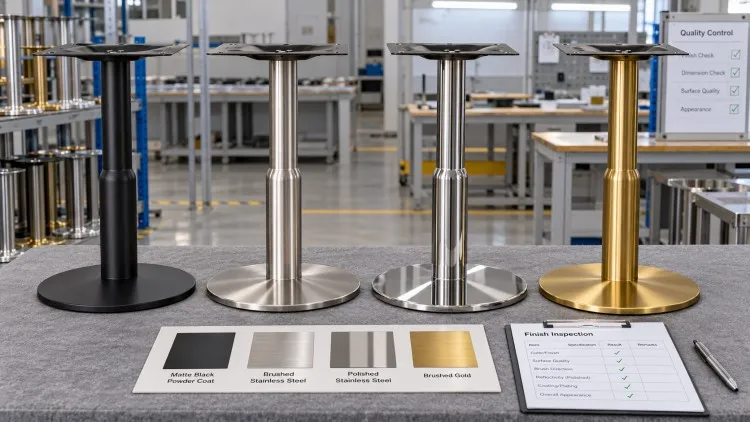
Restaurant buyers should specify whether they need matte, sand-textured, semi-gloss or gloss black.
| Finish | Visual Effect | Procurement Consideration |
| Matte black | Soft, low-reflection appearance | Common for modern and industrial interiors |
| Sand-textured black | Fine texture that visually reduces minor marks | Useful for high-use commercial environments |
| Semi-gloss black | Moderate reflection | Balanced decorative and practical option |
| Gloss black | Strong reflection and polished appearance | Fingerprints and surface marks may be more visible |
The approved sample should be viewed under lighting similar to the final restaurant environment.
6. Use a Clear Black Color Reference
Descriptions such as “normal black” or “standard black” can lead to inconsistent results.
The purchase order should reference an approved color code, physical sample or signed finish board.
The color approval record should include:
- Color name
- Color code, when applicable
- Gloss level
- Texture
- Approved physical sample
- Sample approval date
- Product model
- Substrate material
- Approved lighting condition
- Acceptable color tolerance
The same black powder may appear slightly different on cast iron, smooth steel, textured steel or aluminum surfaces.
7. Check Surface Preparation Before Coating
A black coating can hide the original metal color, but it cannot correct every surface defect.
Poor grinding, weld spatter, casting marks or uneven metal surfaces may remain visible after coating.
Pre-coating inspection should check:
- Welding spatter
- Sharp edges
- Grinding marks
- Casting flash
- Dents or deformation
- Oil contamination
- Rust
- Dust or residue
- Previous coating or rework areas
The approved finish sample should use the same substrate and production process as the final order whenever possible.
8. Review the Areas Most Likely to Wear
Not every area of a table base receives the same amount of contact.
Commercial buyers should pay particular attention to locations that are frequently touched, moved or hit during daily restaurant operation.
High-contact areas include:
- Bottom edges of floor plates
- Corners of square bases
- Folding joints
- Stackable contact points
- Adjustable-height locking areas
- Screw and bolt locations
- Top plate edges
- Areas touched by chairs or cleaning equipment
- Glides and feet
A sample review should include these wear points instead of checking only the most visible central surface.
9. Match the Finish to Daily Cleaning
Restaurant table bases are exposed to dust, food residue, cleaning products and repeated wiping.
The cleaning method should be confirmed before selecting the finish.
Cleaning considerations include:
- Type of cleaning cloth
- Cleaning frequency
- Detergent type
- Use of abrasive pads
- Moisture remaining near the floor
- Exposure to grease
- Need for spot cleaning
- Staff cleaning instructions
Mild cleaning methods should be defined so restaurant staff do not damage the coating through aggressive scrubbing or unsuitable chemicals.
10. Match Black Bases With the Tabletop
Black table bases can be paired with many tabletop colors and materials, but the final combination should still be reviewed as one product.
|
Tabletop |
Typical Visual Direction |
|
Natural wood grain |
Warm industrial or casual dining |
| Light oak or ash |
Scandinavian or modern café |
| Dark walnut |
Premium restaurant or bar |
|
White marble pattern |
Contemporary or luxury contrast |
| Gray stone pattern |
Minimalist commercial interior |
| Black tabletop |
Monochrome or dramatic interior |
| Colorful HPL |
Branded chain restaurant or canteen |
The tabletop size, weight and mounting method must also be confirmed separately from the color combination.
11. Choose the Base Shape for the Restaurant Layout
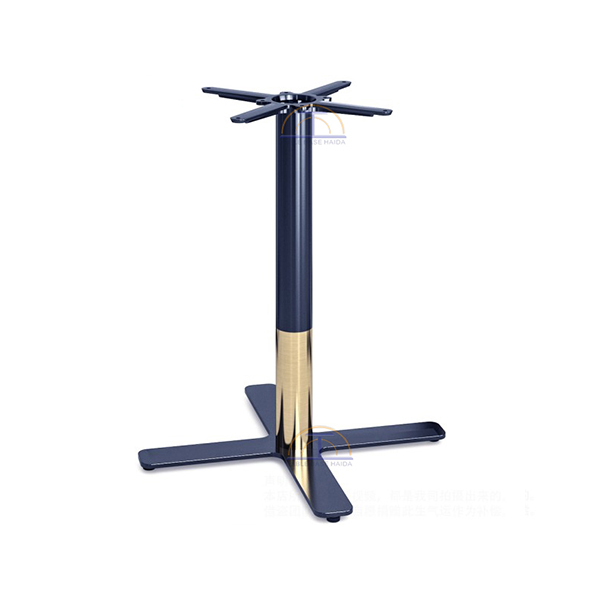
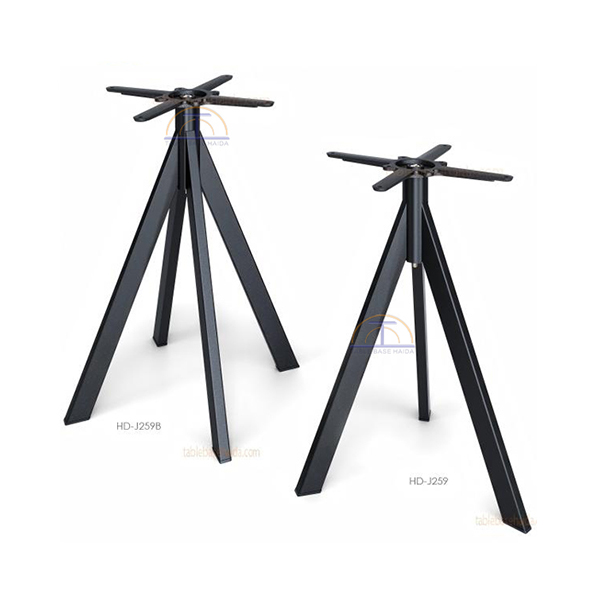
Black table bases are available in many structures, including round plates, square plates, X-bases, claw bases and four-leg frames.
The correct shape depends on seating, floor space, tabletop dimensions and how often the table is moved.
Structure review should include:
- Number of seats
- Chair position
- Knee and foot clearance
- Tabletop shape
- Tabletop overhang
- Base contact area
- Cleaning access around the base
- Required movement or storage
- Dining or bar height
Color should be confirmed only after the suitable structure has been selected.
12. Product Examples for Different Black Table Base Requirements
Different restaurant areas may require different black base structures.
The Foldable 3-Leg Claw Base HD-J245 uses a cast iron three-leg structure with a folding top plate. Its published specifications include a 570 × 570 mm base, 720 mm height with an optional 1080 mm version, a 480 mm top plate and black among the available powder-coated colors. It is relevant for bistro projects that need decorative character and compact storage.
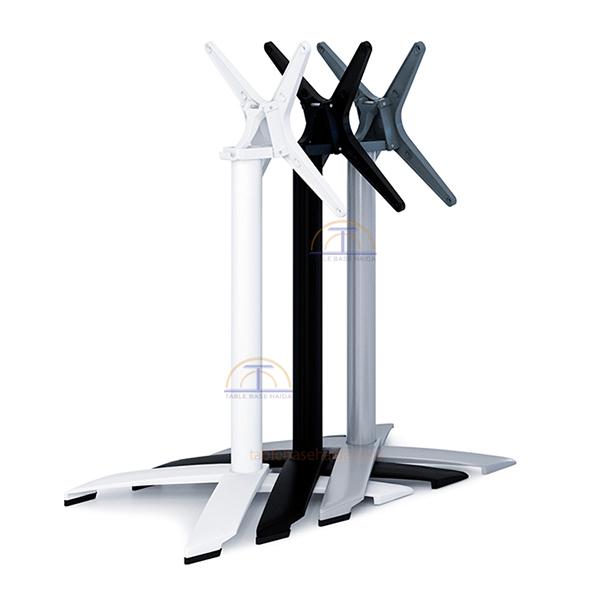
The Adjustable Height Folding X-Base HD-J277 uses an aluminum X-shaped structure with folding, stacking and height-adjustment functions. Its published specifications list a 720–1120 mm height range, a 450 mm folding top plate and black as an available color. It is a useful reference for flexible cafés, bars and event spaces.
The Decorative Fluted Steel Round Base HD-J305 combines a fluted steel column with a round floor base. Its published specifications list a 720 mm height, a 450 mm top plate and black, white, gray or wood-grain finish options. It is relevant when a restaurant wants a black base with more visible texture and decorative detail.
The Tiger Paw Cast Iron Table Base HD-J086 features a decorative cast iron structure. Its published specifications include a 570 × 570 mm base, 720 mm height with an optional 1080 mm version, a 450 mm top plate and matte, sand or gloss powder-coated finish options. It is suitable as a reference for themed restaurants, boutique cafés and traditional bistro interiors.
These examples show that “black table base” can describe very different materials, structures and functions.
13. Confirm Size and Stability Separately From Color
A suitable black finish does not make an unsuitable base stable.
The buyer must still match the base dimensions to the tabletop size, shape, material and weight.
Size confirmation should include:
- Base footprint
- Overall height
- Column size
- Top plate size
- Mounting-hole pattern
- Tabletop dimensions
- Tabletop weight
- Tabletop overhang
- Number of support points
- Final assembled stability
The supplier should approve the complete table configuration, not only the black base sample.
14. Review Dining and Bar-Height Versions Separately
A black base that performs well at dining height may require a different footprint or structure at bar height.
Increasing the height changes the center of gravity and the effect of horizontal pressure.
The quotation should clearly separate:
- Dining-height model
- Bar-height model
- Base size for each height
- Column specification
- Suitable tabletop recommendation
- Footrest requirement
- Packing version
- Model or SKU code
A single product photo should not be used to represent several height configurations without a specification table.
15. Check Folding and Stackable Contact Points
Folding and stackable black bases require additional surface checks.
Contact between metal parts can create wear marks if the stacking or folding positions are not controlled.
The buyer should inspect:
- Folding hinge area
- Locking mechanism
- Contact points during stacking
- Protective pads or spacers
- Clearance between coated parts
- Paint damage after repeated folding
- Stability in the locked position
- Storage orientation
- Maximum recommended stack arrangement
The packaging and operating instructions should show how to fold or stack the product without damaging the black finish.
16. Approve a Production Finish Sample
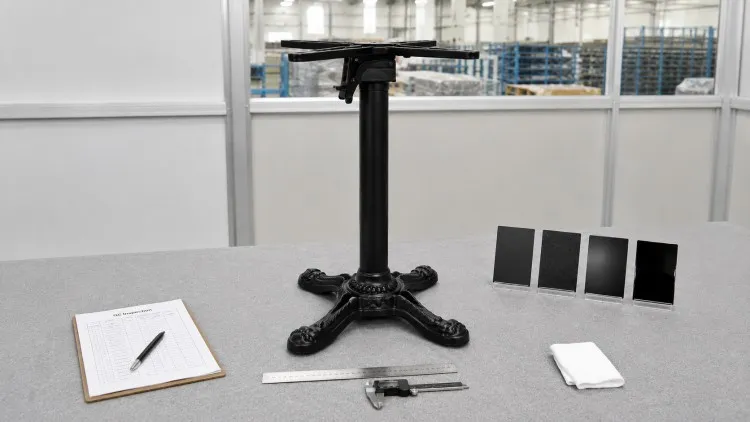
A digital image is not enough for final black finish approval.
Screen brightness, camera exposure and surrounding light can change how the color appears.
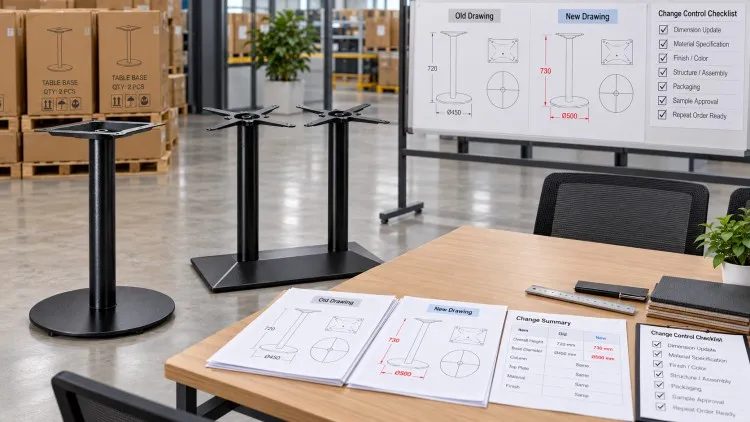
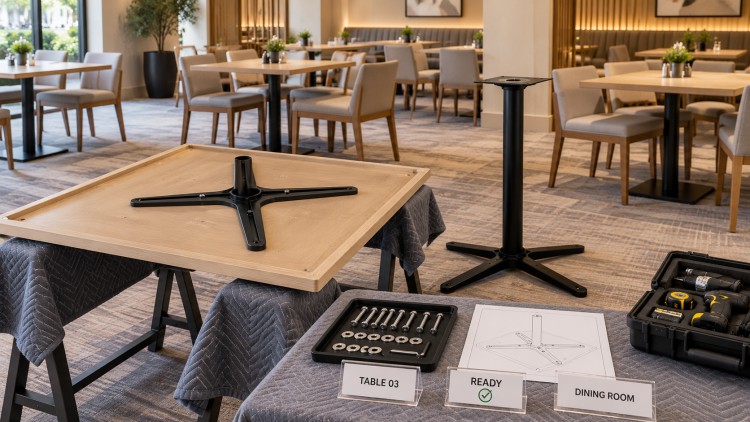
For a structured approval process, buyers can follow the Commercial Table Base Sample Approval Checklist to confirm the sample type, product dimensions, finish, installation details and approved production reference before mass production.
The approval sample should confirm:
- Correct base material
- Actual production texture
- Black color reference
- Gloss level
- Edge coverage
- Weld and casting appearance
- Hardware color
- Glide color
- Product label location
- Packing protection
The approved sample should be identified by model, date and revision number.
17. Protect Black Surfaces During Packing
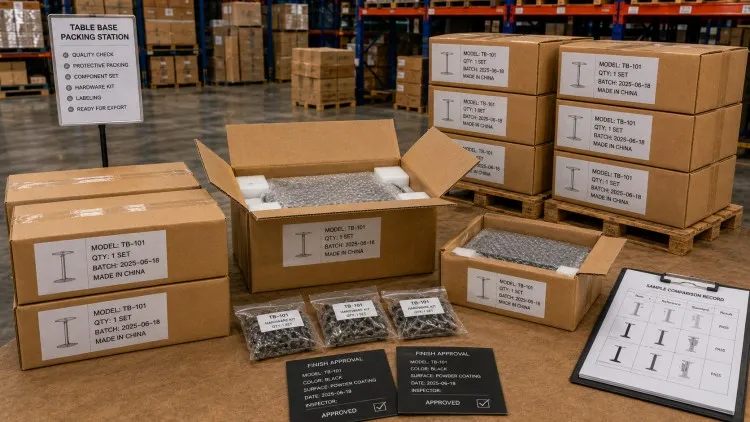
Black finishes can show abrasion, dust and packing marks if the protection method is unsuitable.
The packaging should prevent coated metal parts from rubbing directly against one another.
Packing protection can include:
- Individual wrapping
- Foam or non-abrasive sheets
- Edge and corner protection
- Separate hardware bags
- Fixed component positions
- Protection around folding mechanisms
- Clean inner cartons
- Carton labels identifying finish and model
- Clear unpacking instructions
- Approval of the packed sample
Dark surfaces should be checked after a simulated packing and unpacking process, not only before packing.
18. Control Color Consistency Across Bulk Orders
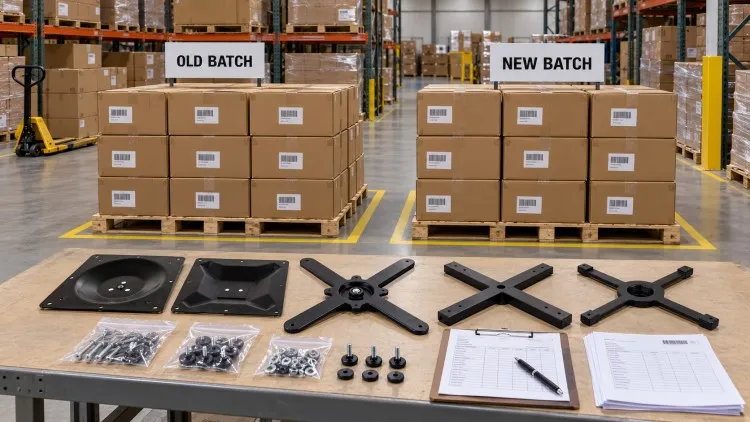
Restaurant chains and furniture dealers may reorder the same black base over several months or years.
The buyer should create a finish reference that can be reused for repeat orders.
For multi-location projects, the Restaurant Chain Table Base Specs Guide provides a useful framework for controlling model codes, finish standards, approved samples, packing and repeat-order specifications across different locations.
A repeat-order record should include:
- Product model
- Buyer SKU
- Material
- Black color code
- Texture
- Gloss level
- Approved sample number
- Powder or finish reference
- Packing version
- Hardware color
- Production batch
- Latest approved revision
When possible, replacement units should be compared with the approved original specification before shipment.
19. Inspect the Bulk Order Before Shipment
A pre-shipment inspection should include both finish quality and product structure.
Black table base inspection can include:
- Color consistency
- Gloss and texture consistency
- Full coating coverage
- Scratches and chips
- Weld appearance
- Casting defects
- Base flatness
- Column alignment
- Top plate and hole positions
- Folding or adjustment function
- Glides and hardware
- Packing protection
The inspection sample should include products from different cartons and production positions.
20. Common Black Table Base Purchasing Mistakes
Black table base problems often begin with incomplete specifications.
Common mistakes include:
- Selecting only by product photo
- Writing only “black” in the purchase order
- Not specifying matte, sand or gloss finish
- Approving color without the correct base material
- Ignoring high-contact wear areas
- Using the same base for dining and bar heights
- Not testing folding or stacking wear
- Using harsh cleaning chemicals
- Allowing coated parts to rub during packing
- Reordering without an approved finish reference
- Mixing different black finishes in one restaurant area
A complete specification should define the base structure and black finish as one approved product.
21. How Haida Supports Black Table Base Orders
Haida can support restaurant buyers, furniture dealers, importers and hospitality projects with black table base model selection, material matching, finish samples, tabletop compatibility and export packing.
Buyers should provide the required model, quantity, tabletop size, application, black finish effect and target delivery schedule.
To review suitable products, buyers can contact Haida for black table base sourcing support with the project specifications and preferred finish sample.
22. FAQ
Q1: Is matte black better than gloss black for restaurants?
Neither finish is automatically better. Matte and sand finishes are often selected for lower reflection and reduced visibility of minor marks, while gloss black provides a more reflective decorative appearance.
Q2: Can cast iron, steel and aluminum use the same black finish?
They can use similar color directions, but the substrate texture and pretreatment may affect the final appearance. Separate samples should be checked when different materials are used.
Q3: What information should be included in a black finish specification?
Include the color reference, texture, gloss level, base material, approved physical sample, model number and acceptable tolerance.
Q4: Are black table bases suitable for outdoor restaurants?
Suitability depends on the base material, coating system, environmental exposure and maintenance plan. The buyer should confirm whether the area is covered or fully exposed before selecting the product.
Q5: How can buyers reduce color differences in repeat orders?
Keep an approved physical sample, color code, gloss level, texture, model and production reference, and use them when confirming every repeat order.
23. Conclusion
Black table bases are a practical choice for many restaurant interiors, but the purchase specification should include more than the word “black.”
Buyers should confirm the base material, structure, finish texture, gloss level, color reference, tabletop match, cleaning method, wear points and packaging protection.
Bulk orders should use an approved physical sample and a repeatable SKU or finish record to maintain consistency across production batches.
When the structure and finish are approved together, black restaurant table bases become easier to source, inspect, maintain and reorder.