1. Why Table Bases Need a Detailed FF&E BOQ
In a hospitality project, table bases must coordinate with tabletops, seating layouts, interior finishes, installation teams, delivery phases and long-term maintenance requirements.
A BOQ, or Bill of Quantities, gives the procurement team, designer, contractor and supplier one approved reference for product specifications, quantities and project responsibilities.
A description such as “black restaurant table base” is not detailed enough for an accurate quotation or production order. The BOQ should identify the product structure, material, finish, dimensions, tabletop match, packing method and installation scope.
When these details are confirmed before production, the project can reduce specification mistakes, repeated clarification and last-minute replacements.
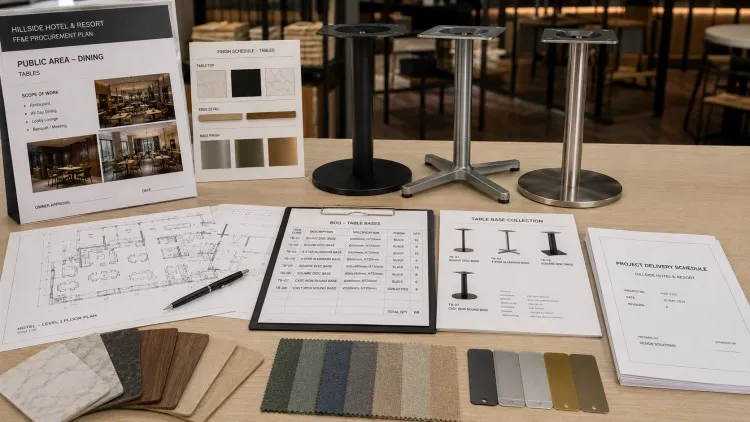
2. Identify the Project, Venue and Application Area
Each BOQ line should show exactly where the table base will be used.
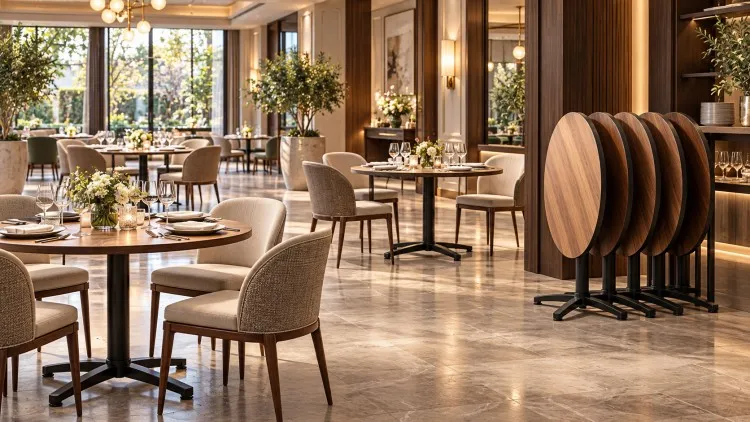
A hotel may require different products for the lobby café, all-day dining restaurant, bar, banquet room, guest lounge, outdoor terrace and poolside area.
Application fields should include:
- Project or property name
- Building, tower or floor
- Venue or functional area
- Indoor, covered outdoor or open outdoor use
- Fixed, movable, folding or stackable requirement
- Expected traffic level
- Required delivery phase
This information helps the supplier evaluate the correct structure instead of quoting one table base for every hospitality area.
3. Match Table Base Models to Different Hospitality Areas
The BOQ should not only state the material category. It should identify the specific approved model for each venue.
For a hotel lobby, lounge or premium restaurant, a design-focused model such as the Modern Two-Tone Stainless Steel Base HD-J199 can be used as a reference when the project requires a decorative metal finish and a more distinctive hospitality appearance.
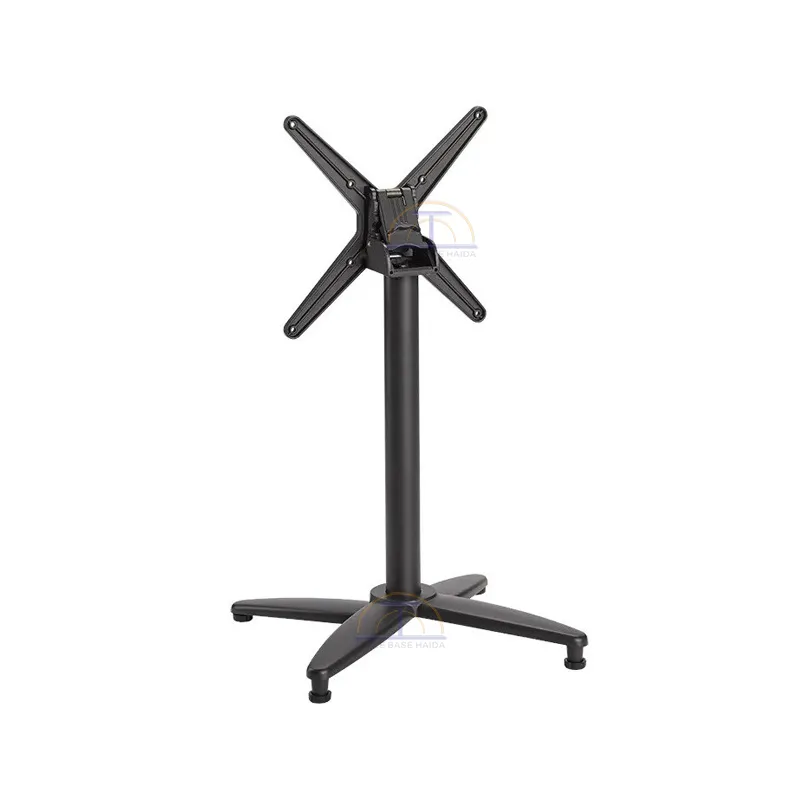
For terraces, courtyards and flexible dining areas, the Outdoor Stackable Aluminum Folding Table Base HD-JN02 provides a useful reference for projects that need folding tops, stackable storage and frequent layout changes.
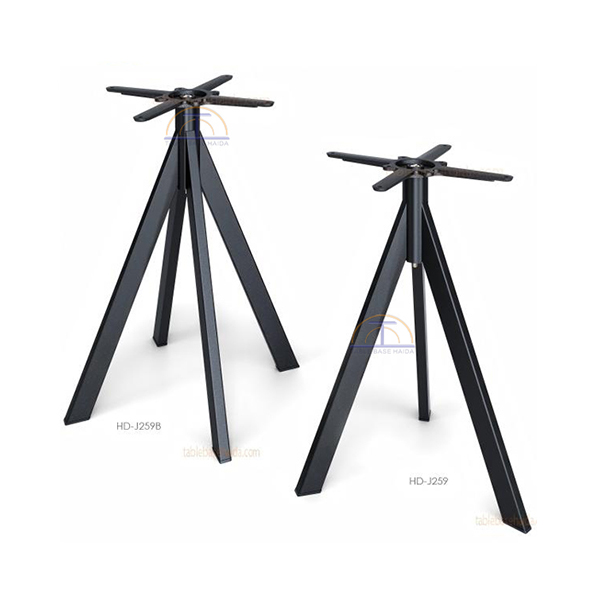
For communal tables, buffet areas or large dining tables, the Heavy-Duty Twin-Column Base HD-J044 is a more relevant reference than a single-column base because long tabletops normally require support at more than one point.
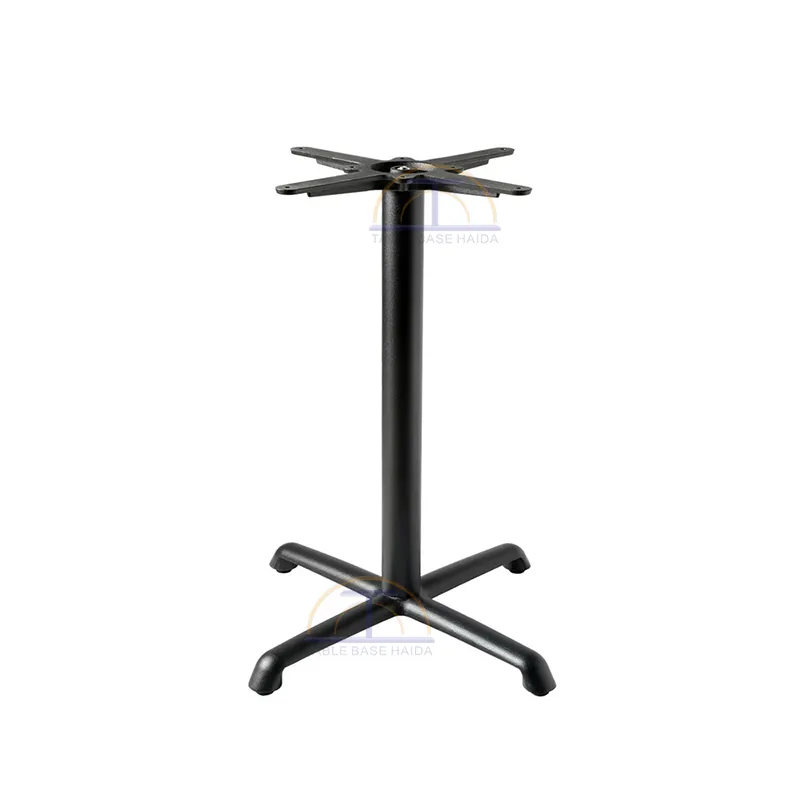
For cafés, bistros or dining areas with uneven floors, the Commercial Cast Iron Self-Leveling Table Base HD-JN03 can be specified when automatic floor compensation is part of the project requirement.
The supplier should quote the approved model shown in the BOQ rather than replacing it with a visually similar product without written approval.
4. Give Every Item a Unique BOQ Code
Every table base should have a unique item code that remains consistent throughout the project.
The same code should appear in the BOQ, technical drawing, finish schedule, sample approval record, purchase order, carton mark, installation instruction and replacement-parts record.
Example item codes:
| Item Code | Venue | Product Requirement |
| FNB-TB-01 | All-day dining | Standard dining table base |
| FNB-TB-02 | Lobby lounge | Decorative stainless steel base |
| FNB-TB-03 | Outdoor terrace | Folding and stackable base |
| FNB-TB-04 | Banquet area | Twin-column base for long top |
Using one code throughout the project makes it easier to control quantities, revisions, packing and installation.
5. Record the Complete Product Structure
The BOQ should describe the actual structure rather than using only a general product name.
Structure information should include:
- Approved model number
- Base shape
- Base type or spread
- Column shape and quantity
- Top plate structure
- Fixed or folding top
- Stackable or non-stackable design
- Adjustable or self-leveling feet
- KD, partly assembled or fully assembled supply
If the project requires a special function, such as folding, height adjustment or floor leveling, that function should appear directly in the BOQ description.
6. Include All Critical Dimensions
Dimensions affect stability, seating clearance, tabletop compatibility, installation and shipping volume.
The BOQ should record:
- Overall height
- Base diameter, length or width
- Base spread
- Column diameter or profile
- Top plate size
- Mounting-hole pattern
- Mounting-hole diameter
- Adjustable-foot range
- Folded dimensions, if applicable
Dining-height and bar-height versions should be listed as separate BOQ items even when they use the same base design.
7. Connect Every Base to an Approved Tabletop
A table base should never be approved without confirming the tabletop that will be installed on it.
The tabletop schedule should provide enough information for the supplier to evaluate stability, mounting and support requirements.
Tabletop information should include:
- Tabletop item code
- Shape
- Length and width
- Diameter
- Thickness
- Material
- Approximate weight
- Edge profile
- Mounting inserts or screw requirements
- Indoor or outdoor application
For outdoor hotel terraces and café areas, a product such as the Durable Weatherproof Round HPL Commercial Patio Table Top can be used as a product-level reference when the BOQ requires a commercial round top with outdoor-oriented surface performance.
Heavy stone, marble or sintered-stone tops should be reviewed separately because they may require a wider base, additional columns or a different fixing method.
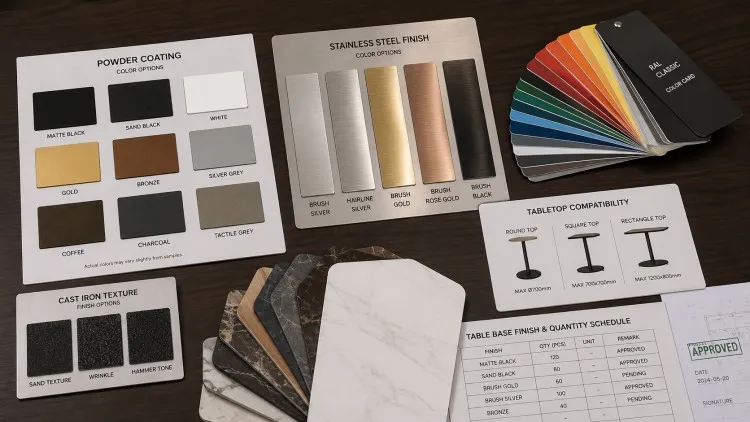
8. Build a Clear Material and Finish Schedule
Descriptions such as “metal,” “black” or “silver” are not detailed enough for project production.
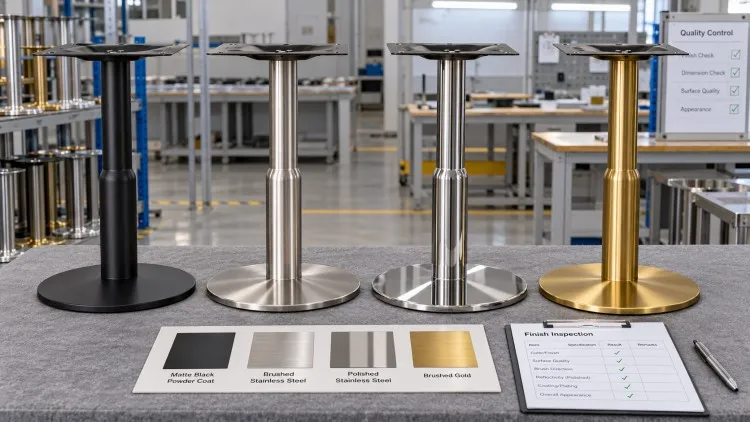
The BOQ and finish schedule should define both the base material and the final visible surface.
Material fields can include:
- Cast iron
- Aluminum
- Steel
- Stainless steel
- Stainless steel grade, when required
Finish fields can include:
- Powder-coated finish
- Matte, sand or gloss texture
- Brushed stainless steel
- Polished stainless steel
- Titanium or decorative metal color
- Approved color code
- Approved physical finish sample
The schedule should also state whether the table base finish must match chairs, metal frames, lighting or other FF&E items.
9. Separate Quantities by Venue and Delivery Phase
A hospitality BOQ should not show only one total quantity.
Quantities should be divided by venue, floor, installation area and delivery phase.
Example quantity schedule:
| Item Code | Venue | Installed Qty. | Spare Qty. | Delivery Phase |
| FNB-TB-01 | All-day dining | 40 | 2 | Phase 1 |
| FNB-TB-02 | Lobby lounge | 16 | 1 | Phase 1 |
| FNB-TB-03 | Outdoor terrace | 24 | 2 | Phase 2 |
| FNB-TB-04 | Banquet area | 12 | 1 | Phase 2 |
This breakdown helps the supplier prepare phased production, carton marks and area-based delivery.
10. Include Packing and Ship-Set Instructions
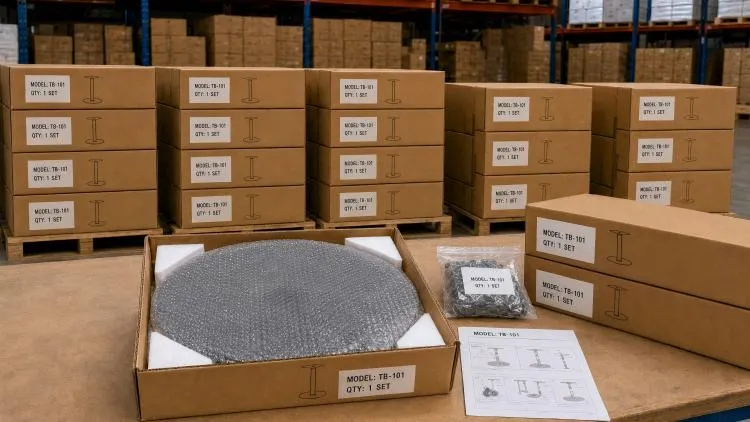
Hospitality projects often need products packed by room, venue, floor or installation phase.
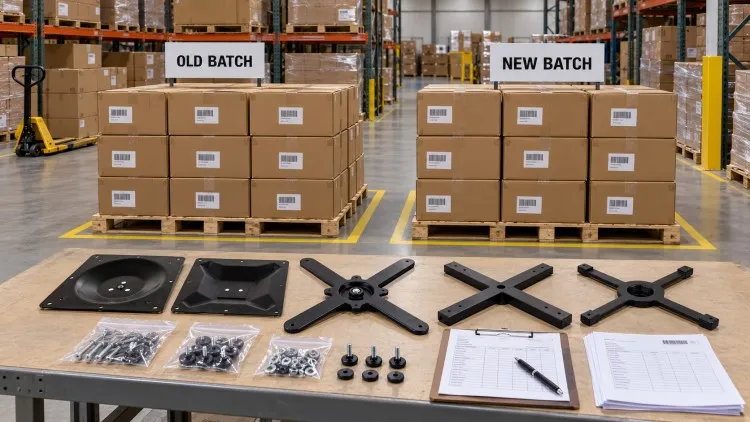
A ship-set groups the products, hardware and documents required for one installation area.
Packing fields should include:
- KD, partly assembled or fully assembled packing
- Sets per carton
- Carton size and weight
- Hardware-bag location
- Product and carton labels
- Venue or room code
- Ship-set number
- Carton sequence
- Pallet requirement
- Mixed-model packing restrictions
- Special surface protection
Clear ship-set instructions reduce sorting time at the project site and help prevent components from being delivered to the wrong venue.
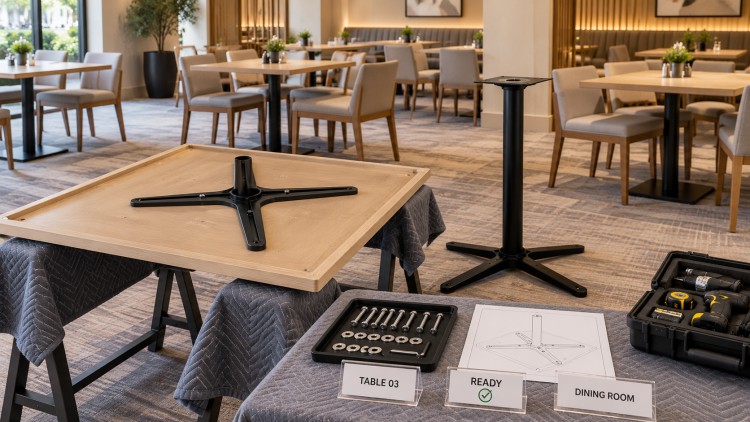
11. Clarify Installation Responsibility
The BOQ should define which party is responsible for each installation task.
Installation responsibilities should cover:
- Factory pre-assembly
- On-site base assembly
- Tabletop mounting
- Screws and fixing hardware
- Floor fixing, when required
- Leveling adjustment
- Removal of protective film
- Final stability inspection
- Installation sign-off
If these responsibilities are not stated clearly, the supplier, contractor and installation team may each assume that another party will complete the work.
12. Add Spare Parts and Maintenance Requirements
Spare parts should be included in the original BOQ instead of being ordered only after a problem appears.
Common spare parts include:
- Leveling glides
- Adjustable feet
- Screws and bolts
- Washers and nuts
- Spare hardware bags
- Plastic caps
- Model-specific replacement parts
The BOQ can define spare parts as a fixed quantity, a percentage of the installed quantity or one maintenance kit per venue.
It should also state who will store the spare parts and how replacement parts will be identified after project handover.
13. Track Required Documents and Approval Status
The BOQ should show which documents the supplier must provide and whether each item has been approved.
Required documents may include:
- Product specification sheet
- Technical drawing
- Tabletop compatibility confirmation
- Finish sample
- Product sample
- Assembly instruction
- Packing drawing
- Carton mark
- Product and packing photos
- Sample approval record
- Final production approval
Approval status can be shown as:
- Pending
- Submitted
- Revised
- Approved
- Approved with comments
Production should use only the latest approved drawing, finish reference and BOQ revision.
14. Connect the BOQ to Project Milestones
Hospitality furniture is usually delivered according to a project schedule rather than one simple ship date.
The BOQ or procurement tracker should include:
- Drawing submission date
- Sample completion date
- Sample approval deadline
- Production start date
- Inspection date
- Required ship date
- Required arrival date
- Site installation date
- Handover date
When an approval date changes, the procurement team should review the effect on production, shipping and installation.
15. Control BOQ Revisions
Hospitality project specifications often change during design development and site coordination.
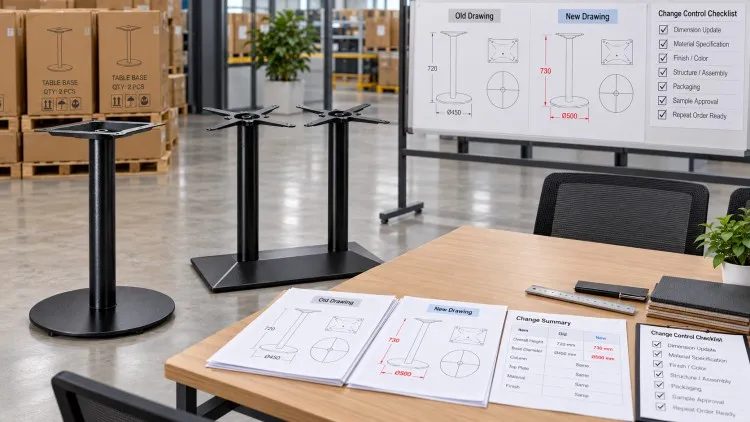
A table base may change in model, height, finish, tabletop match, quantity or delivery phase after the first BOQ is issued.
Revision records should include:
- BOQ revision number
- Revision date
- Changed item code
- Previous requirement
- New requirement
- Reason for change
- Requested by
- Approval status
- Effect on price or lead time
Old BOQ versions should be withdrawn so the supplier and contractor do not continue using outdated specifications.
16. Common Hospitality BOQ Mistakes
Many table base procurement problems begin with incomplete or inconsistent documents.
Common mistakes include:
- No unique item code
- Product category listed without a specific model
- No tabletop size or weight
- Finish described only as black, gold or silver
- Dining and bar heights mixed under one item
- Quantities not separated by venue
- No spare parts allowance
- Installation responsibility is unclear
- Packing does not follow delivery phases
- Production uses an outdated BOQ
A useful BOQ should allow the supplier to prepare a quotation and production plan without relying on assumptions.
17. How Haida Supports Hospitality FF&E Projects
Hospitality table base procurement requires coordination between product selection, tabletop compatibility, finishes, samples, packing and phased delivery.
Haida can support hotel, restaurant, FF&E and project buyers with model selection, specification confirmation, finish review, tabletop matching, sample approval and export packing.
To request project support, buyers can contact Haida for hospitality table base procurement with the BOQ, tabletop schedule, preferred finishes, venue quantities and delivery phases.
18. FAQ
Q1: What should a hospitality table base BOQ include?
It should include the venue, item code, approved model, structure, material, finish, dimensions, tabletop match, quantity, packing, spare parts, installation responsibility and delivery phase.
Q2: Why should the BOQ use specific product models?
A specific model helps the supplier quote the correct structure, dimensions, finish, packing and hardware instead of selecting a visually similar alternative.
Q3: Should table bases and tabletops share related item codes?
Yes. Related codes make it easier to confirm which base supports each tabletop and reduce matching errors during packing and installation.
Q4: Should spare parts be included in the initial BOQ?
Yes. Spare glides, screws, bolts and hardware bags can reduce maintenance delays and urgent replacement shipments after handover.
Q5: What is a ship-set?
A ship-set groups the table bases, hardware, instructions and related components required for one room, venue or installation phase.
19. Conclusion
A hospitality FF&E BOQ should do more than list products and quantities.
It should connect every table base to an approved venue, model, tabletop, finish, quantity, packing method, installation responsibility and delivery phase.
Using specific product references instead of broad material categories gives both the procurement team and supplier a clearer basis for quotation, sampling and production.
When all project parties work from the same approved BOQ, hospitality furniture procurement becomes easier to control from sample approval through final installation.