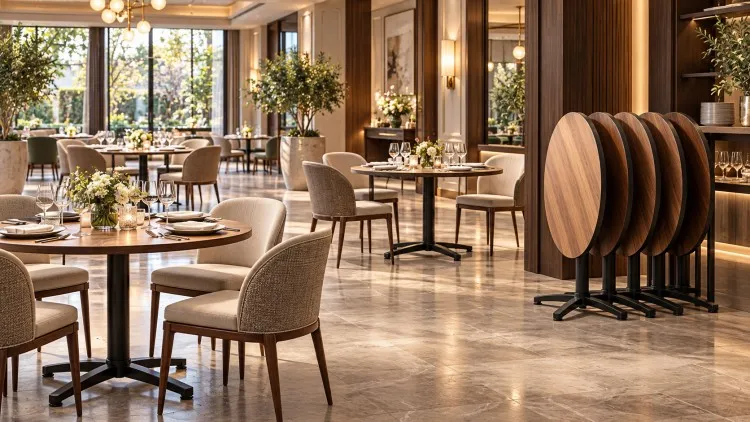
If you are choosing a base for a restaurant 2-top or 4-top, tabletop size alone is not enough. The real question is whether the base footprint, column structure, and top weight are properly matched.
A table can look balanced in photos and still wobble in daily use if the spread is too small or the top is too heavy for the base. This guide explains how to size a commercial table base for common 2-top and 4-top layouts and when it makes sense to move from a single pedestal to a heavier X-base or a twin-column structure.
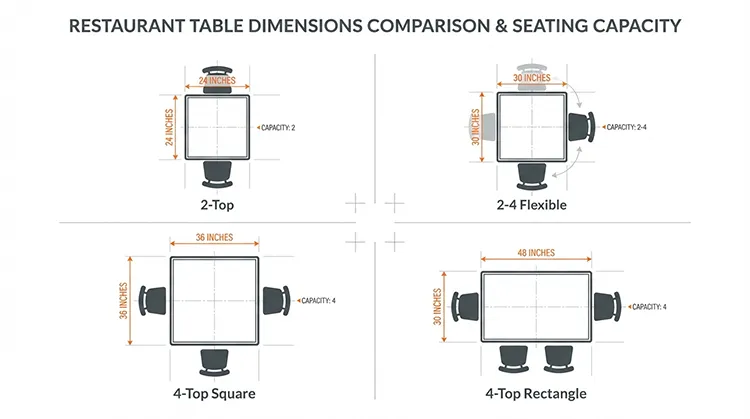
Common 2-Top and 4-Top Tabletop Sizes
In commercial dining, the most common 2-top sizes are 24″×24″, 24″×30″, and 30″×30″. Common 4-top sizes include 36″×36″ and 30″×48″.
These sizes are popular because they balance guest comfort, aisle clearance, and layout flexibility. The key sizing mistake is assuming that one standard base can cover all of them. In reality, as the tabletop gets larger, heavier, or more rectangular, the base usually needs a wider footprint or a more supportive structure.
Why Footprint Matters More Than Buyers Expect
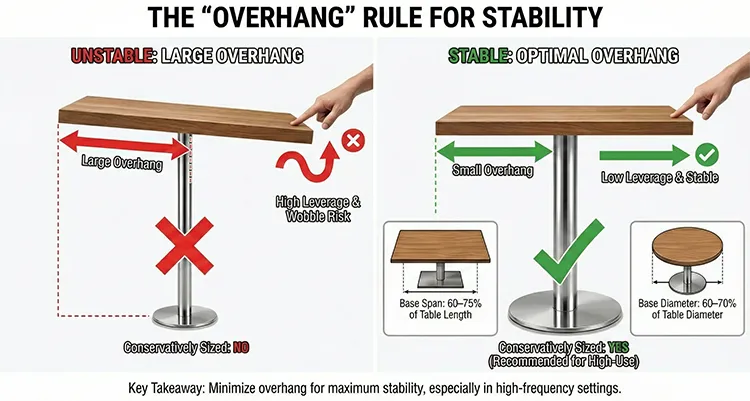
Footprint refers to the effective spread of the base on the floor. Overhang is the distance from the tabletop edge beyond that spread.
-
The Leverage Effect: The larger the overhang, the more leverage guests create when they lean on the edge, pull a chair in, or place weight unevenly.
-
The Golden Ratio: In many commercial setups, rectangular bases often span roughly 60–75% of tabletop length, while round pedestal bases often work around 60–70% of tabletop diameter.
In high-frequency hospitality use, conservative sizing is usually the safer choice to ensure long-term durability.
Recommended Base Matches for Popular 2-Top Sizes
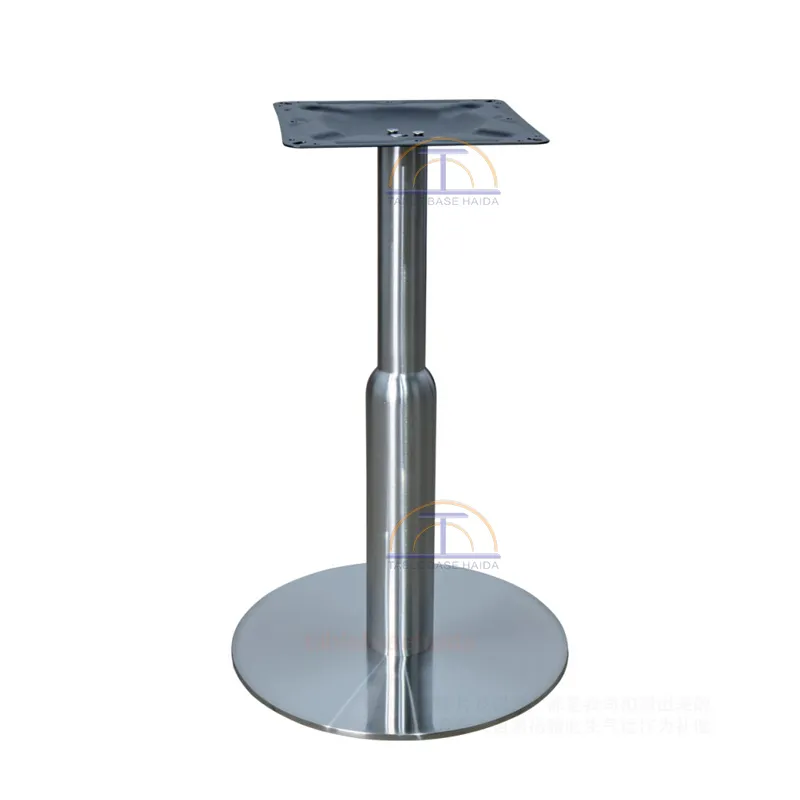
For a compact 24″×24″ or 30″×30″ restaurant table, a clean square base such as the square stainless steel table base (HD-J124) is a practical option. It is available in multiple footprint sizes including 400×400, 450×450, and 500×500 mm, making it easier to match smaller commercial tops while keeping a modern appearance.
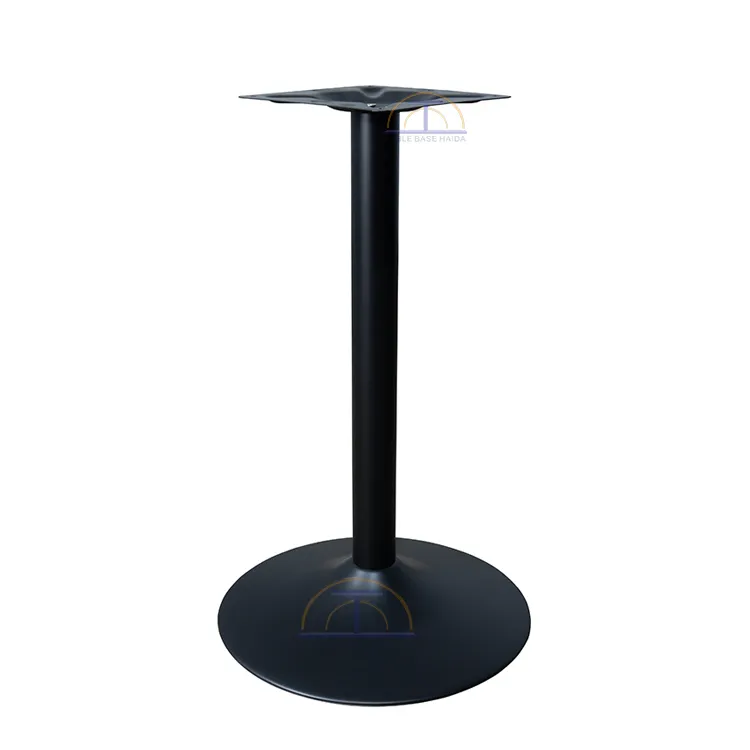
If your layout uses compact round tops or small pedestal-style dining tables, the cast iron pedestal table base (HD-J068) is a stronger fit for stability-focused projects. Its product specification lists suitability for 600 / 700 / 800 mm tabletops, making it a reliable match for many 2-top commercial configurations where buyers want a classic central-column look without sacrificing support.
Recommended Base Matches for 4-Top Tables
Once you move up to 36″×36″ square tops, stability expectations increase quickly. This is especially true in busy restaurants where guests regularly lean on table corners.
-
For High-Traffic Square Tops: A heavier base with a larger spread such as the heavy-duty cast iron X-base (HD-J053) is more appropriate. The HD-J053 offers larger base size options including 560×560 mm and 760×760 mm, distributing weight more evenly across the floor.
-
For Modern Heavy-Duty Needs: For buyers who want a modern solution that pairs with square or round tops, the heavy-duty steel table base (HD-J300) is another excellent commercial option. Its cross-shaped structure is specifically designed for large dining applications.

When to Upgrade to a Twin-Column Base (30″×48″)
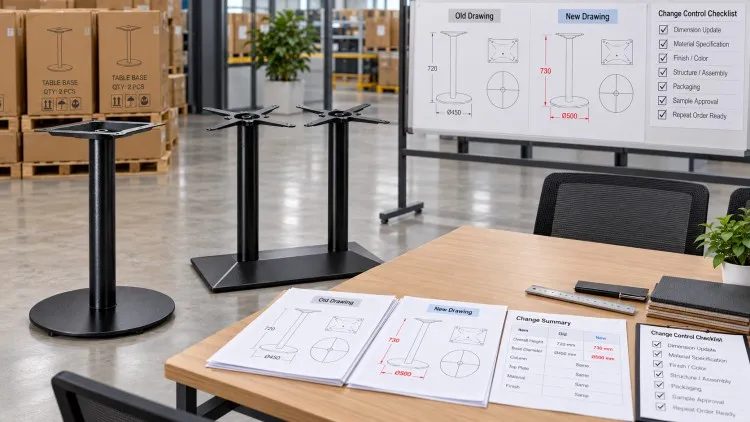
A 30″×48″ tabletop is where many projects become unstable if the buyer tries to force the same single base used for a smaller square top. Longer rectangular tops create different leverage patterns, especially when guests sit at both ends.
In these cases, a twin-column base for large dining tables (HD-J044) is the safer specification. Its dual-post structure is designed to support longer tabletops and eliminate the “seesaw” effect across the long axis.
Pro Rule: If the top is longer than 42″, or if the material is unusually heavy, always evaluate moving to a twin-column design.
Top Material: The Hidden Stability Factor
Base sizing should never be decided without considering the tabletop material. If the project uses HPL commercial tops, buyers can compare options such as:
Heavier-looking finishes or natural stone surfaces must be matched to a wider base footprint and a thicker mounting plate to ensure the center of gravity remains stable.
FAQ: Common Commercial Sizing Questions
Q: What size base is usually used for a 30″×30″ table top? A: A 30″×30″ top is often paired with a moderate square or pedestal base. For modern restaurant layouts, a model like the HD-J124 square stainless steel base is a strong fit if the 450×450 or 500×500 mm footprint is selected.
Q: Is one pedestal enough for a 36″×36″ 4-top? A: In heavier-use dining environments, many buyers move to a larger and heavier base such as the HD-J053 cast iron X-base because the added footprint and load-bearing capacity drastically improve stability.
Q: What is the safer base choice for a 30″×48″ rectangular top? A: For longer rectangular tops, a twin-column base like the HD-J044 is always a better choice than forcing a compact single pedestal to handle uneven leverage.
Final Recommendation
To reduce table wobble, make decisions in this order: Tabletop Size → Seating Use → Material Weight → Base Footprint → Floor Condition.
-
For compact 2-tops: Start with the HD-J124 or HD-J068.
-
For heavier 4-tops: Upgrade to the HD-J053 or HD-J300.
-
For long rectangular tables: Move directly to the HD-J044 twin-column base.